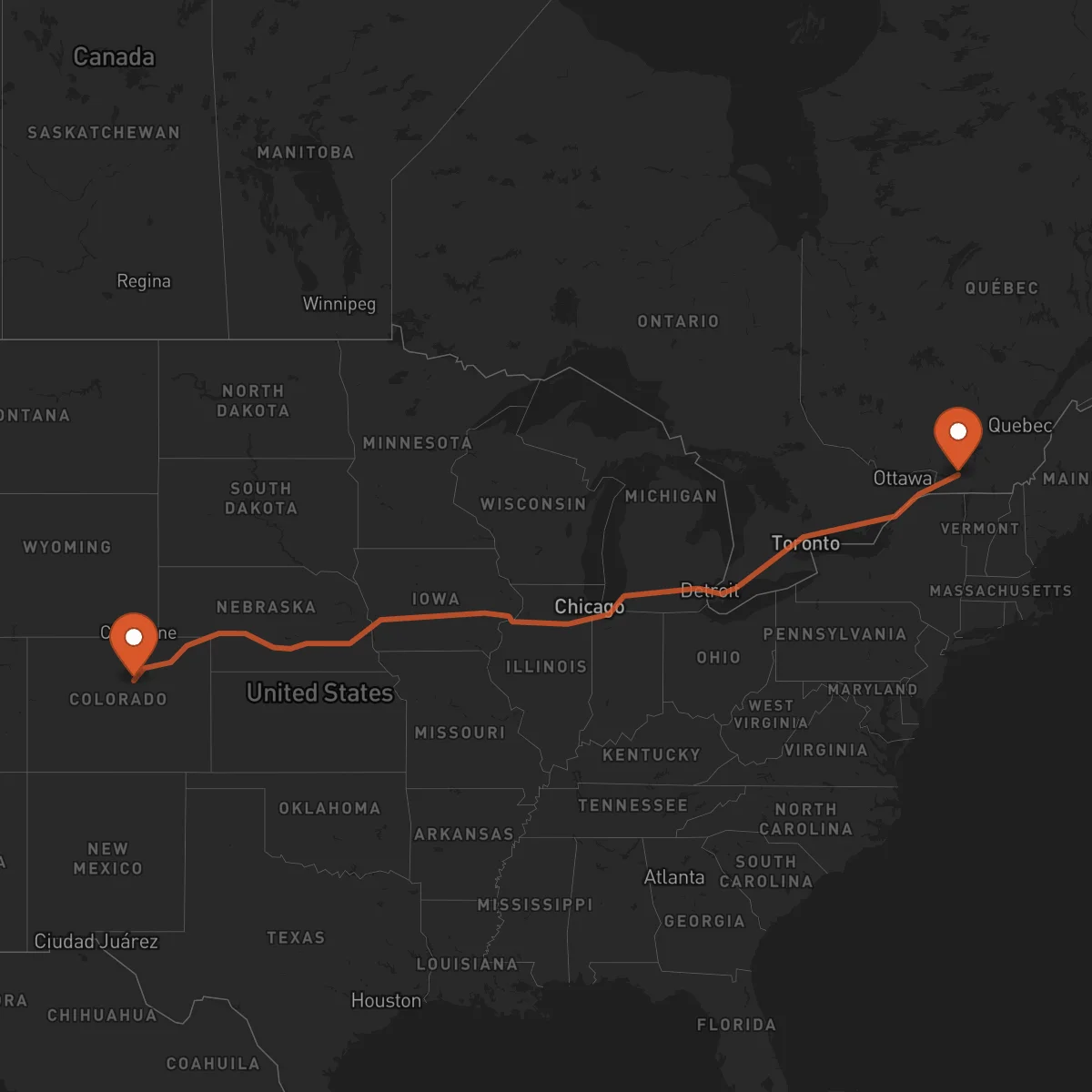
Denver to Montreal
Montreal → DenverFTL freight transportation service between Denver and Montreal. Reliable logistics solutions for your business.
Route Description
Everything you need to know about the corridor Denver - Montreal
The Denver-Montreal corridor is a vital logistics route connecting the heart of the Rocky Mountains in Colorado with the major port city of Montreal in Quebec, Canada. This cross-border route spans approximately 2,631 kilometers and serves as a critical artery for freight transportation between the United States and Canada. The corridor facilitates the movement of goods across diverse terrains, from the high plains of Colorado through the Great Lakes region and into the St. Lawrence River Valley, ultimately reaching one of North America's largest inland ports.
The economic significance of this corridor is substantial, linking key industrial centers in both countries. Denver, known for its aerospace, technology, and energy sectors, connects with Montreal's diverse economy, which includes aerospace, pharmaceuticals, electronics, and financial services. This route is particularly important for companies in the automotive, technology, and manufacturing industries that require efficient cross-border transportation solutions. The corridor also supports the agricultural sector, facilitating the movement of products from the American Midwest to Canadian markets and vice versa.
Major transportation infrastructure along this route includes Interstate 25 and Interstate 70 in the United States, connecting to Interstate 89 and Autoroute 10 in Canada. The primary border crossing for this corridor is at the Derby Line/Stanstead crossing in Vermont, which provides efficient access to the Canadian highway system. Control Terrestre specializes in managing the complexities of cross-border transportation along this route, offering expertise in customs clearance, regulatory compliance, and temperature-controlled shipping when needed. Our comprehensive services ensure seamless freight movement from origin to destination, optimizing transit times and maintaining the integrity of your cargo throughout the journey.
Services for this Route
Available services for the corridor Denver - Montreal
 Origin
Denver
Denver, Colorado serves as a strategic logistics hub in the western United States, positioned at the intersection of major transportation routes. Located at the eastern edge of the Rocky Mountains, Denver provides access to both mountain and plains regions, making it an ideal distribution center for companies serving the western states. The city's economy is diverse, with strong sectors in aerospace, technology, telecommunications, and energy, particularly renewable energy and oil and gas. Denver International Airport, one of the largest airports in the world by land area, provides extensive air cargo capabilities, while the city's extensive rail network and highway system, including I-25 and I-70, offer robust ground transportation options. The Denver market is particularly attractive for companies requiring efficient distribution to both coastal and inland destinations, with its central location providing relatively equal access to major U.S. markets.
 Destination
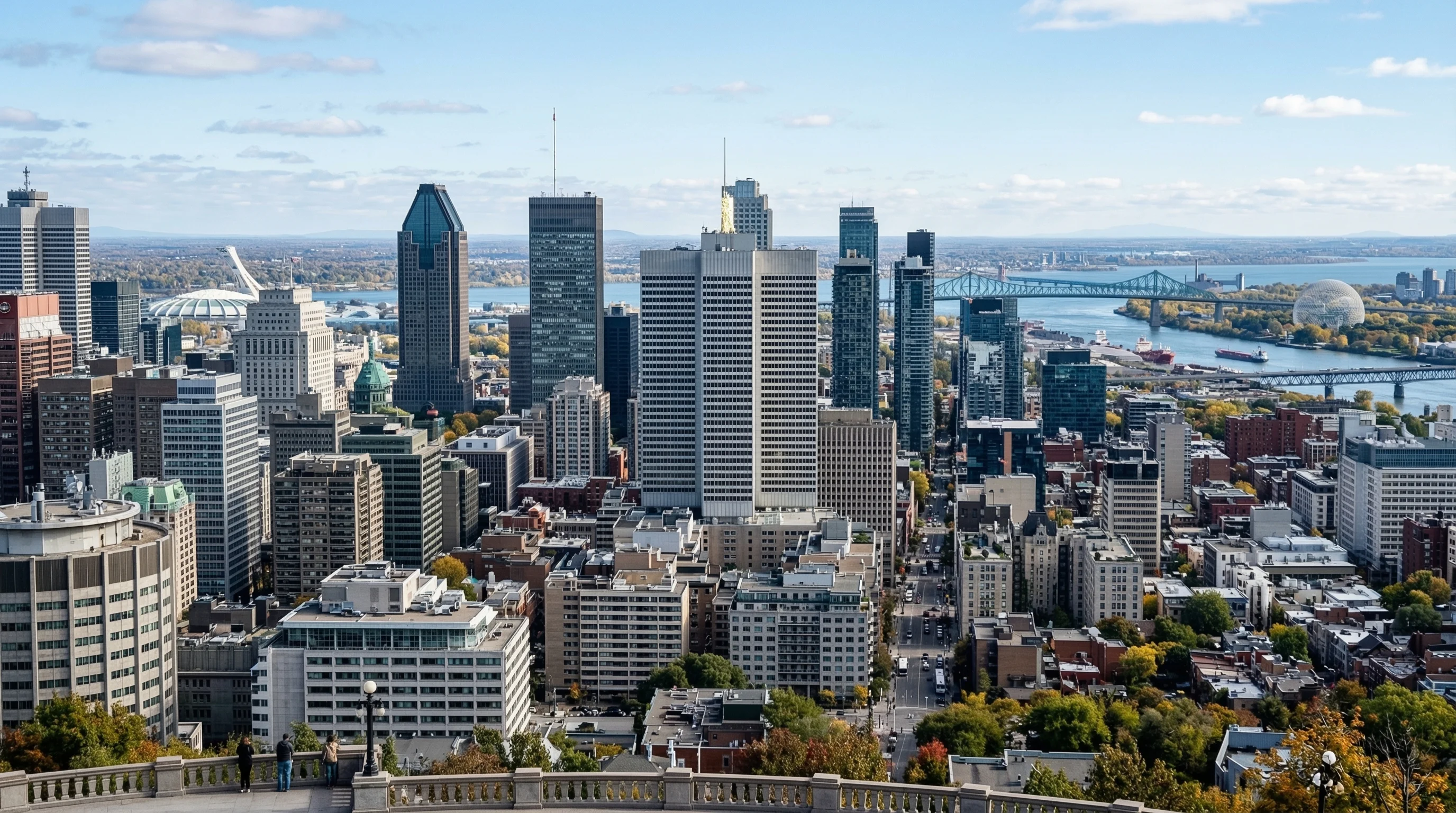
Montreal, Quebec stands as a premier logistics gateway for eastern Canada and the northeastern United States, leveraging its strategic location on the St. Lawrence River. As Canada's second-largest city and a major port, Montreal offers unparalleled access to both domestic and international markets. The city's economy is highly diversified, with significant presence in aerospace, pharmaceuticals, technology, finance, and creative industries. Montreal's Port is the largest inland port in North America and remains ice-free year-round, providing consistent shipping capabilities. The city is served by Montreal-Pierre Elliott Trudeau International Airport and benefits from an extensive network of highways, including Autoroutes 10, 15, and 40, which connect to the broader Canadian and U.S. transportation systems. Montreal's bilingual workforce and its position as a NAFTA/USMCA trade corridor hub make it an essential destination for companies engaged in North American commerce.










