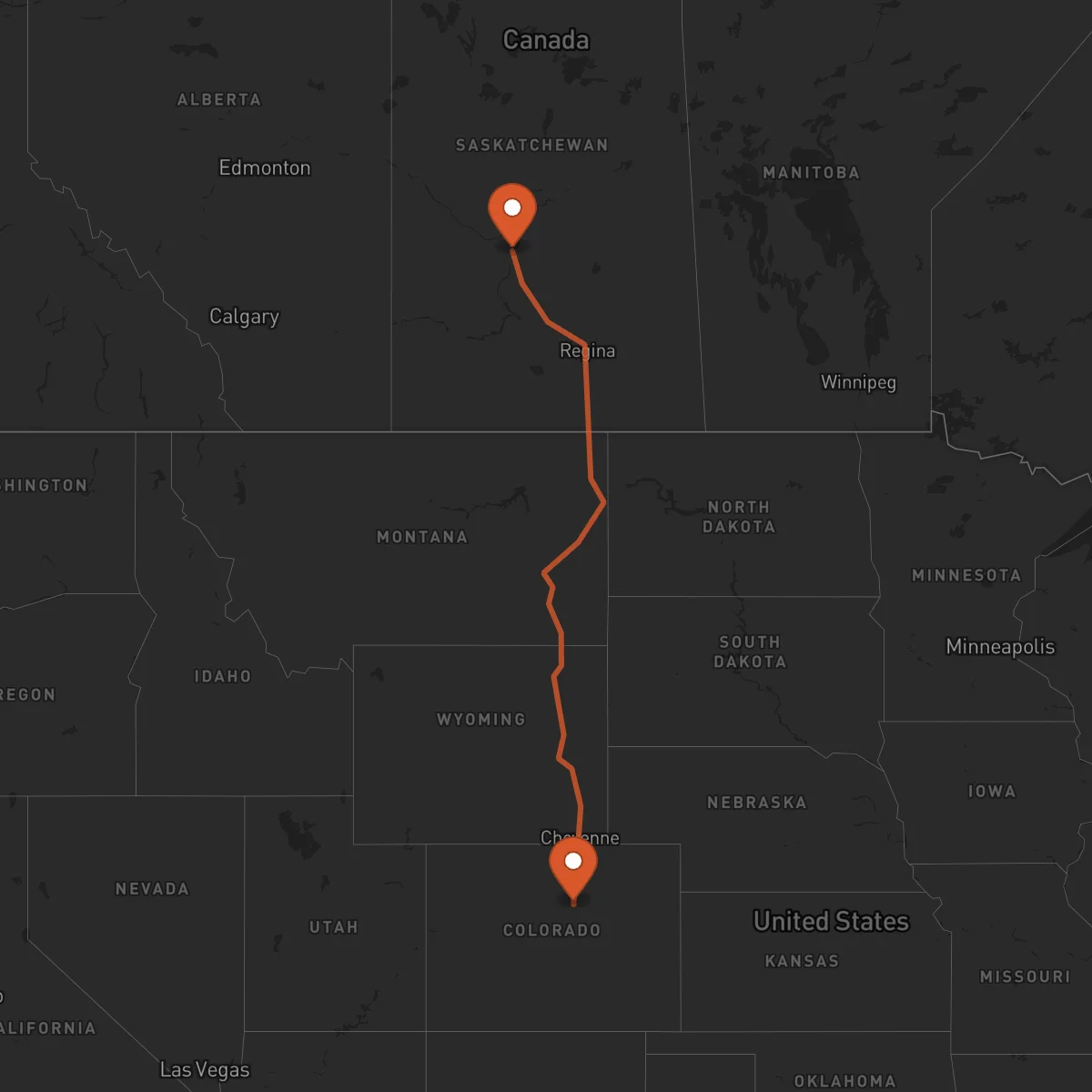
Denver to Saskatoon
Saskatoon → DenverFTL freight transportation service between Denver and Saskatoon. Reliable logistics solutions for your business.
Route Description
Everything you need to know about the corridor Denver - Saskatoon
The Denver to Saskatoon corridor represents a vital cross-border freight route connecting the dynamic industrial centers of Colorado and Saskatchewan. This strategic transportation artery spans approximately 1,387 kilometers through the heart of North America, facilitating the movement of goods between the United States and Canada. The route traverses diverse terrain and crosses the international border, requiring specialized expertise in customs clearance and cross-border regulations.
This corridor serves as a critical link for industries on both sides of the border, particularly in sectors such as agriculture, energy, mining, and manufacturing. Denver's proximity to major distribution centers and Saskatoon's role as a key agricultural and mining hub make this route essential for just-in-time supply chains. The corridor benefits from well-maintained highway infrastructure, including major routes like I-25 and I-90, which provide reliable access for freight transportation.
Control Terrestre specializes in managing the complexities of this cross-border corridor, offering comprehensive FTL services that ensure seamless transit between Denver and Saskatoon. Our expertise in customs documentation, border crossing procedures, and regulatory compliance helps minimize delays and optimize transit times. With our network of certified carriers and strategic partnerships, we provide reliable, efficient transportation solutions that keep your supply chain moving smoothly across international borders.
Services for this Route
Available services for the corridor Denver - Saskatoon
 Origin
Denver
Denver, Colorado serves as a strategic logistics hub in the western United States, offering exceptional connectivity and infrastructure for freight transportation. Located at the intersection of major interstate highways, Denver provides direct access to key markets across the western and central regions of the country. The city's economy is diverse and robust, with strong sectors in technology, aerospace, energy, and agriculture, creating consistent demand for freight services.
The Denver metropolitan area boasts extensive transportation infrastructure, including Denver International Airport, one of the busiest cargo airports in the nation, and a comprehensive network of rail and trucking routes. The city's central location in the Mountain Time Zone makes it an ideal distribution point for reaching both coastal regions and the Midwest efficiently. With its growing population and business-friendly environment, Denver continues to strengthen its position as a critical logistics center for cross-border and domestic freight movements.
 Destination
Saskatoon
Saskatoon, Saskatchewan stands as a vital economic and logistics center in central Canada, strategically positioned to serve the vast agricultural and mining regions of the Prairie Provinces. As Saskatchewan's largest city, Saskatoon has developed into a major distribution hub, particularly for agricultural products, potash, and other natural resources that are key exports for the region. The city's location on the South Saskatchewan River provides additional logistical advantages for certain types of freight movements.
The transportation infrastructure in Saskatoon is well-developed, featuring access to major highways like the Yellowhead Highway (Highway 16) and proximity to the Canadian National Railway mainline. The city's industrial areas are equipped with modern warehousing and distribution facilities, supporting efficient freight handling and storage. Saskatoon's growing economy, driven by agriculture, mining, and technology sectors, creates consistent demand for reliable freight transportation services connecting it to major markets in the United States and across Canada.










