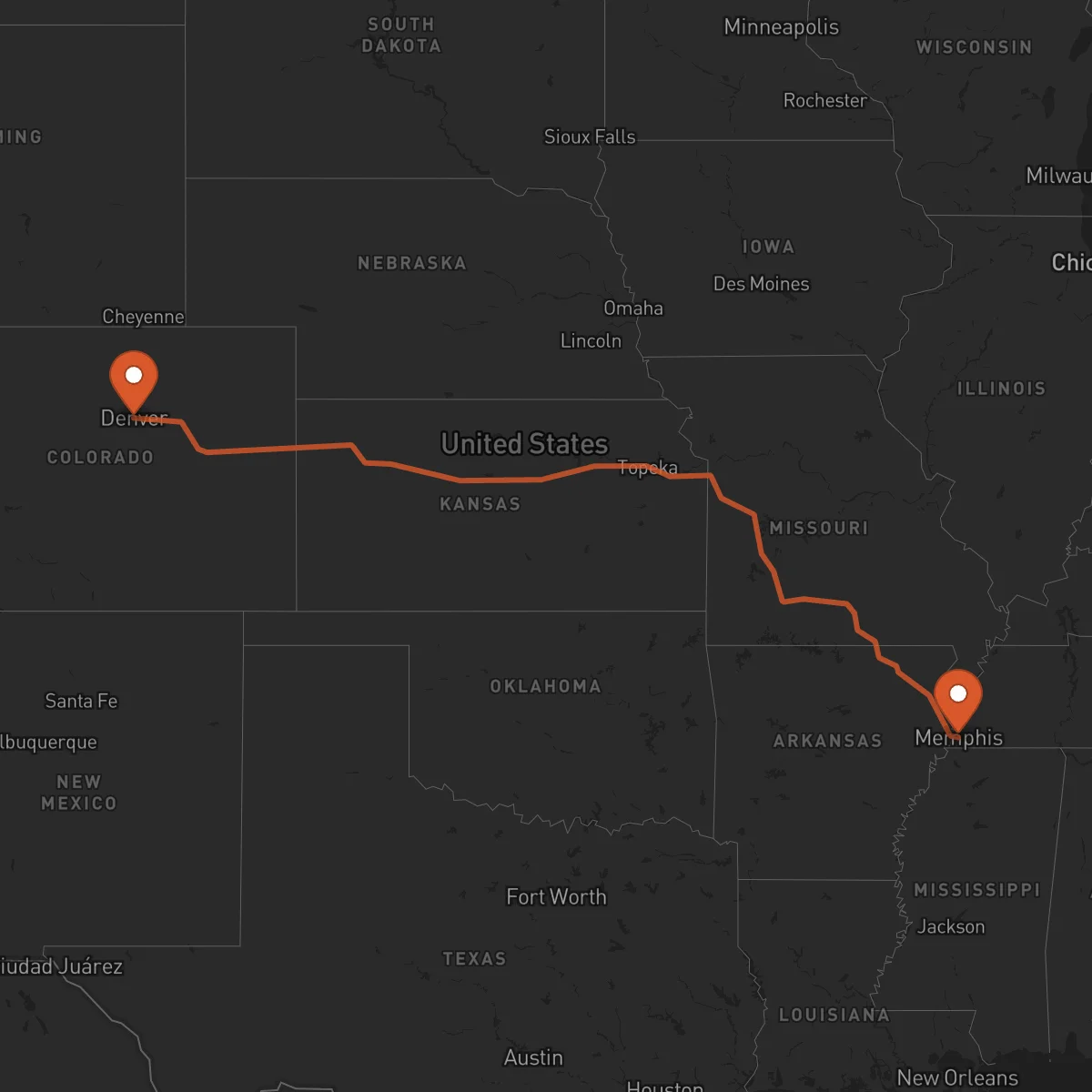
Denver to Memphis
Memphis → DenverFTL freight transportation service between Denver and Memphis. Reliable logistics solutions for your business.
Route Description
Everything you need to know about the corridor Denver - Memphis
The Denver-Memphis corridor represents a vital logistics link connecting the Rocky Mountain region with the central United States. This 1412 km route traverses diverse terrain and crosses multiple states, facilitating the movement of goods between Colorado's mountainous terrain and Tennessee's Mississippi River basin. The corridor serves as a critical artery for freight transportation, connecting major industrial centers and supporting the economic integration of the American heartland with the western states.
The economic significance of this corridor extends beyond its geographic span. Denver, as a major hub for technology, aerospace, and energy industries, generates substantial freight volume moving eastward. Memphis, with its world-renowned logistics infrastructure including FedEx's global headquarters and the second-largest cargo airport in the world, serves as a crucial distribution center for the eastern United States. The corridor benefits from this complementary economic relationship, where Denver's production capabilities meet Memphis's distribution expertise.
This route primarily serves industries such as technology equipment, aerospace components, energy products, agricultural goods, and manufactured products. The transportation infrastructure includes major highways like I-70 and I-40, providing reliable connections across the continental United States. Control Terrestre leverages this established infrastructure to provide efficient FTL transportation services, ensuring that freight moves seamlessly between these strategic locations while maintaining the high standards of safety and reliability that our clients expect.
Services for this Route
Available services for the corridor Denver - Memphis
 Origin
Denver
Denver, Colorado serves as a strategic logistics hub positioned at the intersection of major transportation routes in the western United States. Located at the base of the Rocky Mountains, Denver benefits from its central location within the Mountain Time Zone, providing advantageous access to both coastal and inland markets. The city's elevation and geographic position have fostered the development of specialized logistics capabilities, particularly for industries requiring temperature-controlled or specialized handling.
The Denver metropolitan area hosts a diverse industrial base including aerospace, technology, energy (particularly renewable energy), and advanced manufacturing sectors. Major employers such as Lockheed Martin, Ball Aerospace, and numerous tech companies generate significant freight volumes requiring reliable transportation solutions. Denver's transportation infrastructure includes Denver International Airport, one of the largest airports in the world by land area, extensive rail connections, and a well-developed highway network including I-70, I-25, and I-76, providing multiple routing options for freight movement.
 Destination
Memphis
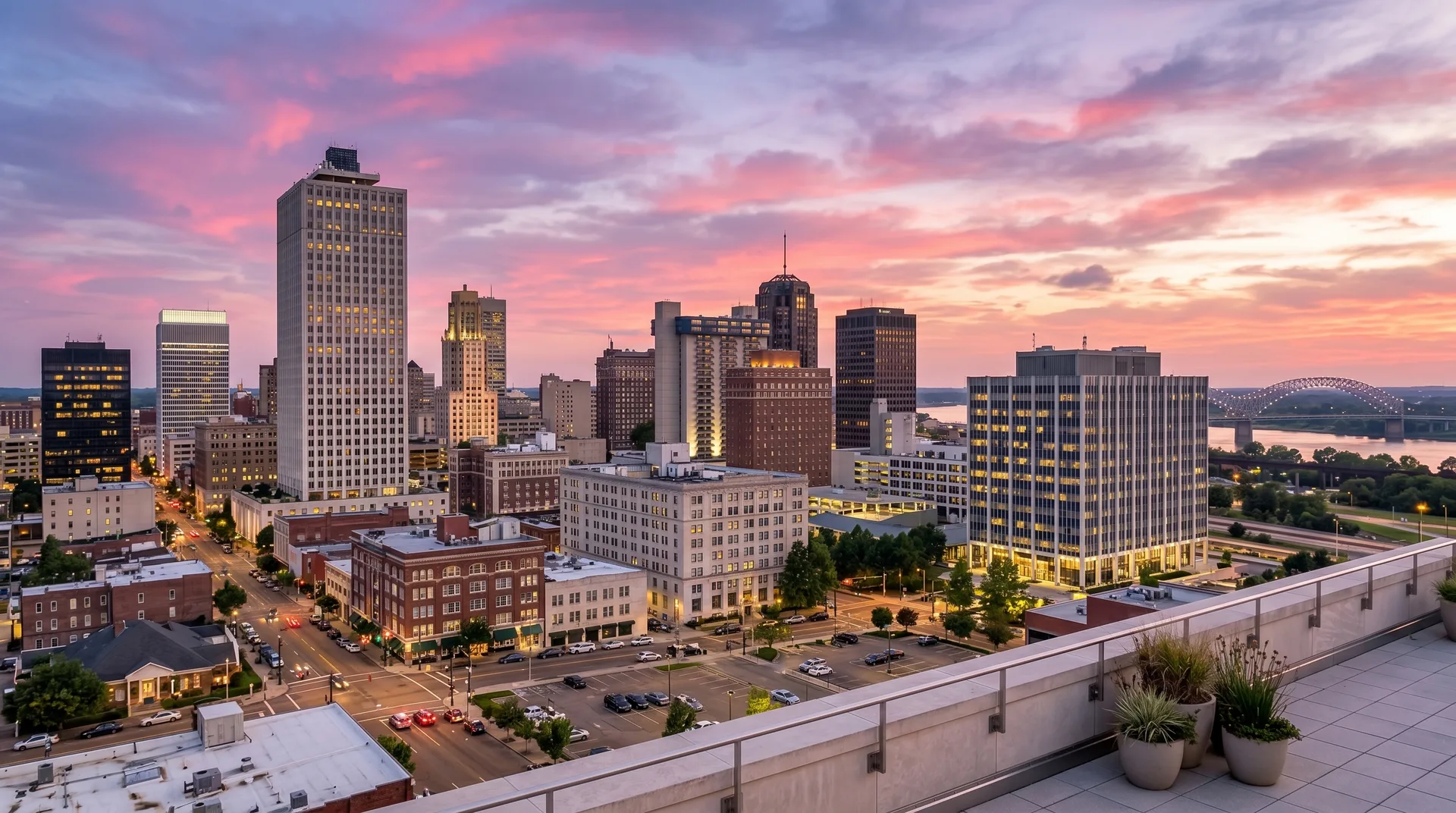
Memphis, Tennessee stands as one of America's most strategically positioned logistics centers, located at the crossroads of major east-west and north-south transportation corridors. The city's location on the Mississippi River, combined with its central position in the eastern United States, provides unparalleled access to major markets within a day's drive. Memphis benefits from its status as a logistics hub, with FedEx's global operations headquartered there and the Memphis International Airport handling more air cargo than any other airport in the Americas.
The Memphis metropolitan area features a robust industrial base centered around logistics, distribution, healthcare, and manufacturing. The city's logistics infrastructure includes the FedEx Express World Hub, extensive intermodal facilities, multiple Class I railroads, and the Port of Memphis on the Mississippi River. Major highways such as I-40, I-55, and I-69 converge in Memphis, creating a comprehensive transportation network that enables efficient movement of goods throughout the eastern United States and beyond.










