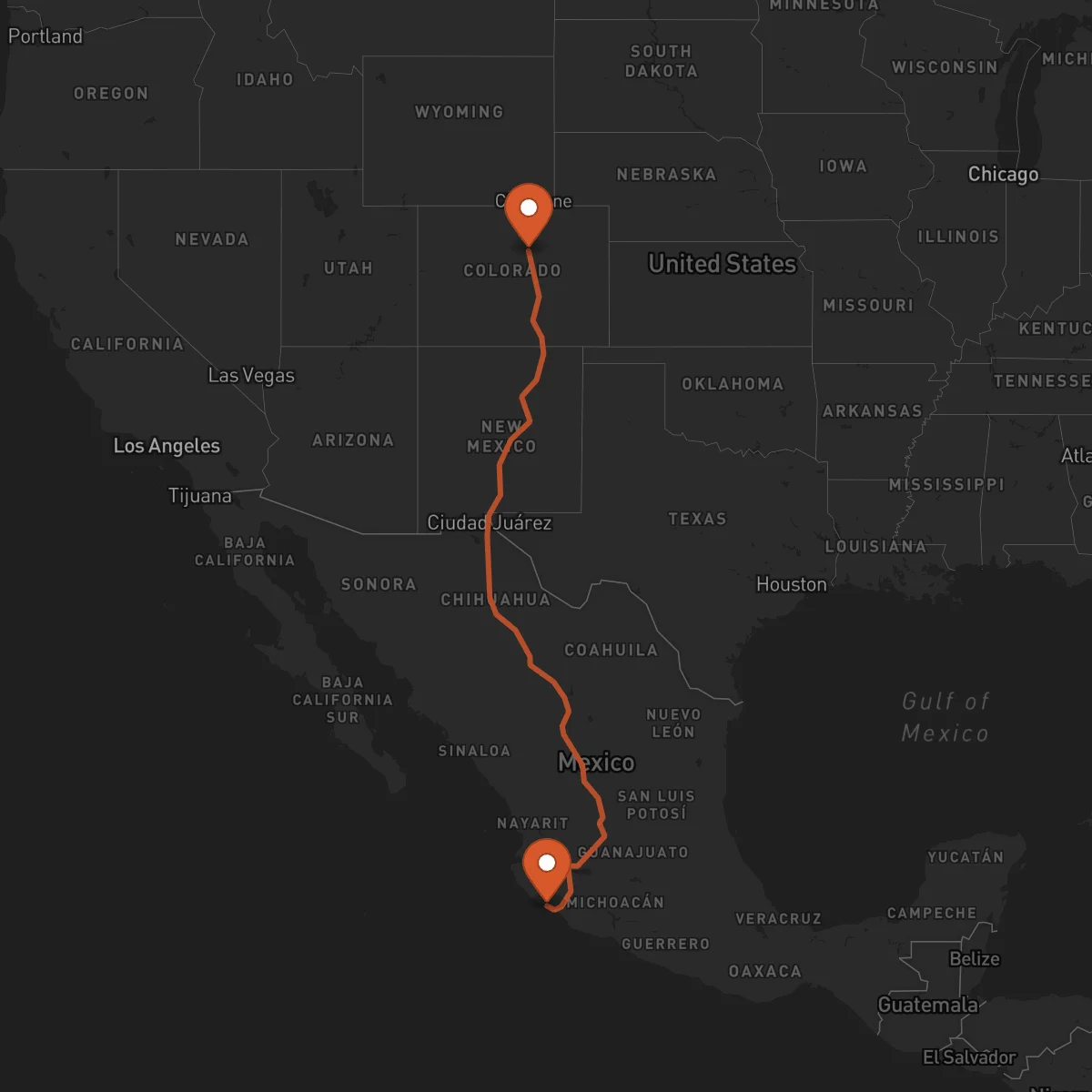
Denver to Manzanillo
Manzanillo → DenverFTL freight transportation service between Denver and Manzanillo. Reliable logistics solutions for your business.
Route Description
Everything you need to know about the corridor Denver - Manzanillo
The Denver to Manzanillo corridor represents a vital link in North American supply chains, connecting the economic powerhouse of Colorado with one of Mexico's most important Pacific ports. This cross-border route spans approximately 2,301 kilometers and serves as a crucial artery for industrial and commercial goods moving between the United States and Mexico. The corridor leverages Denver's strategic location as a transportation hub in the Rocky Mountain region and Manzanillo's position as Mexico's busiest cargo port, creating a seamless logistics chain from inland manufacturing centers to international maritime shipping.
This route is particularly significant for industries such as automotive manufacturing, electronics, agricultural products, and industrial equipment. Denver's robust economy, anchored by technology, aerospace, and energy sectors, generates substantial freight volume that requires efficient transportation to Mexican markets and beyond. The corridor benefits from well-maintained interstate highways including I-25 and I-40, which provide reliable connections through key border crossings such as El Paso-Ciudad Juárez or Laredo-Nuevo Laredo. Control Terrestre's expertise in cross-border logistics ensures smooth customs clearance and regulatory compliance, minimizing delays and optimizing transit times for our clients' critical shipments.
Control Terrestre facilitates seamless operations along this corridor through our extensive network of certified carriers and our deep understanding of cross-border requirements. Our C-TPAT and FAST certifications enable expedited processing at customs checkpoints, while our dedicated team manages all documentation and compliance issues. We provide full truckload (FTL) services that cater to the specific needs of industries relying on this route, offering specialized equipment options including refrigerated units for temperature-sensitive goods and flatbed trailers for oversized cargo. Our commitment to reliability and efficiency makes us the preferred partner for companies seeking to optimize their Denver-Manzanillo supply chain operations.
Services for this Route
Available services for the corridor Denver - Manzanillo
 Origin
Denver
Denver, Colorado serves as a strategic logistics hub in the western United States, offering exceptional connectivity to major markets across the country. Located at the intersection of several major interstate highways, Denver provides direct access to both coastal ports and inland manufacturing centers. The city's economy is diverse and robust, with key industries including aerospace, technology, telecommunications, energy, and healthcare. Denver's central location in the Rocky Mountain region makes it an ideal starting point for cross-country and cross-border freight movements. The city benefits from Denver International Airport, one of the largest airports in the world by land area, and an extensive rail network operated by Union Pacific and BNSF Railway. The surrounding area features numerous industrial parks and distribution centers, creating a dense concentration of logistics infrastructure that supports efficient freight handling and distribution operations.
 Destination
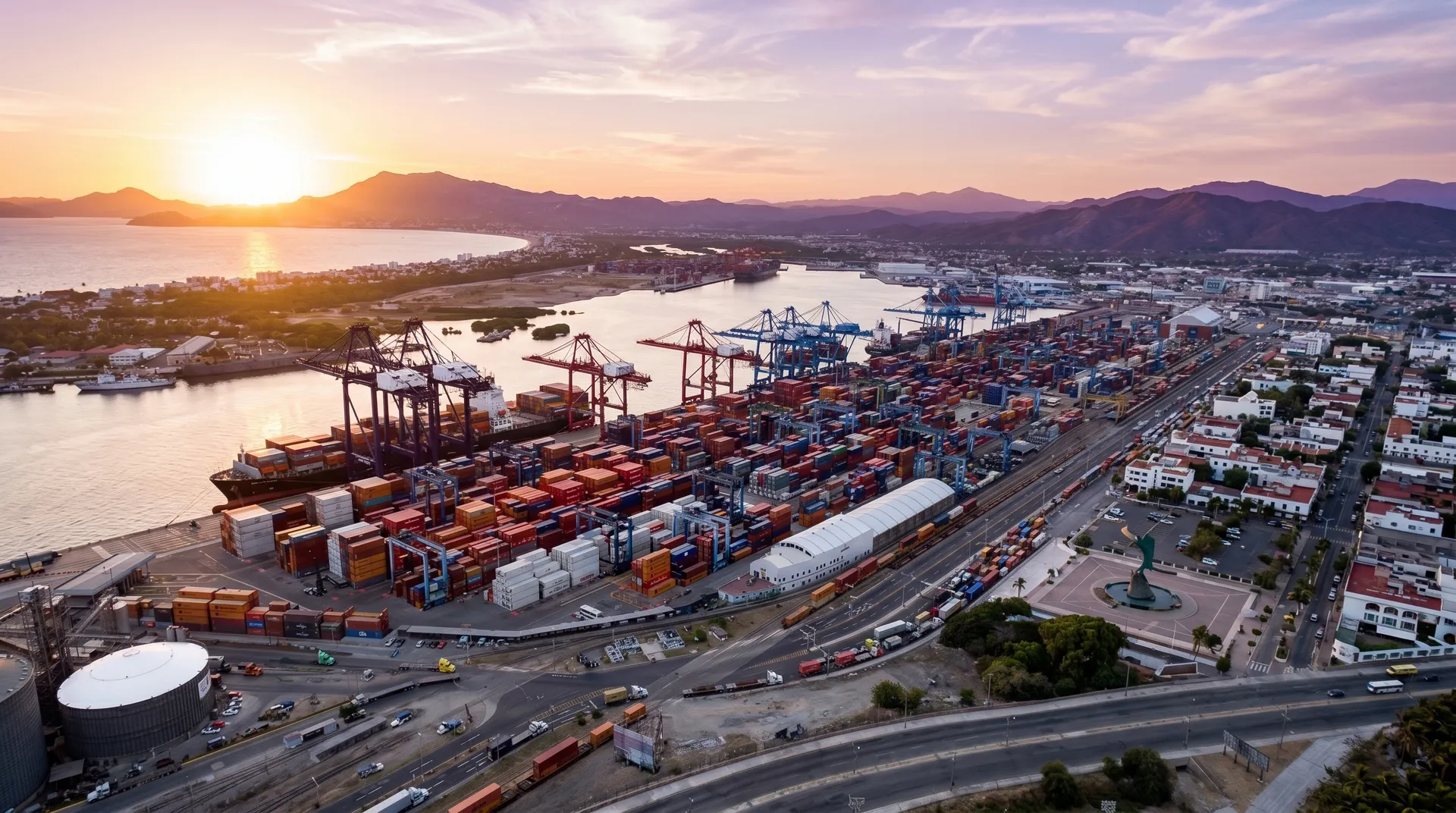
Manzanillo, Colima stands as Mexico's premier Pacific port and one of the busiest cargo ports in Latin America, making it a critical gateway for international trade. The port handles over 2.5 million TEUs annually and specializes in containerized cargo, automobiles, and bulk commodities. Manzanillo's strategic location on Mexico's Pacific coast provides direct maritime connections to Asia, the United States, and South America, serving as a vital link in global supply chains. The surrounding region has developed a strong industrial base, with particular strengths in automotive manufacturing, electronics assembly, and food processing. The port's modern infrastructure includes multiple container terminals, specialized facilities for automobiles and bulk cargo, and efficient rail connections to Mexico's interior. The recently expanded rail links to Mexico City and other major industrial centers ensure seamless inland distribution, while the port's proximity to major highways facilitates efficient truck transportation throughout the country.










