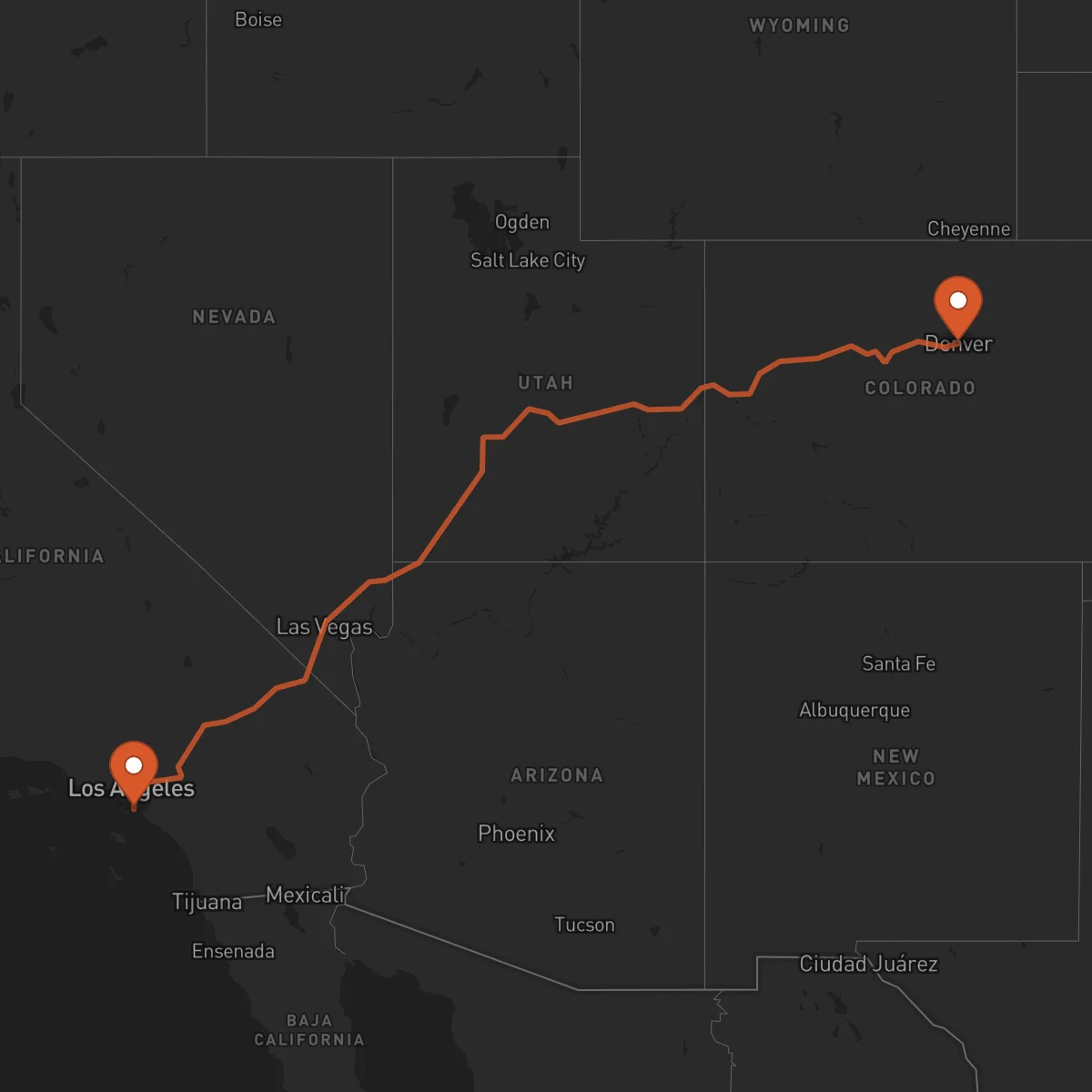
Denver to Long Beach
Long Beach → DenverFTL freight transportation service between Denver and Long Beach. Reliable logistics solutions for your business.
Route Description
Everything you need to know about the corridor Denver - Long Beach
The Denver to Long Beach corridor represents a vital logistics link connecting the Rocky Mountain region with one of the busiest ports on the West Coast. This 1349 km route traverses diverse terrain and connects major economic hubs, facilitating the movement of goods between Colorado's industrial centers and Southern California's extensive distribution networks. The corridor's strategic importance has grown significantly with the expansion of e-commerce and just-in-time manufacturing practices.
The region's economic landscape is characterized by Denver's strong aerospace, technology, and energy sectors, complemented by Long Beach's dominance in international trade, automotive distribution, and advanced manufacturing. Key industries utilizing this corridor include automotive parts, high-tech equipment, consumer electronics, and industrial machinery. The route also serves as a crucial link for companies managing inventory between inland warehouses and coastal distribution centers.
Transportation infrastructure along this corridor includes major highways such as I-70, I-15, and I-710, providing reliable access for freight movement. Control Terrestre leverages this established infrastructure through our network of certified carriers, offering dedicated FTL services that ensure cargo moves efficiently without intermediate stops. Our specialized equipment options, including temperature-controlled units and flatbeds, accommodate the diverse freight needs of companies operating along this corridor.
Services for this Route
Available services for the corridor Denver - Long Beach
 Origin
Denver
Denver serves as a strategic logistics hub in the Rocky Mountain region, benefiting from its central location and excellent transportation connections. The city's elevation and climate create unique freight handling considerations, particularly for temperature-sensitive cargo. Denver's economy is anchored by aerospace manufacturing, technology companies, energy firms, and a growing craft beverage industry. The city's transportation infrastructure includes Denver International Airport, extensive rail connections through Union Pacific and BNSF, and direct highway access via I-70 and I-25. The region's concentration of warehouses and distribution centers makes it an ideal origin point for freight moving to coastal destinations.
 Destination
Long Beach
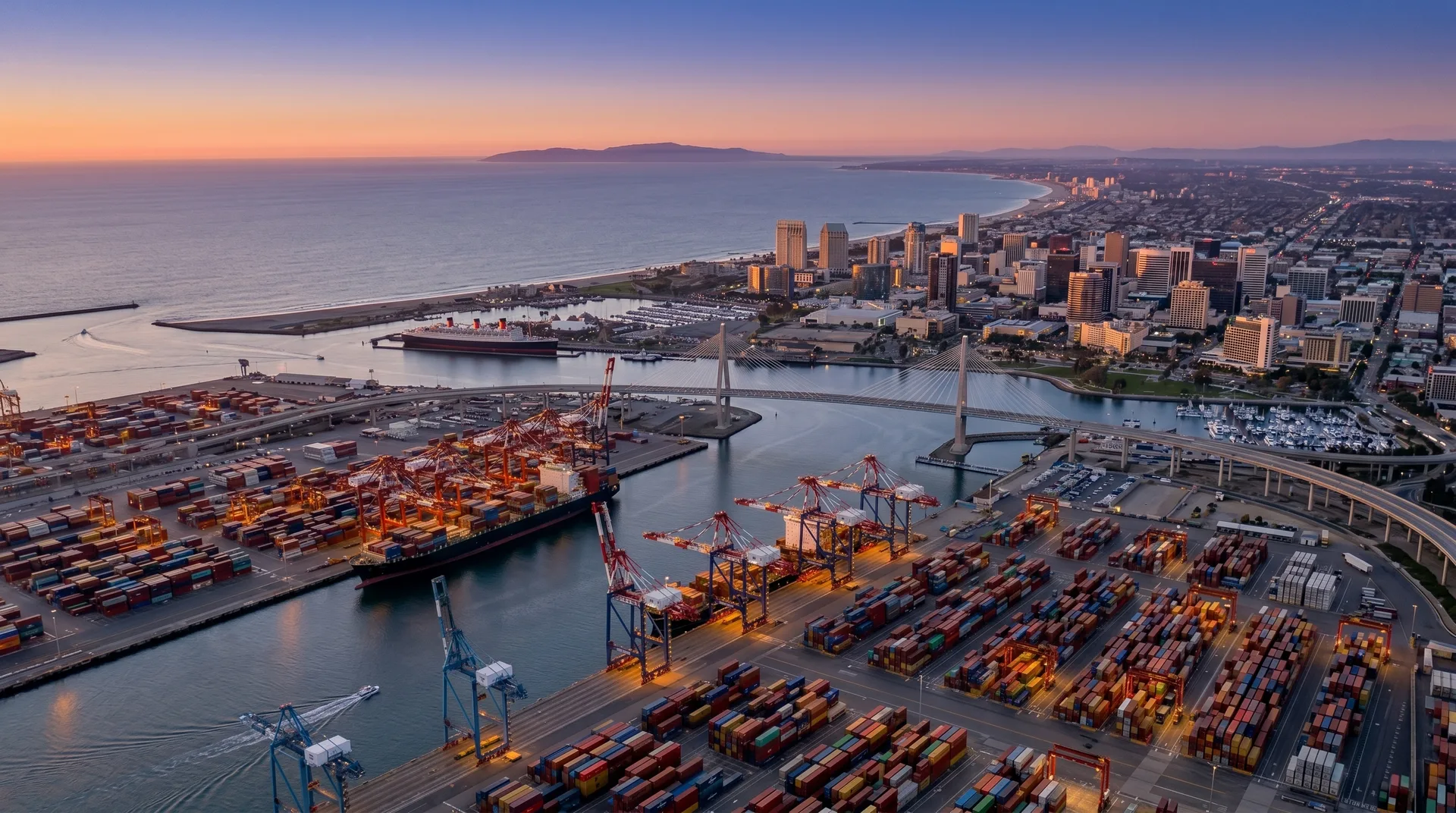
Long Beach stands as a critical logistics gateway on the West Coast, home to one of the largest container ports in the United States. The city's strategic location near the Port of Long Beach and Port of Los Angeles creates a dense network of warehousing, distribution centers, and manufacturing facilities. Long Beach's economy is heavily influenced by international trade, with strong automotive, aerospace, and electronics sectors. The region's transportation infrastructure includes extensive port facilities, rail yards served by major Class I railroads, and highway connections via I-710 and I-405. The concentration of logistics operations in the area creates efficient last-mile delivery opportunities for freight arriving from inland locations.










