Denver to Lansing
Lansing → DenverFTL freight transportation service between Denver and Lansing. Reliable logistics solutions for your business.
Route Description
Everything you need to know about the corridor Denver - Lansing
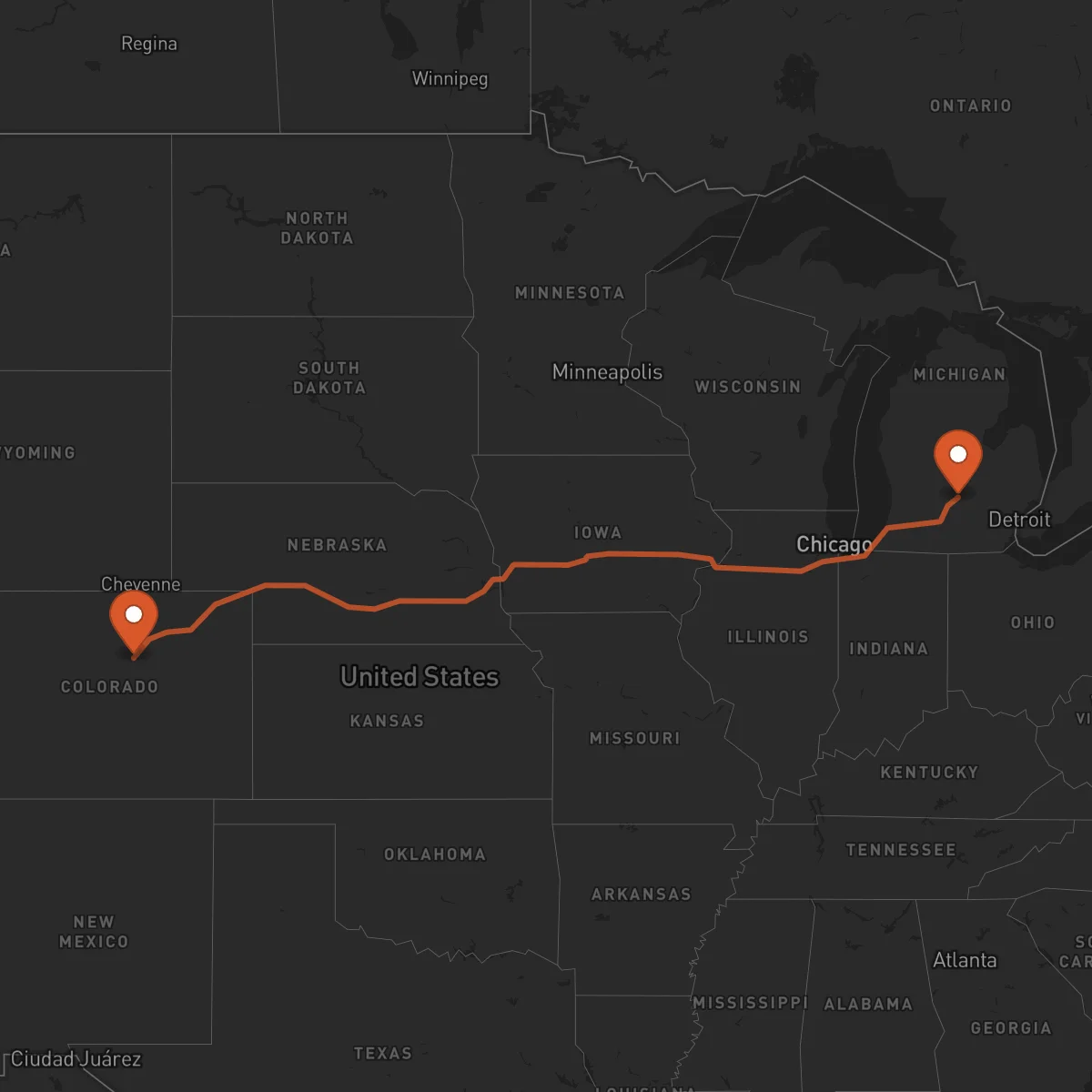
The Denver to Lansing corridor represents a vital freight transportation link between the Rocky Mountain region and the industrial Midwest. This 1736 km domestic route connects Colorado's capital with Michigan's state capital, facilitating the movement of goods between two economically significant regions of the United States.
The corridor traverses diverse terrain and crosses multiple state lines, making it essential for industries requiring reliable full truckload (FTL) transportation services. Control Terrestre specializes in managing this route through our network of certified transportation providers, ensuring seamless door-to-door delivery regardless of weather conditions or seasonal challenges.
Major highways serving this corridor include I-76, I-80, and I-94, providing multiple routing options for optimal transit times and fuel efficiency. The route passes through key logistics hubs in Nebraska, Iowa, Illinois, and Indiana, allowing for strategic planning and real-time tracking capabilities.
Our expertise in handling full truckload shipments on this corridor ensures that businesses can maintain consistent supply chains between these two important markets. Whether transporting manufacturing components, agricultural products, or industrial equipment, Control Terrestre provides the dedicated transportation solutions necessary for successful freight movement along this critical North American route.
Services for this Route
Available services for the corridor Denver - Lansing
 Origin
Denver
Denver serves as a strategic logistics hub in the Rocky Mountain region, offering unique advantages for freight transportation. Located at the intersection of major interstates I-25 and I-70, Denver provides direct access to both east-west and north-south freight corridors. The city's elevation and central location within the Mountain Time Zone make it an ideal distribution point for companies serving the western United States.
The Denver metropolitan area hosts a diverse industrial base including aerospace, technology, telecommunications, and energy sectors. The region is also a significant producer of agricultural products and natural resources, creating substantial freight volumes moving through the area. Denver International Airport and the city's extensive rail network complement the robust trucking infrastructure, providing multimodal transportation options for businesses.
 Destination
Lansing
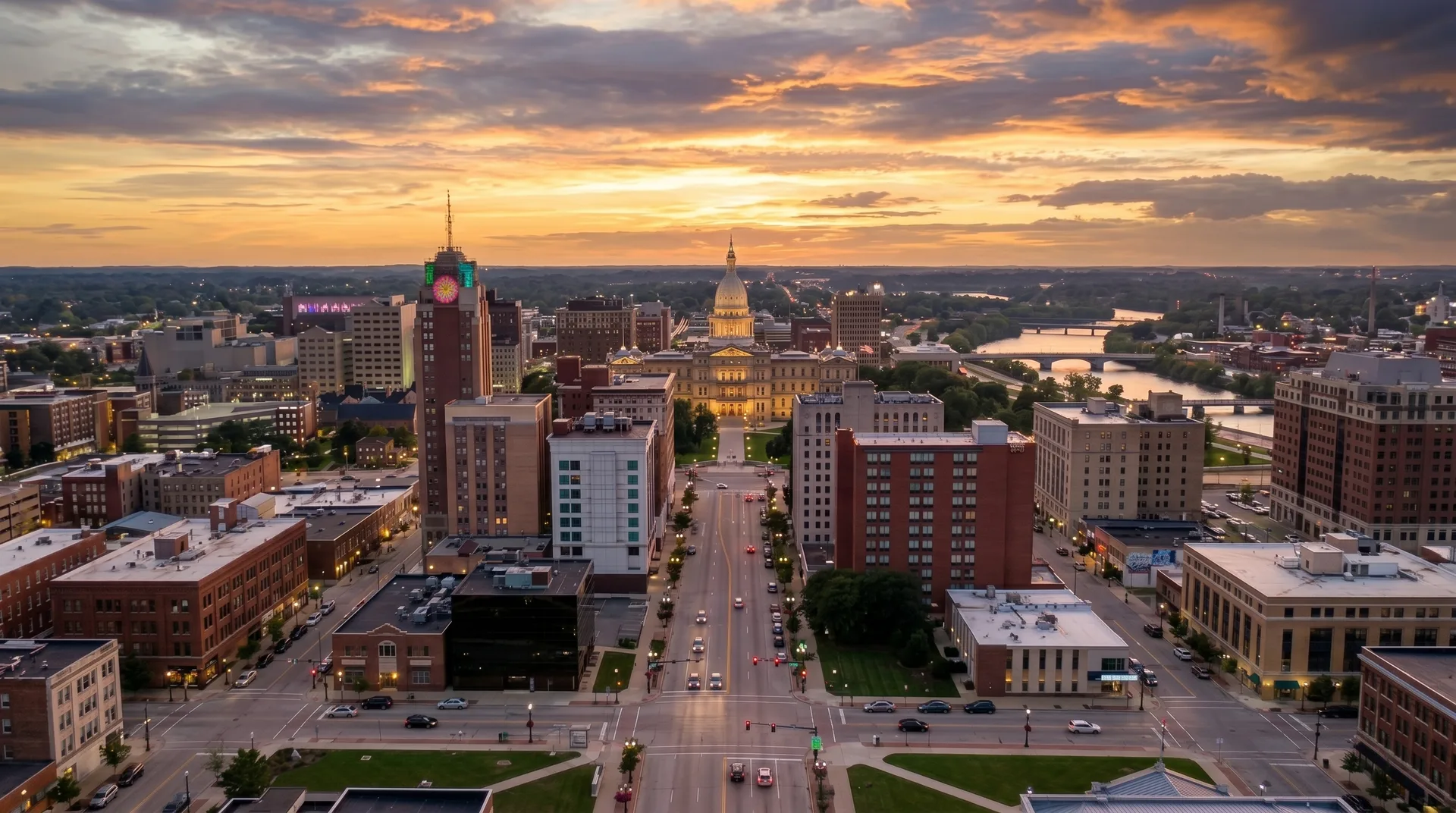
Lansing functions as a key logistics center in Michigan's Lower Peninsula, strategically positioned to serve the Great Lakes industrial region. The city's location along I-96 provides direct connections to Detroit, Grand Rapids, and other major Michigan markets. Lansing's transportation infrastructure includes multiple interstate connections and proximity to Port Lansing, offering multimodal freight solutions for businesses operating in the region.
The Lansing area is characterized by its manufacturing heritage, particularly in the automotive and agricultural equipment sectors. The presence of Michigan State University also contributes to a knowledge-based economy with significant research and development activities. These diverse economic drivers create consistent demand for full truckload transportation services connecting Lansing with other major markets across the United States.










