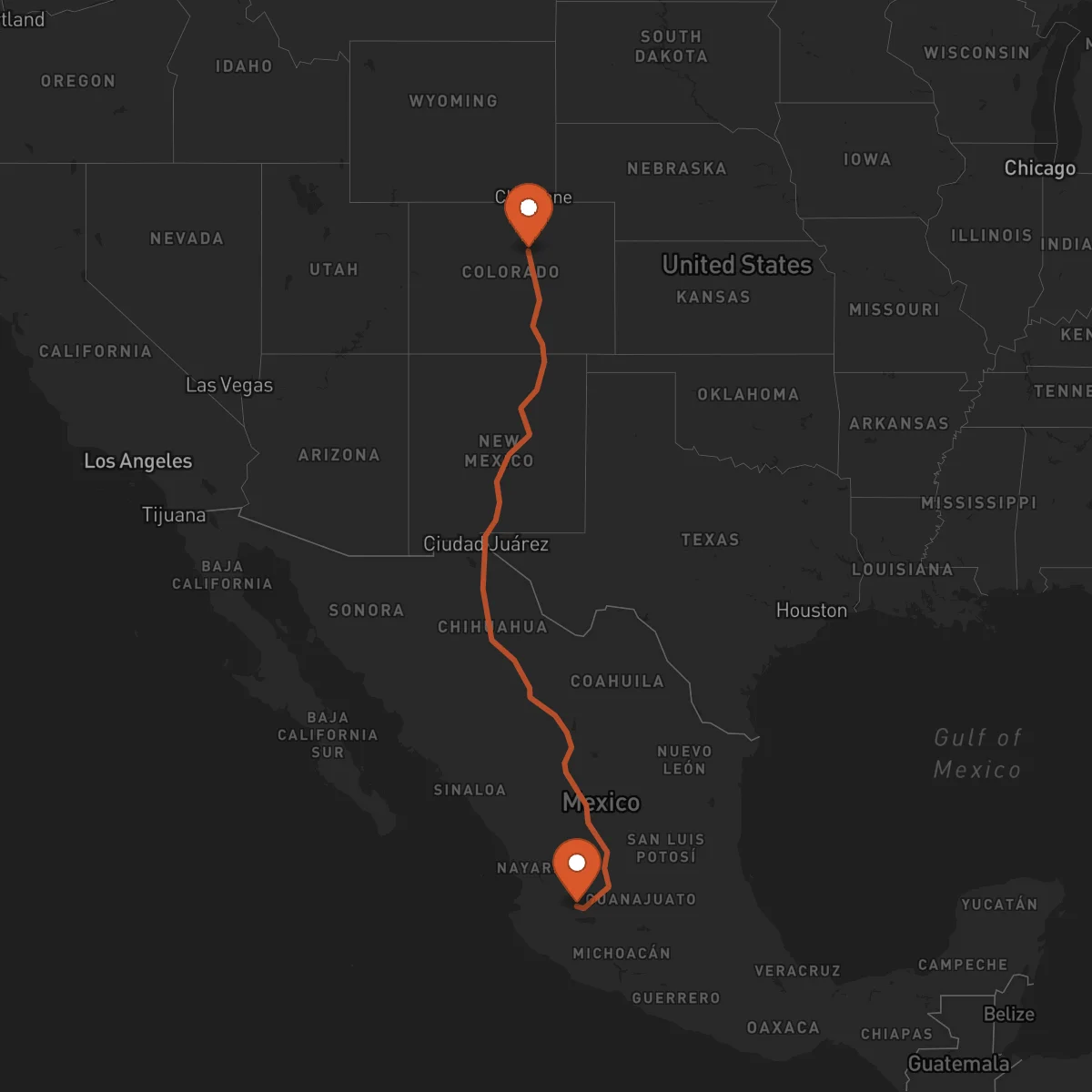
Denver to Guadalajara
Guadalajara → DenverFTL freight transportation service between Denver and Guadalajara. Reliable logistics solutions for your business.
Route Description
Everything you need to know about the corridor Denver - Guadalajara
The Denver to Guadalajara corridor represents a vital cross-border logistics connection between the United States and Mexico. This strategic route spans approximately 2,126 kilometers and serves as a crucial link between Colorado's industrial heartland and Jalisco's manufacturing powerhouse. The corridor facilitates the movement of diverse cargo types, from automotive parts and electronics to agricultural products and industrial equipment, supporting the robust trade relationship between these two nations.
The transportation infrastructure along this route is well-developed, primarily utilizing major highways including I-25 southbound from Denver, connecting to I-40 and eventually Mexican Federal Highways 45 and 15. The primary border crossing at Nuevo Laredo provides efficient customs processing for freight vehicles, while alternative crossings at Juarez and Reynosa offer flexibility during peak periods. Control Terrestre's expertise in navigating these border crossings ensures smooth transitions and minimal delays for our clients' shipments.
This corridor particularly benefits from the strong industrial presence in both regions. Denver serves as a major distribution hub for the Rocky Mountain region, while Guadalajara has established itself as Mexico's Silicon Valley, hosting numerous technology companies and manufacturing facilities. Our comprehensive cross-border services include customs brokerage, dedicated transportation solutions, and real-time tracking capabilities that keep clients informed throughout the journey. We understand the unique challenges of this route, including varying terrain, climate conditions, and regulatory requirements, allowing us to provide reliable, full truckload transportation solutions that meet the specific needs of each shipment.
Services for this Route
Available services for the corridor Denver - Guadalajara
 Origin
Denver
Denver, Colorado serves as a strategic logistics hub in the western United States, offering excellent connectivity to major markets across the country. Located at the intersection of I-25 and I-70, Denver provides direct access to both east-west and north-south transportation corridors. The city's elevation of 5,280 feet above sea level positions it as a natural distribution center for the Rocky Mountain region, with its central location allowing for efficient three-day delivery to both coasts.
The Denver metropolitan area hosts a diverse industrial base, including aerospace, technology, energy, and manufacturing sectors. The city's robust economy is supported by Denver International Airport, one of the largest cargo airports in the nation, and extensive rail connections through Union Pacific and BNSF rail networks. The region's concentration of warehouses, distribution centers, and manufacturing facilities creates substantial freight movement, particularly in specialized cargo such as aerospace components, electronics, and industrial equipment.
 Destination
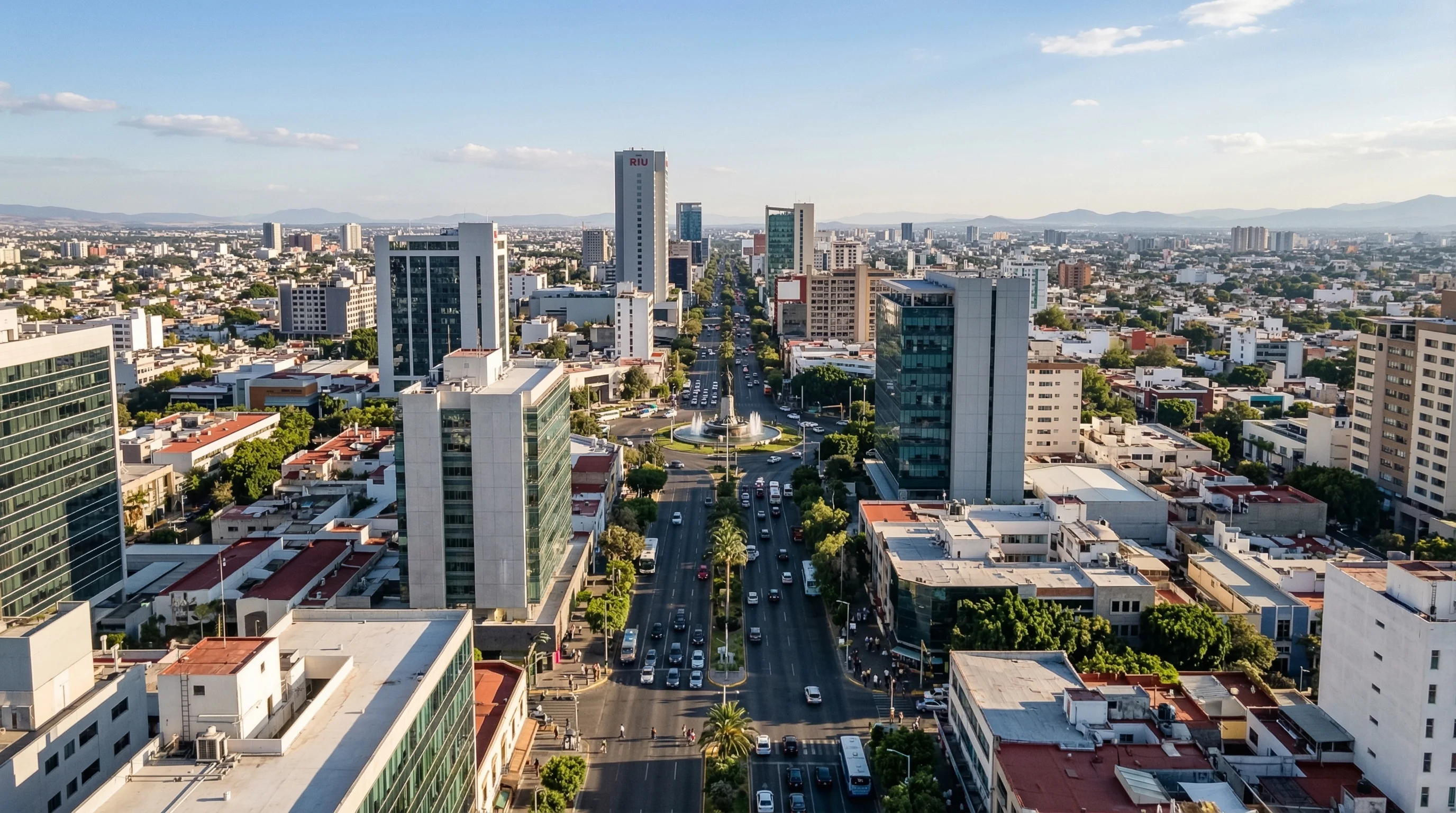
Guadalajara, Jalisco stands as Mexico's second-largest metropolitan area and a major industrial and technological center. Known as the country's Silicon Valley, Guadalajara hosts a thriving electronics and IT manufacturing sector, with numerous multinational companies operating advanced manufacturing facilities. The city's strategic location in western Mexico provides excellent access to both Pacific ports and the central Mexican market, making it a crucial node in North American supply chains.
The region benefits from a well-developed transportation infrastructure, including the Miguel Hidalgo y Costilla International Airport and an extensive network of federal highways connecting to Mexico City, the United States border, and Pacific ports. Guadalajara's industrial parks are equipped with modern facilities for manufacturing, assembly, and distribution operations. The area's skilled workforce, particularly in engineering and technology fields, has attracted significant foreign investment, creating a robust demand for reliable freight transportation services to and from the United States.










