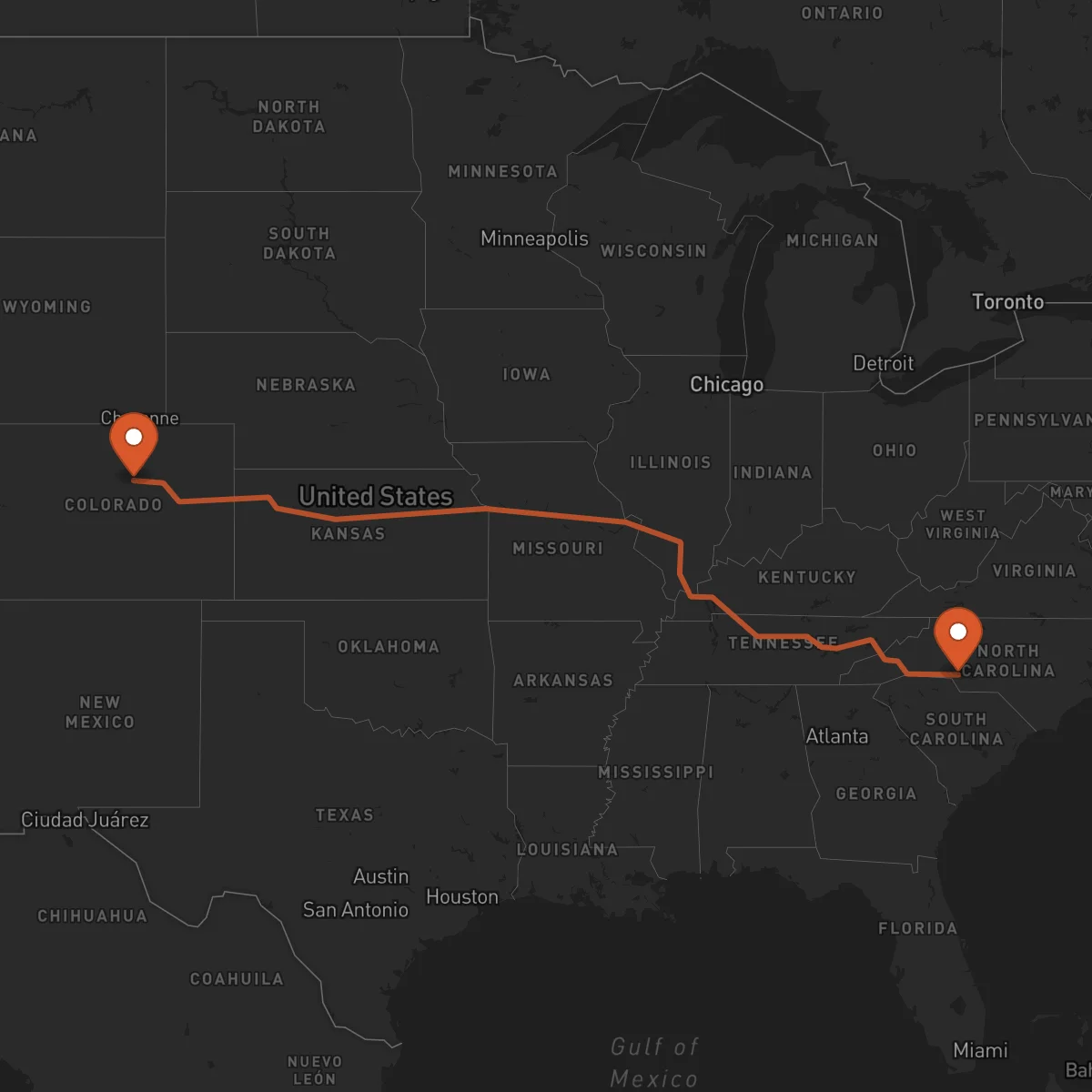
Denver to Charlotte
Charlotte → DenverFTL freight transportation service between Denver and Charlotte. Reliable logistics solutions for your business.
Route Description
Everything you need to know about the corridor Denver - Charlotte
The Denver to Charlotte corridor is a vital logistics route connecting the Rocky Mountain region with the Southeast, spanning approximately 2,182 kilometers across the United States. This strategic transportation link serves as a crucial artery for freight movement between Colorado's growing industrial base and North Carolina's manufacturing and distribution hubs. The route traverses diverse terrain and crosses multiple states, making it essential for companies requiring reliable full truckload (FTL) transportation services.
This corridor supports numerous industries including automotive manufacturing, aerospace components, technology equipment, and consumer goods distribution. Denver serves as a major gateway for goods moving between the West Coast and Midwest, while Charlotte has established itself as a key logistics center for the Southeast region. The route primarily utilizes major interstate highways including I-70, I-64, and I-77, providing efficient access to key distribution points along the way.
Control Terrestre specializes in optimizing full truckload transportation along this critical corridor, offering dedicated services that ensure timely and secure delivery of freight. Our extensive network of certified carriers and strategic partnerships enable us to provide reliable transportation solutions tailored to the specific needs of businesses operating between these two important economic centers.
Services for this Route
Available services for the corridor Denver - Charlotte
 Origin
Denver
Denver, Colorado stands as a strategic logistics hub in the Rocky Mountain region, offering exceptional connectivity for freight transportation. The city's location at the intersection of major interstate highways I-25 and I-70 makes it a crucial gateway for goods moving between the western and central United States. Denver's economy is diverse, with strong sectors in aerospace, technology, energy, and manufacturing, creating consistent demand for reliable freight services.
The city boasts world-class transportation infrastructure, including Denver International Airport, one of the largest cargo airports in the country, and extensive rail connections. The surrounding metropolitan area features numerous industrial parks and distribution centers, supported by a robust network of warehousing and logistics facilities. Denver's strategic position allows for efficient access to major markets across the western United States and beyond.
 Destination
Charlotte
Charlotte, North Carolina serves as a major logistics and financial center in the Southeast, offering strategic advantages for freight distribution. The city's location provides excellent access to major ports in the region, including the Port of Charleston and Port of Wilmington, making it a crucial inland hub for international trade. Charlotte's economy is anchored by strong manufacturing, banking, and technology sectors, driving consistent demand for freight transportation services.
The city features comprehensive transportation infrastructure, including Charlotte Douglas International Airport, one of the busiest cargo airports in the world, and extensive rail networks. The surrounding region offers numerous industrial parks and distribution centers, supported by a well-developed network of highways including I-77, I-85, and I-485. Charlotte's strategic position allows for efficient distribution throughout the Southeast and Mid-Atlantic regions.










