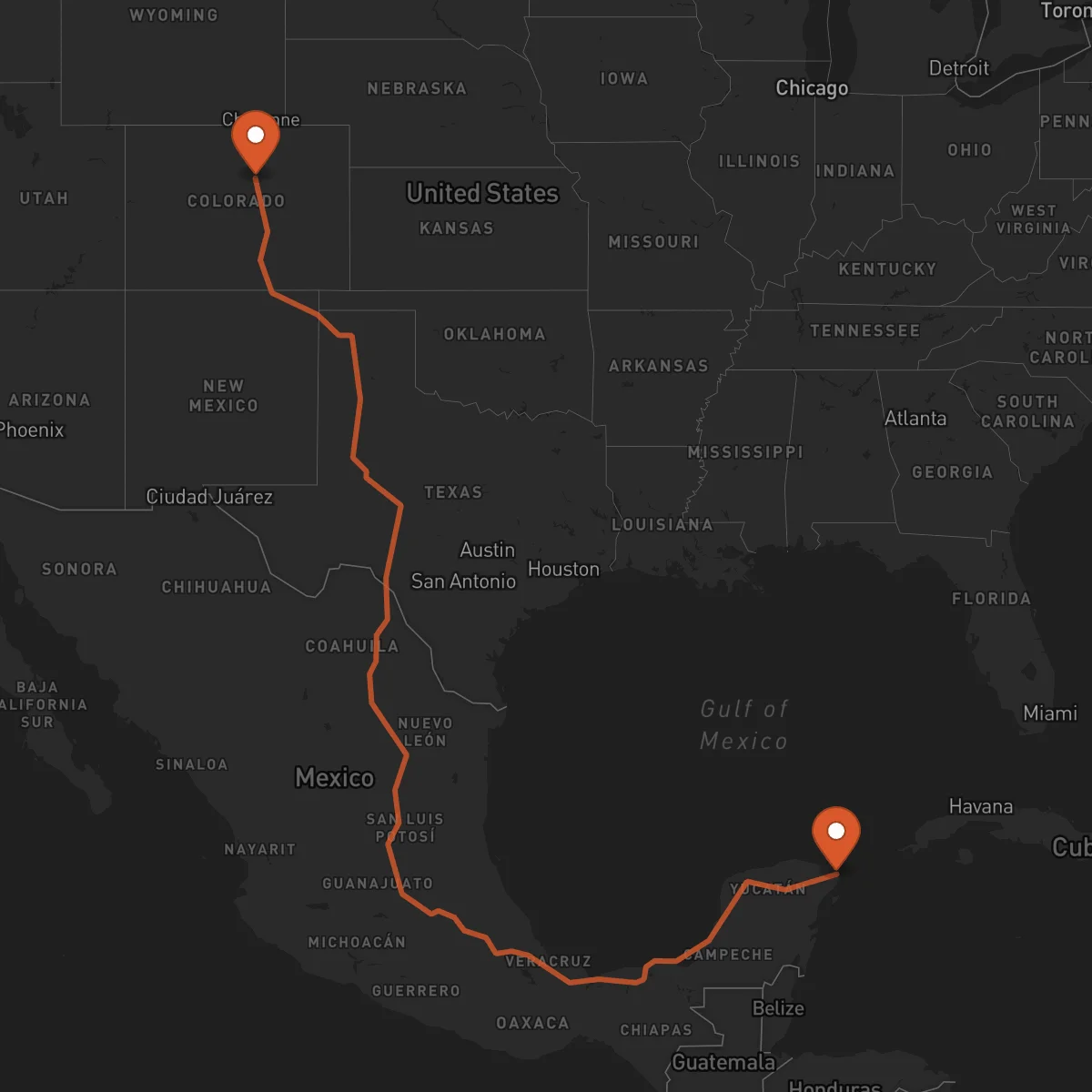
Denver to Cancún
Cancún → DenverFTL freight transportation service between Denver and Cancún. Reliable logistics solutions for your business.
Route Description
Everything you need to know about the corridor Denver - Cancún
The Denver to Cancún corridor represents a vital cross-border logistics connection between the United States and Mexico, spanning approximately 2,689 kilometers. This route links Colorado's industrial heartland with Mexico's premier Caribbean destination, creating a strategic pathway for diverse freight movements. The corridor facilitates the flow of goods between Denver's manufacturing and distribution centers and Cancún's tourism-driven economy, serving as a critical link in North American supply chains.
This transportation route traverses diverse terrain and crosses multiple state and federal boundaries, requiring expert knowledge of cross-border regulations and customs procedures. The corridor connects through major transportation hubs including Denver's extensive rail and highway network, continuing south through key Mexican cities before reaching the Quintana Roo region. Control Terrestre's expertise in managing cross-border documentation and compliance ensures seamless freight movement across this international boundary.
Key industries utilizing this corridor include automotive parts, electronics, consumer goods, and specialized equipment moving from Denver's industrial zones to Cancún's growing commercial sectors. The return route often carries agricultural products, manufactured goods, and materials supporting Cancún's construction and tourism industries. Control Terrestre provides dedicated FTL services along this corridor, leveraging our network of certified carriers and our deep understanding of both US and Mexican transportation regulations to deliver reliable, efficient freight solutions.
Our cross-border capabilities include handling all necessary customs documentation, ensuring compliance with C-TPAT and other security programs, and providing real-time tracking throughout the journey. The Denver-Cancún corridor benefits from Control Terrestre's commitment to safety, reliability, and our extensive experience in managing complex international freight movements between North American markets.
Services for this Route
Available services for the corridor Denver - Cancún
 Origin
Denver
Denver serves as a strategic logistics hub in the Rocky Mountain region, offering exceptional connectivity through its central location in the United States. The city's elevation and geographic position make it a natural distribution center for goods moving in all directions across the country. Denver's extensive transportation infrastructure includes major interstate highways (I-25, I-70, I-76), a robust rail network operated by Union Pacific and BNSF, and Denver International Airport, one of the busiest cargo airports in the nation.
The Denver metropolitan area hosts a diverse industrial base including aerospace, technology, telecommunications, energy, and advanced manufacturing sectors. The region's strong economy is supported by major corporations, research institutions, and a skilled workforce. Denver's logistics advantages include its proximity to major markets in the western United States, relatively low congestion compared to coastal ports, and access to both east-west and north-south transportation corridors.
 Destination
Cancún
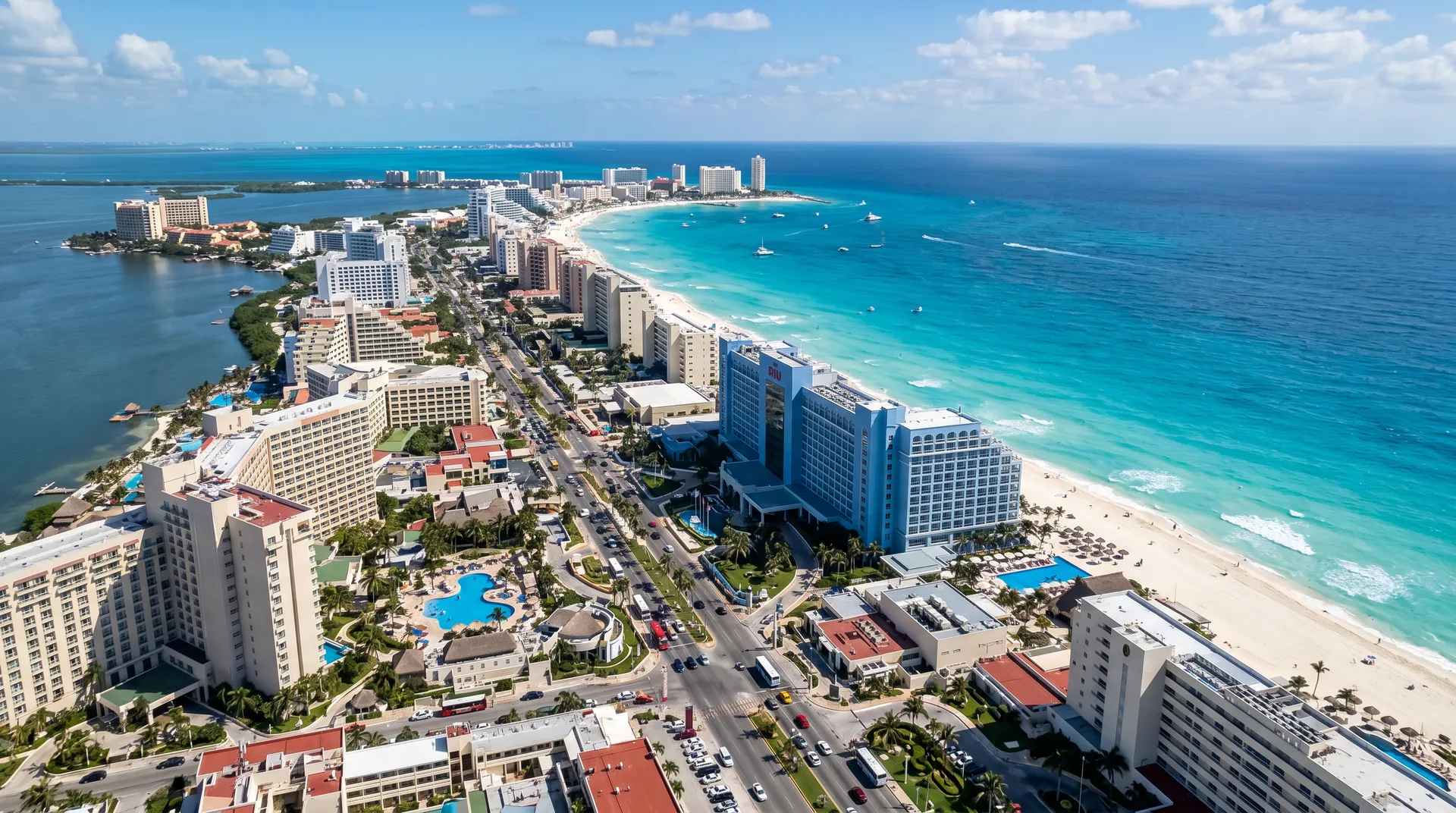
Cancún represents a strategic logistics gateway to Mexico's Caribbean coast and the broader Yucatán Peninsula region. Located in Quintana Roo, Cancún serves as the primary commercial and tourism hub for southeastern Mexico, with its modern infrastructure supporting both international trade and domestic distribution. The city's location provides access to major maritime routes and connects to Mexico's extensive highway network via Federal Highway 180D.
The Cancún region's economy is dominated by tourism, hospitality, and related service industries, but it also hosts growing manufacturing and logistics sectors. The area benefits from the nearby Port of Puerto Morelos and Cancún International Airport, one of Mexico's busiest airports for both passengers and cargo. Cancún's strategic position makes it an ideal distribution point for goods serving the Riviera Maya, the entire Quintana Roo state, and connections to Central America via maritime and air routes.










