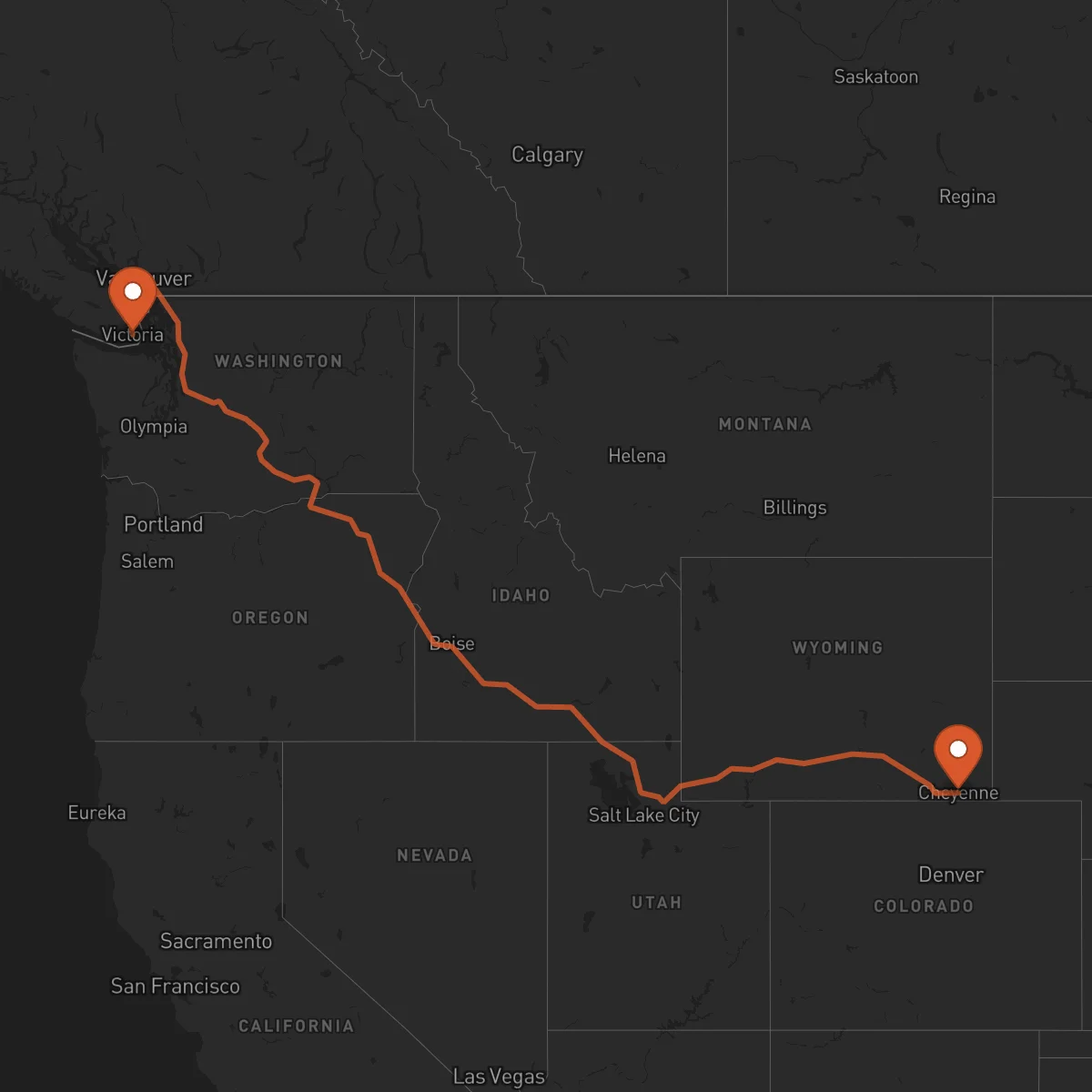
Cheyenne to Victoria
Victoria → CheyenneFTL freight transportation service between Cheyenne and Victoria. Reliable logistics solutions for your business.
Route Description
Everything you need to know about the corridor Cheyenne - Victoria
The logistics corridor connecting Cheyenne, Wyoming to Victoria, British Columbia represents a vital cross-border transportation route spanning approximately 1,667 kilometers through the heart of North America. This strategic corridor traverses diverse landscapes from the Rocky Mountain foothills through the Pacific Northwest, connecting the central United States with Canada's western coast. The route serves as a critical link for businesses operating across both nations, facilitating the seamless movement of goods between major industrial centers.
The economic significance of this corridor cannot be overstated. Cheyenne serves as a key logistics hub in the American Midwest, with strong connections to manufacturing, energy, and agricultural sectors. Meanwhile, Victoria functions as a major port city on Canada's west coast, providing essential gateway access to Asian markets and serving as a distribution center for western Canada. The corridor supports numerous industries including automotive, technology, forestry products, and consumer goods, making it one of the most active cross-border freight routes in North America.
Transportation infrastructure along this corridor is well-developed, primarily utilizing major highways including I-25, I-90, and Highway 1 through Canada. The route crosses the international border at multiple points, with the most commonly used being the Montana-Alberta and Washington-British Columbia crossings. Control Terrestre specializes in navigating the complexities of cross-border operations, ensuring compliance with customs regulations, managing documentation requirements, and coordinating the seamless transfer of freight between US and Canadian transportation networks.
Services for this Route
Available services for the corridor Cheyenne - Victoria
 Origin
Cheyenne
Cheyenne, Wyoming serves as a strategic logistics hub in the American Midwest, offering exceptional connectivity for freight transportation. Located at the intersection of major interstate highways I-25 and I-80, Cheyenne provides direct access to both north-south and east-west transportation corridors. The city's proximity to Denver, Colorado (approximately 100 miles south) and its position near the Wyoming-Colorado border make it an ideal origin point for cross-border shipments. Cheyenne's transportation infrastructure includes a well-developed network of highways, rail connections, and the Cheyenne Regional Airport, supporting diverse logistics operations. The region's economy is anchored by government services, military installations, energy production, and agricultural activities, creating consistent demand for freight transportation services. The city's central location within the Mountain Time Zone also provides logistical advantages for coordinating shipments across multiple time zones.
 Destination
Victoria
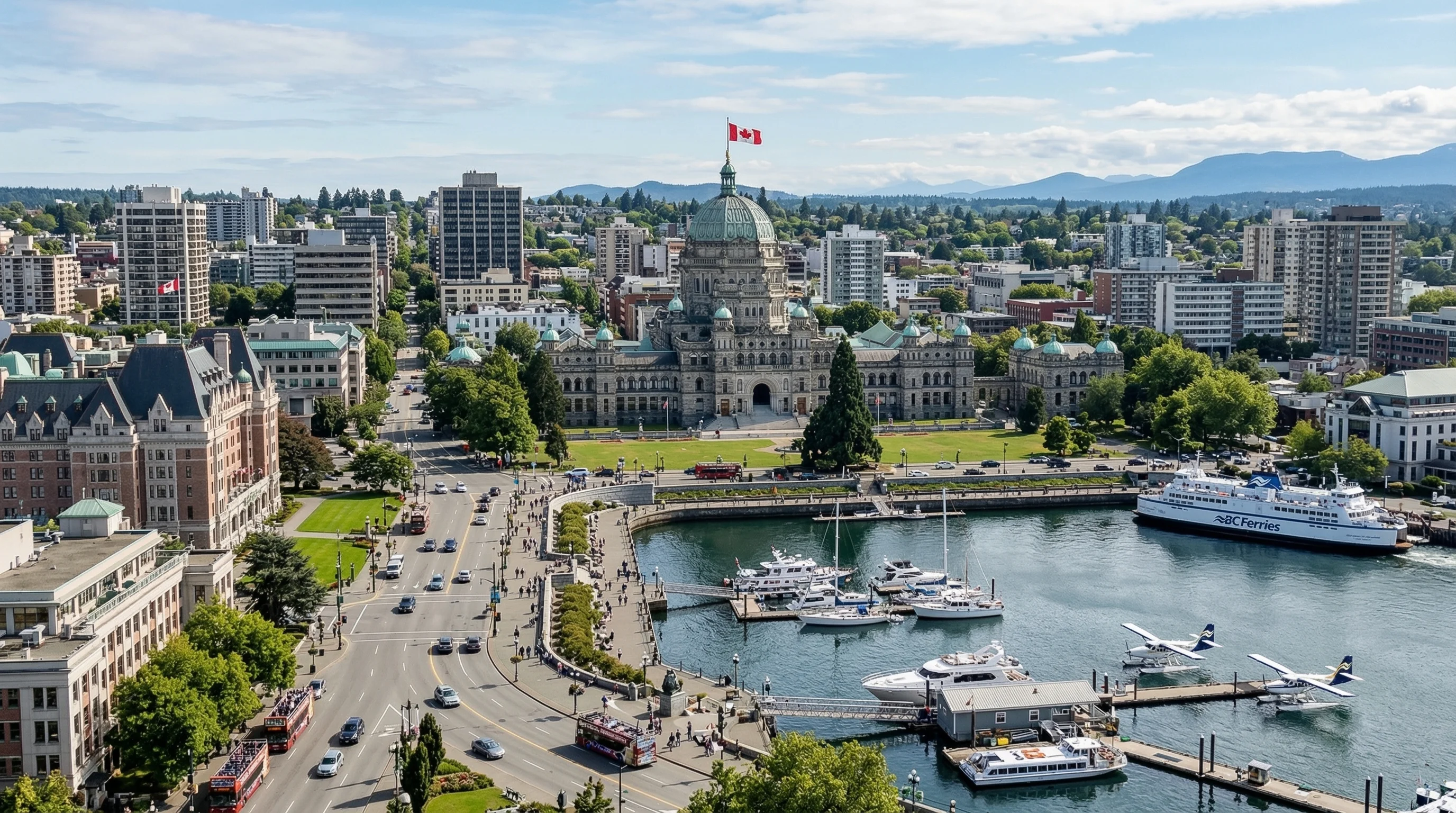
Victoria, British Columbia stands as a premier logistics destination on Canada's Pacific coast, offering strategic access to both domestic and international markets. Located on Vancouver Island, Victoria serves as a gateway to Asian trade routes and provides essential connectivity for western Canadian commerce. The city's port facilities, including the Victoria International Airport and the Port of Victoria, support diverse freight operations ranging from containerized cargo to specialized shipments. Victoria's economy is characterized by technology, tourism, government services, and maritime industries, creating consistent demand for reliable freight transportation. The region's transportation infrastructure includes well-maintained highways connecting to mainland British Columbia via ferry services, as well as rail connections through the Canadian National Railway network. Victoria's position within the Pacific Time Zone and its proximity to major Canadian and US markets make it an ideal destination for cross-border freight operations.










