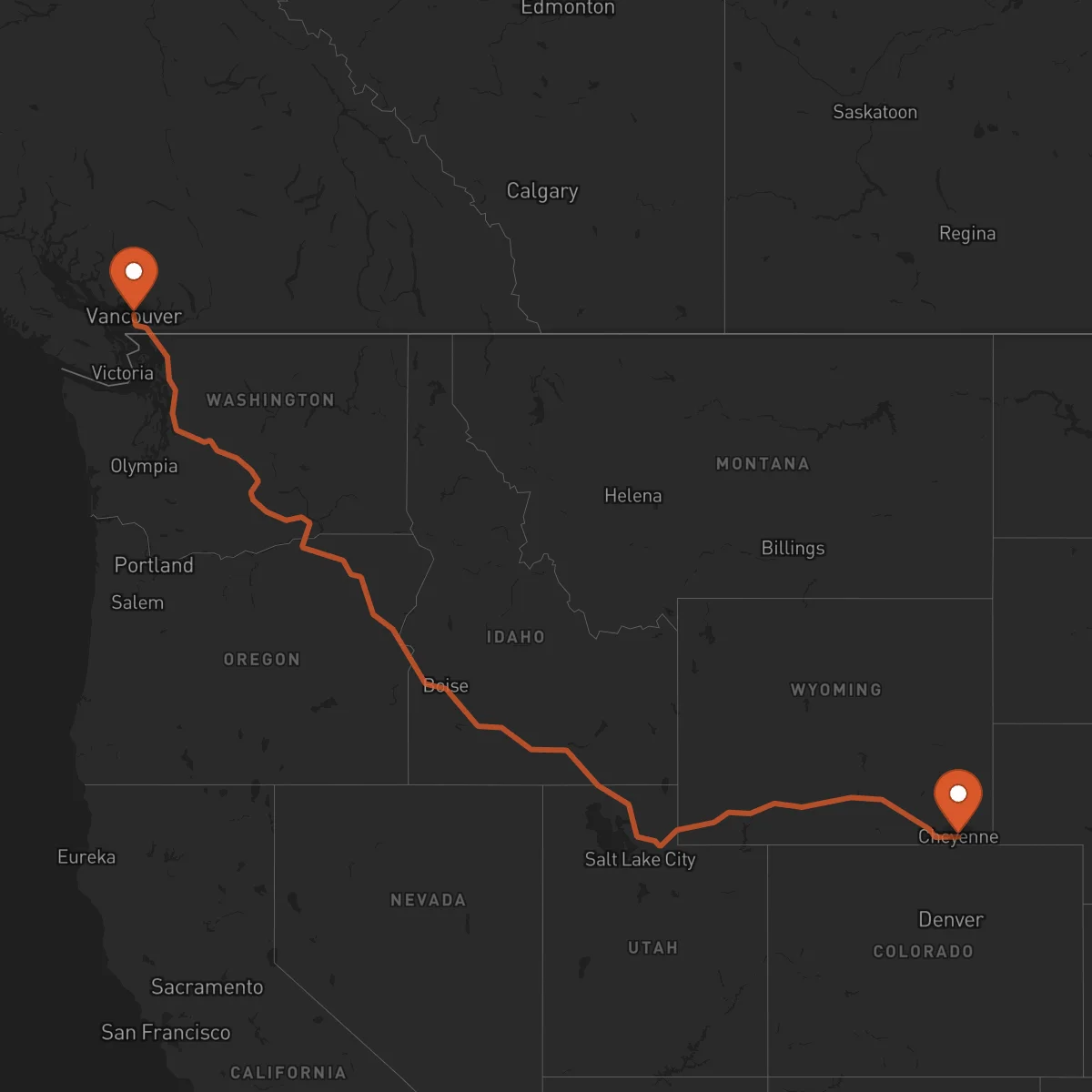
Cheyenne to Vancouver
Vancouver → CheyenneFTL freight transportation service between Cheyenne and Vancouver. Reliable logistics solutions for your business.
Route Description
Everything you need to know about the corridor Cheyenne - Vancouver
The logistics corridor connecting Cheyenne, Wyoming to Vancouver, British Columbia represents a vital cross-border transportation route spanning approximately 1,689 kilometers through the heart of North America. This corridor traverses diverse terrain and connects the industrial Midwest with the Pacific Northwest, serving as a critical link for freight moving between the United States and Canada. The route facilitates the movement of goods through major economic centers, crossing international borders while supporting the supply chain needs of multiple industries.
The region along this corridor encompasses significant economic activity, with Cheyenne serving as a strategic hub for energy production, manufacturing, and agricultural operations in Wyoming. Vancouver stands as Canada's largest port city and a gateway to Asian markets, with a robust economy centered on international trade, technology, and natural resources. The corridor passes through Montana and Alberta, regions known for their energy sector, agricultural production, and industrial manufacturing capabilities.
Key industries utilizing this transportation route include energy equipment and supplies, agricultural products, industrial machinery, and manufactured goods. The corridor is particularly important for companies in the oil and gas sector, agricultural businesses shipping products to international markets, and manufacturers serving both US and Canadian markets. The route also supports cross-border e-commerce and just-in-time manufacturing supply chains.
The primary transportation infrastructure consists of Interstate 25 and Interstate 90 in the United States, transitioning to the Trans-Canada Highway (Highway 1) in Canada. Major border crossings include the Sweetgrass-Coutts crossing in Montana/Alberta, which provides efficient processing for commercial vehicles. Control Terrestre facilitates seamless operations along this corridor through our network of certified carriers, expertise in cross-border documentation, and understanding of customs requirements for both countries. Our team ensures compliance with all regulatory requirements while maintaining efficient transit times for our clients' freight shipments.
Services for this Route
Available services for the corridor Cheyenne - Vancouver
 Origin
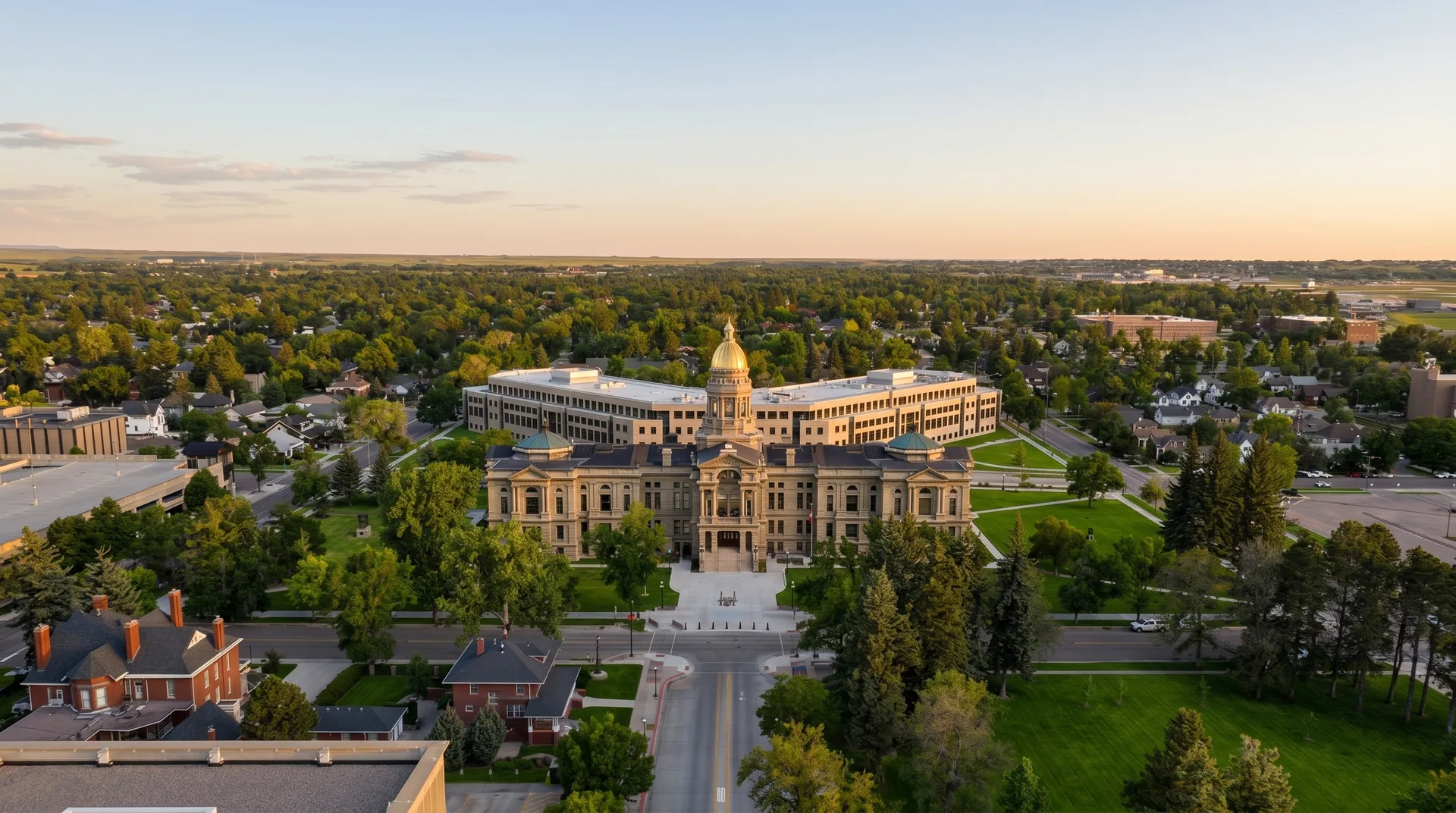
Cheyenne
Cheyenne, Wyoming serves as a strategic logistics hub in the American Midwest, positioned at the intersection of major transportation routes including Interstate 25 and Interstate 80. The city's location provides excellent connectivity to regional markets and serves as a gateway to the Rocky Mountain region. Cheyenne's economy is anchored by government operations, energy production, and military installations, with growing sectors in technology and manufacturing. The city benefits from the Union Pacific Railroad presence and a well-developed highway network that facilitates efficient freight movement. Cheyenne's relatively low congestion and strategic location make it an ideal origin point for cross-country and cross-border freight shipments, particularly for companies serving markets in the Pacific Northwest and Western Canada.
 Destination
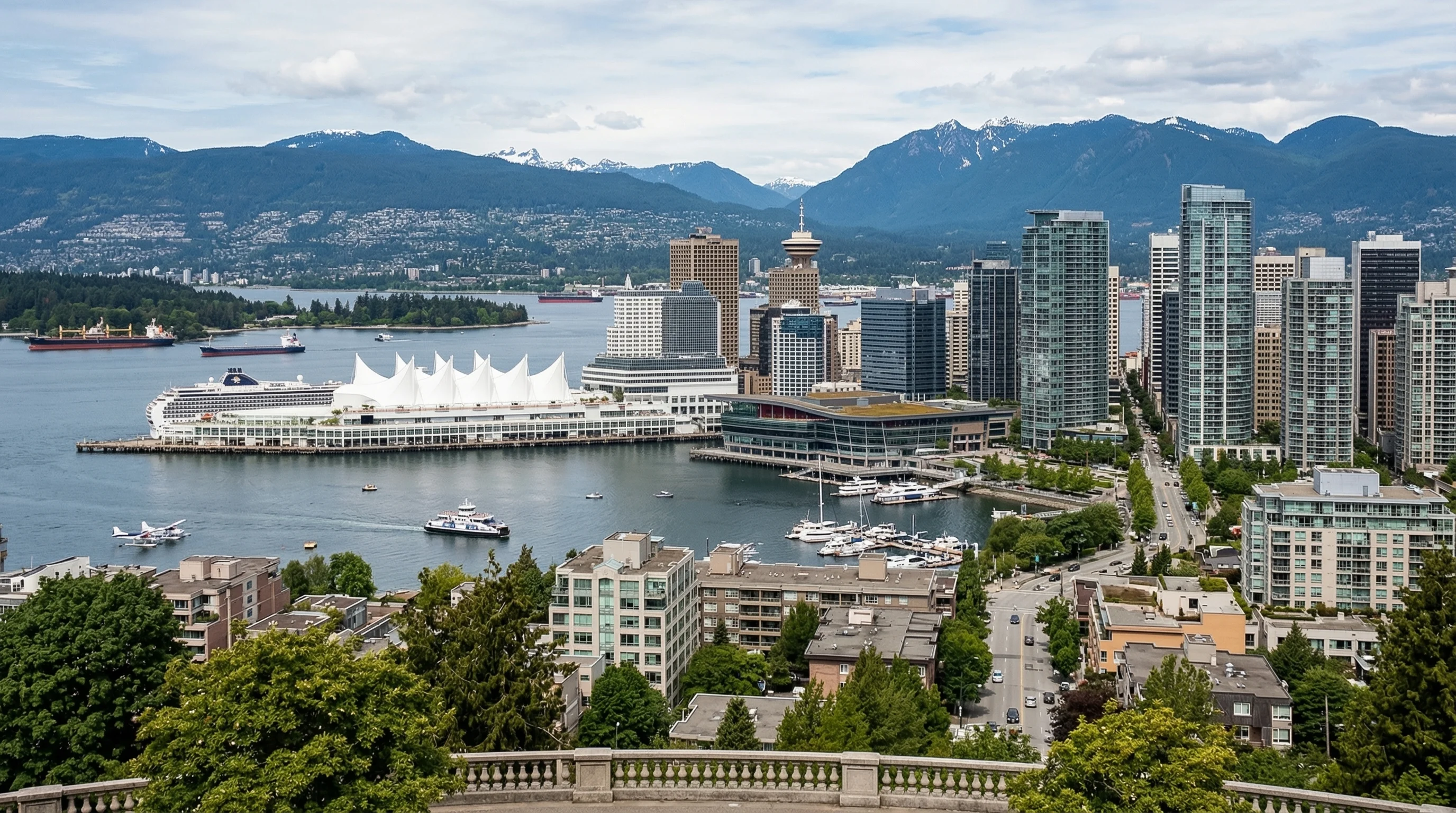
Vancouver
Vancouver, British Columbia represents one of Canada's most important logistics and trade hubs, strategically positioned on the Pacific coast with access to international shipping routes. As Canada's largest port, the Port of Vancouver handles millions of containers annually and serves as a critical gateway for trade with Asia and the United States. The city's economy is diverse, encompassing international trade, technology, film production, tourism, and natural resources. Vancouver's transportation infrastructure includes extensive port facilities, Vancouver International Airport, and a comprehensive road network connecting to the US border and interior Canadian markets. The city's location provides unique advantages for companies engaged in international trade, particularly those requiring efficient connections between North American production facilities and Asian markets or US distribution centers.










