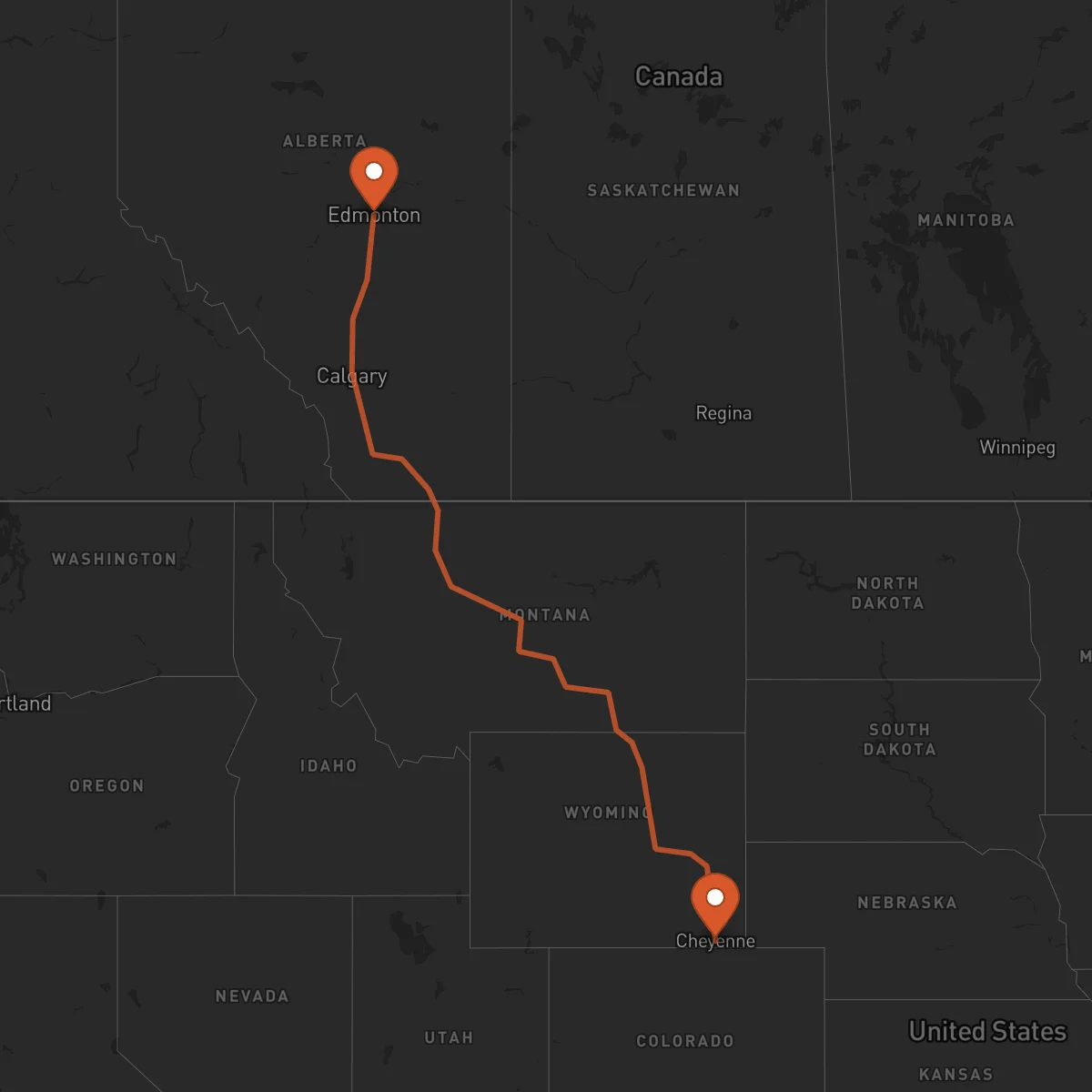
Cheyenne to Edmonton
Edmonton → CheyenneFTL freight transportation service between Cheyenne and Edmonton. Reliable logistics solutions for your business.
Route Description
Everything you need to know about the corridor Cheyenne - Edmonton
The logistics corridor between Cheyenne, Wyoming, and Edmonton, Alberta, represents a vital cross-border freight transportation route connecting the central United States with western Canada. This 1,524-kilometer corridor traverses diverse terrain and crosses the international border at Sweetgrass, Montana, providing essential connectivity for North American supply chains. The route serves as a critical link between the industrial heartland of Wyoming and the thriving economic center of Alberta's capital region.
The corridor's strategic importance stems from its role in facilitating trade between major economic regions. Cheyenne, located at the intersection of I-25 and I-80, serves as a gateway to the Rocky Mountain region, while Edmonton functions as a major distribution hub for northern Canada and the oil sands region. The route primarily follows I-25 north to I-90 west, then continues through Montana before crossing into Alberta via Highway 2, providing reliable year-round transportation despite seasonal weather challenges.
Key industries utilizing this corridor include energy and natural resources, manufacturing, agricultural products, and industrial equipment. The route is particularly important for transporting oversized and specialized cargo between the energy sectors of both regions. Control Terrestre's expertise in cross-border operations ensures seamless freight movement through proper documentation, customs compliance, and strategic carrier partnerships that understand the unique requirements of this international corridor.
Services for this Route
Available services for the corridor Cheyenne - Edmonton
 Origin
Cheyenne
Cheyenne, Wyoming serves as a strategic logistics hub positioned at the intersection of major interstate highways I-25 and I-80. This location provides direct access to Denver, Salt Lake City, and the broader western United States. The city's transportation infrastructure includes the Union Pacific rail yard, Cheyenne Regional Airport, and modern warehousing facilities that support efficient freight operations. Cheyenne's proximity to major energy production areas and its role as Wyoming's capital make it a key distribution point for industrial and commercial goods throughout the Rocky Mountain region.
 Destination
Edmonton, Alberta functions as western Canada's primary distribution center, strategically located on the North Saskatchewan River with excellent transportation connections. The city boasts extensive logistics infrastructure including the Edmonton International Airport, major rail terminals operated by CN and CPKC, and the Edmonton Intermodal Facility. As Alberta's capital and a major economic center, Edmonton serves the oil sands industry, manufacturing sector, and agricultural regions of northern Alberta. The city's location provides critical access to northern Canada and Alaska Highway routes, making it an essential endpoint for cross-border freight movements.










