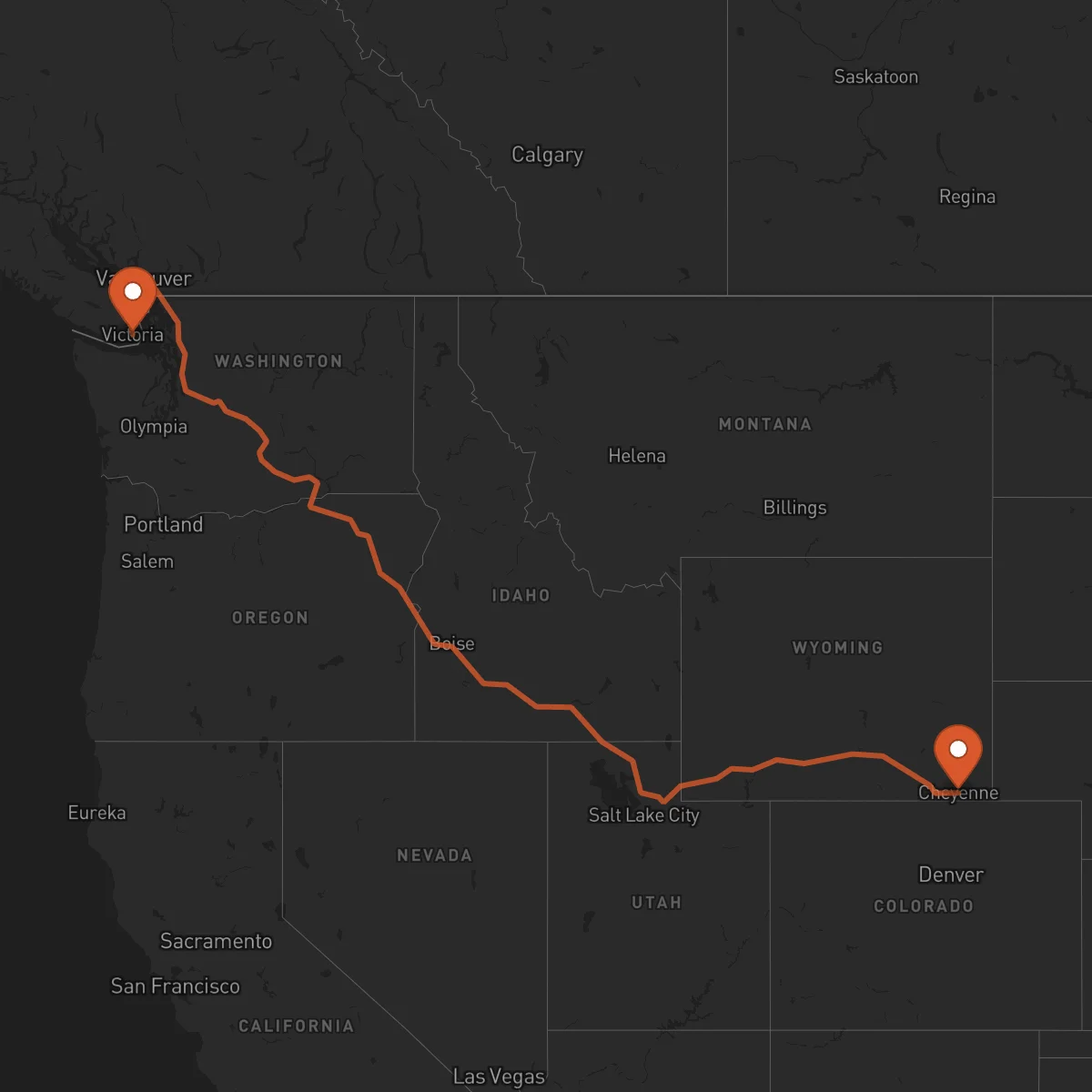
Victoria to Cheyenne
Cheyenne → VictoriaFTL freight transportation service between Victoria and Cheyenne. Reliable logistics solutions for your business.
Route Description
Everything you need to know about the corridor Victoria - Cheyenne
The logistics corridor between Victoria, British Columbia, Canada and Cheyenne, Wyoming, United States represents a vital cross-border freight transportation route connecting the Pacific Northwest with the central United States. This 1,667 km corridor traverses diverse terrain and crosses multiple state and provincial boundaries, making it a complex but strategically important freight route. The corridor serves as a crucial link between Canada's western ports and the industrial heartland of Wyoming, facilitating the movement of goods between these two key North American markets.
The economic significance of this corridor is substantial, supporting trade between British Columbia's technology, aerospace, and forestry sectors and Wyoming's energy, mining, and manufacturing industries. Major highways such as BC-1, I-90, and I-25 form the backbone of this transportation route, providing reliable freight movement across the international border at locations like Roosville or Kingsgate. The corridor handles a diverse range of freight including machinery, industrial equipment, raw materials, and finished products essential to both regional economies.
Control Terrestre facilitates seamless operations on this corridor through our extensive network of certified carriers and expertise in cross-border logistics. Our providers' C-TPAT, FAST, and BASC certifications ensure efficient customs clearance and compliance with all regulatory requirements. We coordinate door-to-door FTL services, managing the complexities of international freight movement while maintaining the highest standards of safety and reliability. Our team's deep understanding of both Canadian and US transportation regulations enables us to navigate the challenges of this cross-border route effectively, ensuring your cargo reaches its destination efficiently.
Services for this Route
Available services for the corridor Victoria - Cheyenne
 Origin
Victoria
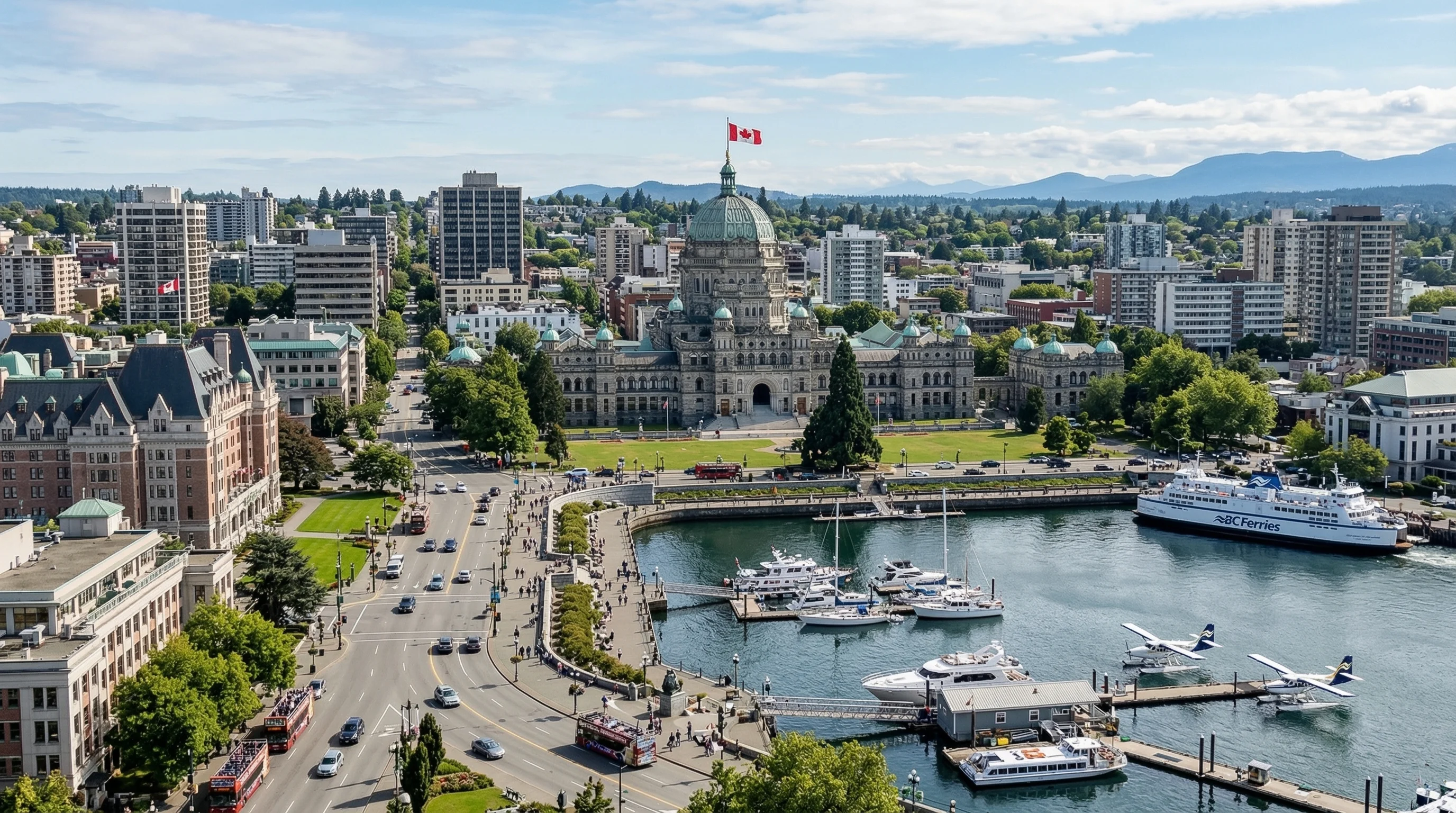
Victoria, located on Vancouver Island in British Columbia, serves as a strategic logistics hub for western Canada. As the capital city of British Columbia, Victoria benefits from its proximity to major ports including the Port of Vancouver and the Port of Prince Rupert, providing excellent connections to international shipping routes. The city's economy is driven by technology, tourism, government services, and a growing aerospace sector, with the surrounding Vancouver Island region contributing significant forestry and agricultural products to the freight mix.
The transportation infrastructure around Victoria includes the BC Ferries system connecting the island to mainland British Columbia, as well as comprehensive road networks linking to major highways. The region's strategic position allows for efficient distribution of goods throughout western Canada and provides excellent access to trans-Pacific trade routes. Victoria's location makes it an ideal origin point for freight destined for various points across North America, with multiple options for moving cargo to mainland ports or directly into the continental freight network.
 Destination
Cheyenne
Cheyenne, Wyoming serves as a crucial logistics center in the central United States, strategically positioned at the intersection of major freight corridors. As the capital and largest city of Wyoming, Cheyenne benefits from its location near the intersection of I-25 and I-80, providing excellent access to both north-south and east-west freight movements. The city's economy is anchored by government services, energy production, and transportation, with the surrounding region contributing significant mining, agriculture, and manufacturing activities.
The transportation infrastructure in Cheyenne includes extensive highway networks, rail connections, and proximity to major freight hubs. The city's location makes it a natural distribution point for goods moving throughout the Rocky Mountain region and beyond. Cheyenne's logistics advantages include its central location within the western United States, relatively low congestion compared to coastal cities, and strong connections to major freight corridors that facilitate efficient movement of goods to and from Canada and other international markets.










