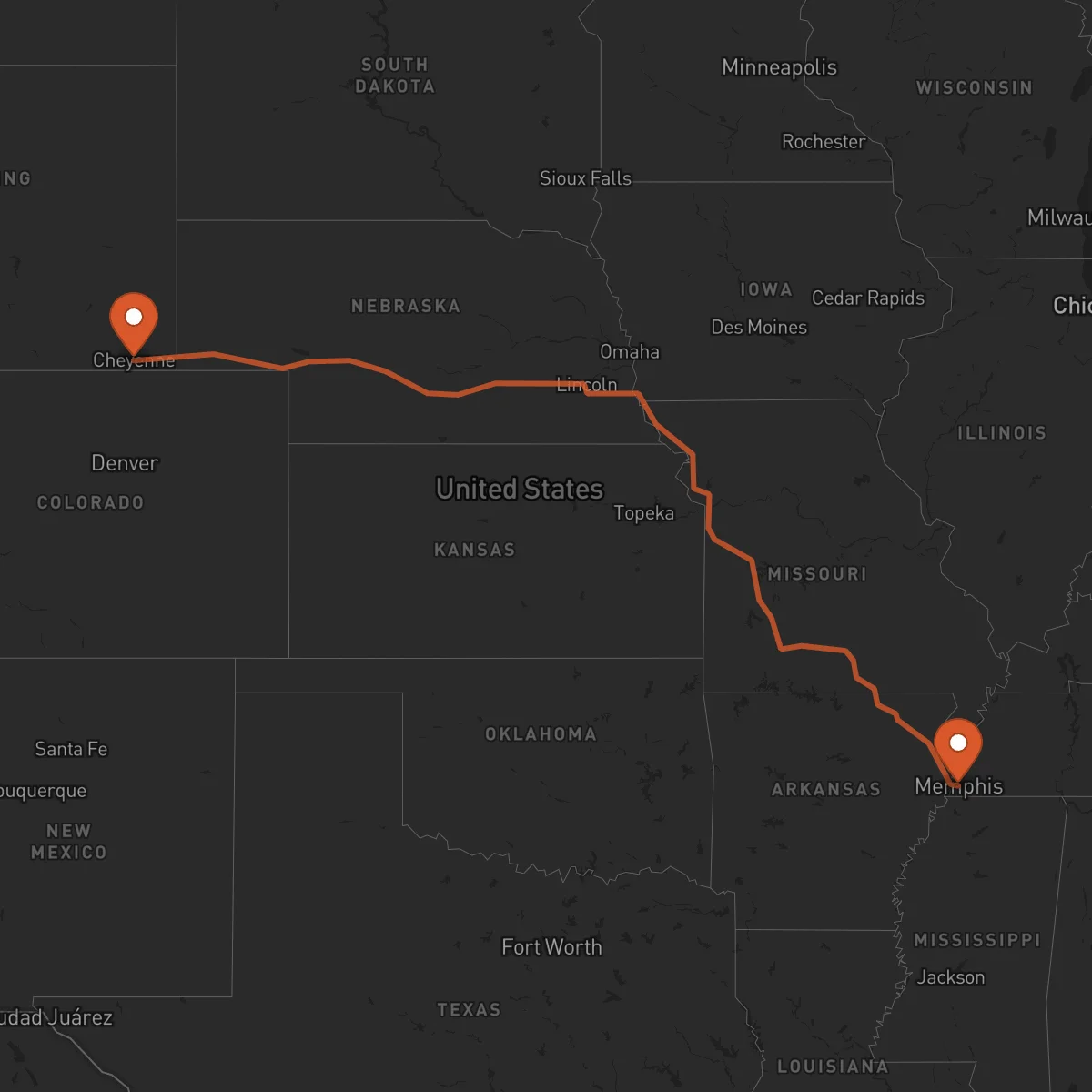
Cheyenne to Memphis
Memphis → CheyenneFTL freight transportation service between Cheyenne and Memphis. Reliable logistics solutions for your business.
Route Description
Everything you need to know about the corridor Cheyenne - Memphis
The logistics corridor connecting Cheyenne, Wyoming to Memphis, Tennessee spans approximately 1,450 kilometers across the heart of the United States. This strategic route traverses diverse terrain and connects two major economic hubs, serving as a vital artery for freight transportation between the Mountain West and the Southeast. The corridor follows Interstate 80 eastward through Nebraska before connecting to Interstate 29 and ultimately Interstate 40, providing efficient access to Memphis's extensive distribution network.
The economic significance of this corridor cannot be overstated, as it links Wyoming's energy and agricultural sectors with Tennessee's manufacturing, healthcare, and logistics industries. Cheyenne serves as a gateway to the Rocky Mountain region, while Memphis functions as a major distribution center due to its central location and access to river, rail, and air transportation. This route facilitates the movement of goods ranging from industrial equipment and agricultural products to manufactured goods and consumer products.
Control Terrestre specializes in providing full truckload (FTL) transportation services along this corridor, offering dedicated solutions for companies requiring reliable, direct shipping between these markets. Our extensive network of certified carriers ensures consistent capacity and service quality, while our expertise in handling specialized cargo, including oversized loads and temperature-controlled shipments, meets the diverse needs of shippers operating on this route. We understand the unique requirements of cross-country transportation and provide end-to-end logistics support to optimize supply chain efficiency.
Services for this Route
Available services for the corridor Cheyenne - Memphis
 Origin
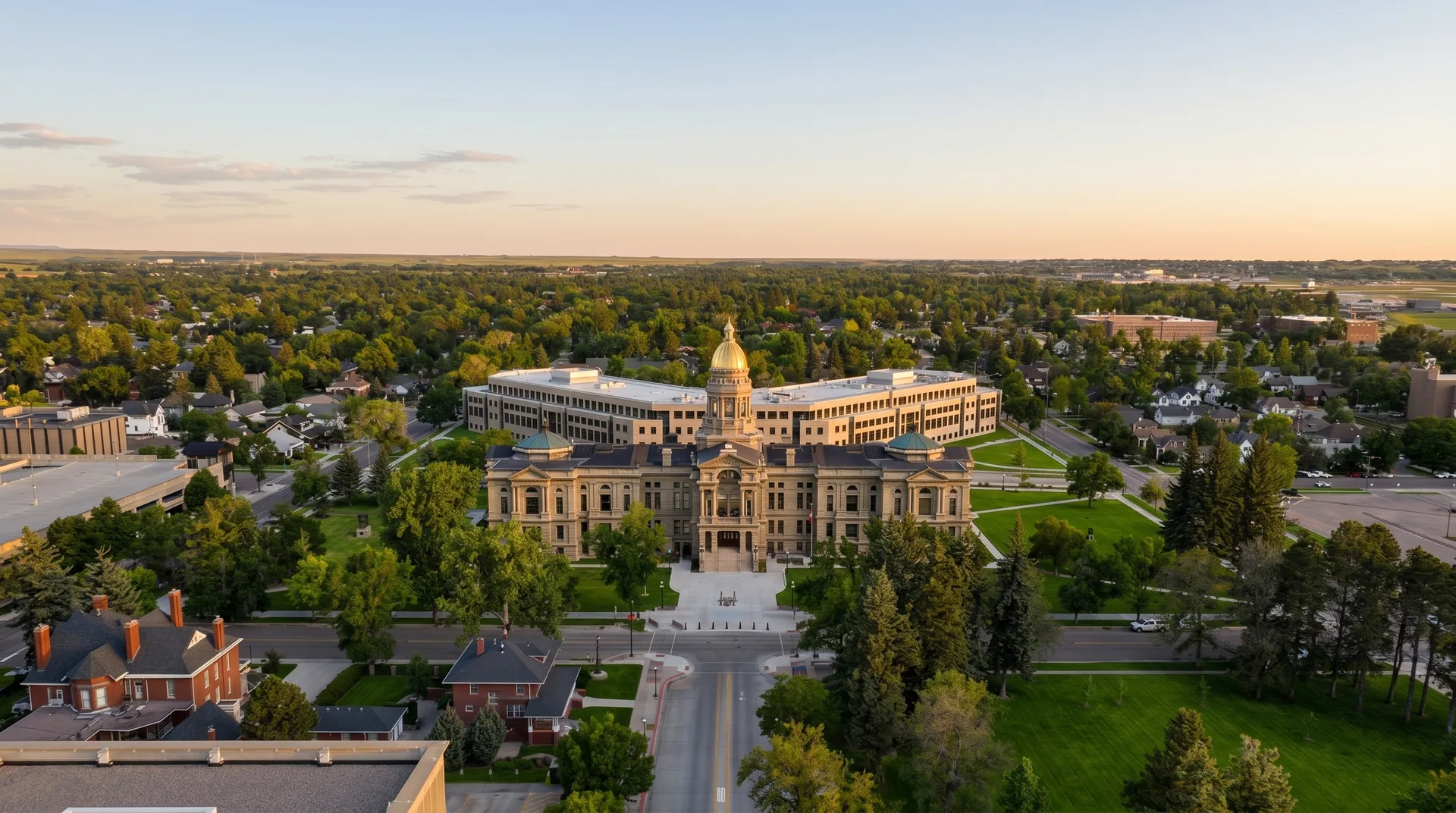
Cheyenne
Cheyenne, Wyoming serves as a strategic logistics hub at the intersection of major transportation routes in the Mountain West. Located at the crossroads of Interstate 25 and Interstate 80, Cheyenne provides direct access to both north-south and east-west freight movement. The city's elevation of 6,000 feet and proximity to the Rocky Mountains make it a critical gateway for goods moving between the western states and the rest of the country. Cheyenne's economy is anchored by government operations, military installations, and a growing logistics sector, with the nearby Warren Air Force Base and the state government providing stable employment and economic activity.
The region's industrial base includes energy production, particularly oil, natural gas, and coal, as well as agriculture and mining operations. These industries generate significant freight volume, particularly in the form of heavy equipment, raw materials, and agricultural products. Cheyenne's transportation infrastructure includes the Union Pacific Railroad's main line, the Cheyenne Regional Airport, and extensive highway networks. The city's logistics facilities benefit from Wyoming's business-friendly environment and strategic location for companies serving the western United States.
 Destination
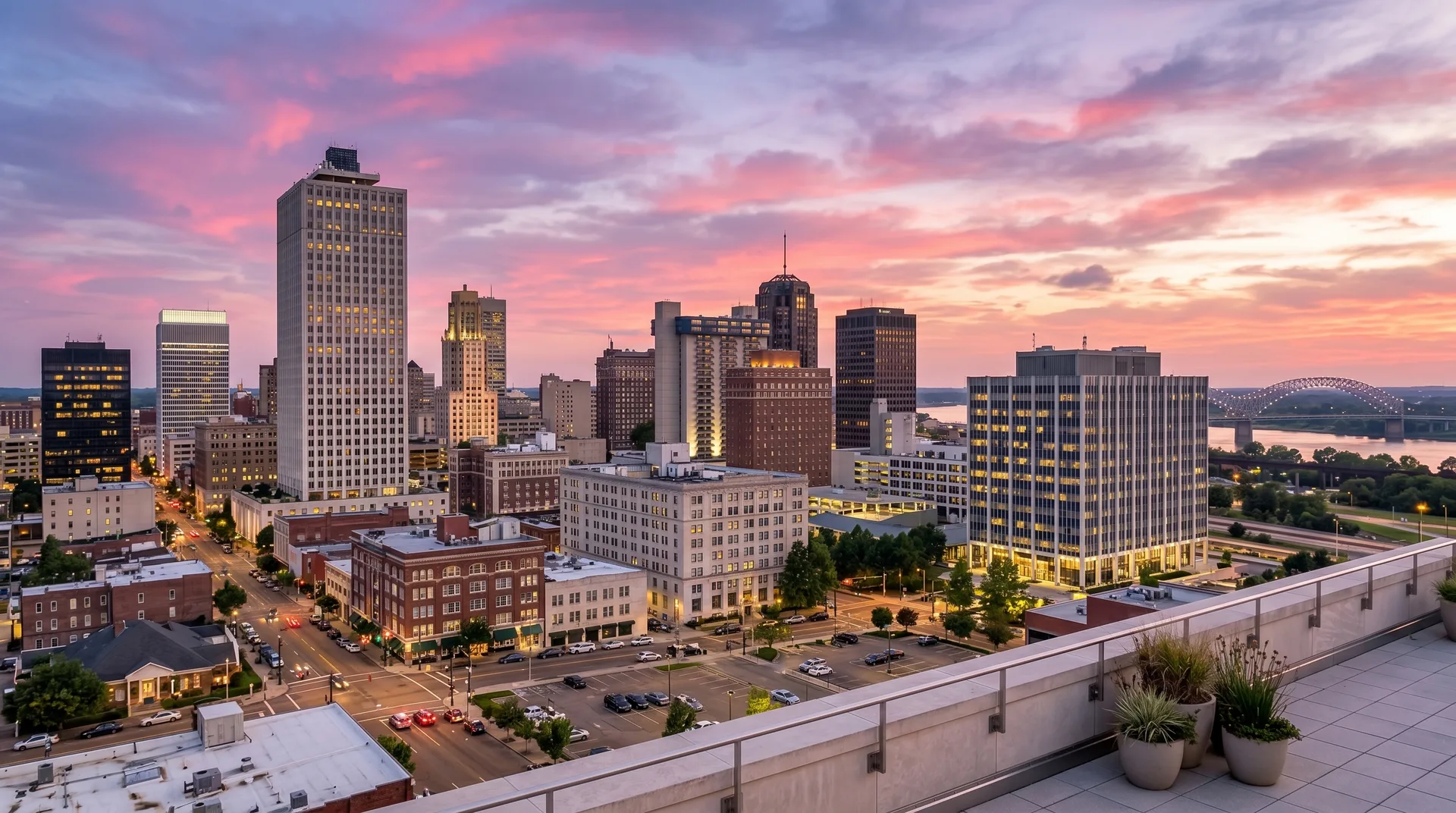
Memphis
Memphis, Tennessee stands as one of the most important logistics hubs in the United States, strategically positioned in the heart of the Mid-South region. The city's location at the confluence of major interstates, including I-40, I-55, and I-69, combined with its access to the Mississippi River, makes it a critical distribution point for freight moving throughout the eastern United States. Memphis International Airport serves as the world's second-busiest cargo airport, hosting the global superhub for FedEx, which processes millions of packages daily. The city's extensive intermodal facilities and warehouse space create a logistics ecosystem that supports diverse industries.
The Memphis metropolitan area's economy is driven by transportation and logistics, healthcare, manufacturing, and entertainment. Major employers include FedEx, International Paper, AutoZone, and St. Jude Children's Research Hospital. The region's manufacturing sector produces everything from automotive components to food products, while its healthcare industry serves as a major employer and economic driver. Memphis's logistics infrastructure includes the Port of Memphis, extensive rail yards operated by BNSF and Union Pacific, and a network of trucking terminals that facilitate the efficient movement of goods throughout the region and beyond.










