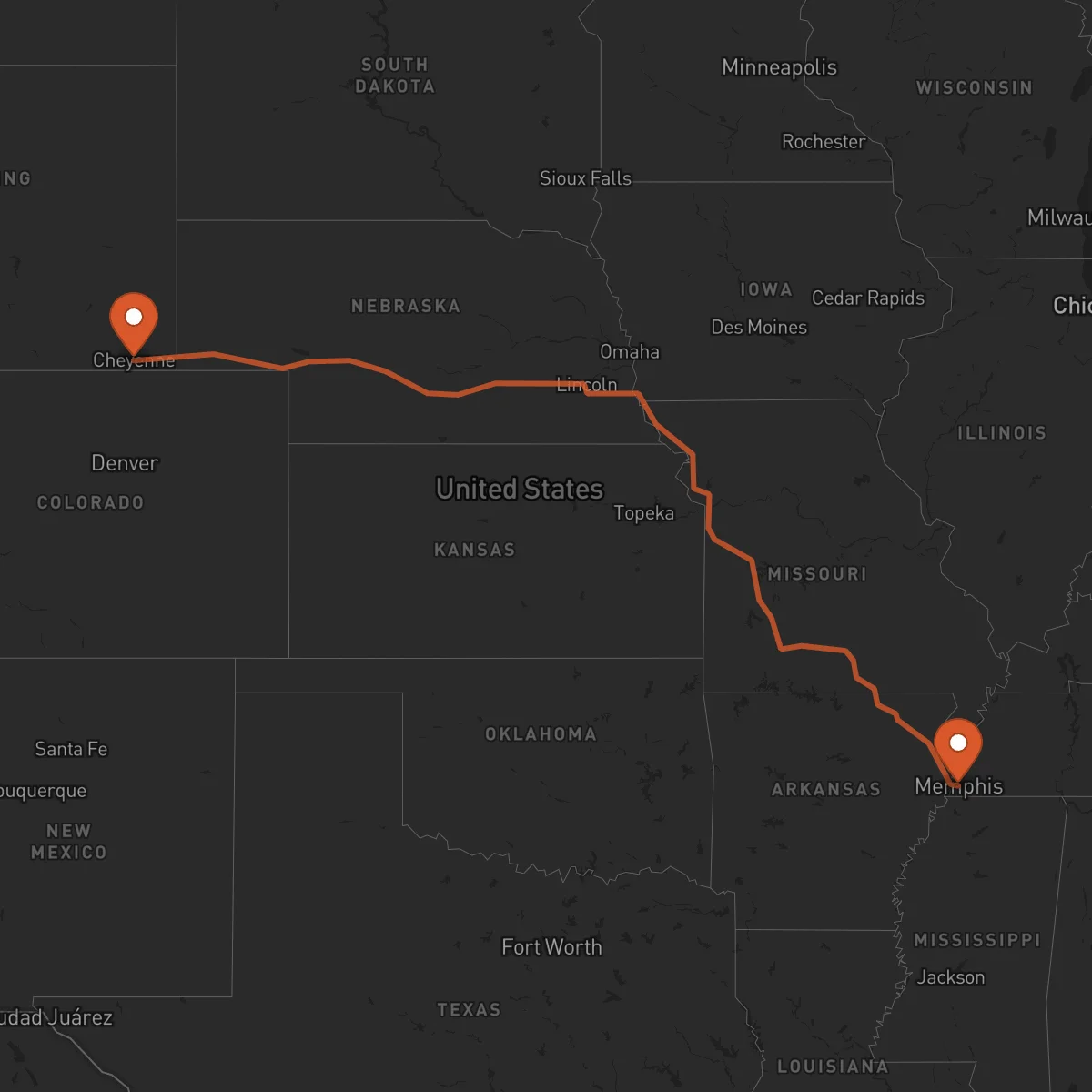
Memphis to Cheyenne
Cheyenne → MemphisFTL freight transportation service between Memphis and Cheyenne. Reliable logistics solutions for your business.
Route Description
Everything you need to know about the corridor Memphis - Cheyenne
The Memphis-Cheyenne corridor represents a vital transportation link connecting the southeastern United States with the Rocky Mountain region. This domestic route spans approximately 1,450 kilometers, traversing diverse terrain and connecting two strategically positioned cities. The corridor serves as a crucial artery for freight movement between Tennessee's industrial heartland and Wyoming's resource-rich territories, facilitating the flow of goods across multiple states and economic regions.
The economic significance of this corridor extends beyond its geographic span. Memphis, situated along the Mississippi River, serves as a major logistics hub with access to rail, air, and river transportation networks. Cheyenne, as Wyoming's capital and largest city, acts as a gateway to the mountain states and provides critical infrastructure for energy, agriculture, and manufacturing sectors. This route enables efficient distribution of goods between the Midwest and the western United States, supporting regional economic integration and supply chain optimization.
Key industries utilizing this corridor include automotive manufacturing, agricultural products, industrial equipment, and energy-related materials. The route accommodates various freight types, from refrigerated goods requiring temperature control to oversized equipment destined for construction and energy projects. Manufacturing facilities in Memphis rely on this connection to distribute products westward, while Cheyenne's role in energy production creates demand for specialized freight transportation services.
Control Terrestre optimizes freight operations along the Memphis-Cheyenne corridor through our network of certified transportation providers. Our dedicated full truckload services ensure reliable, direct shipping between these destinations, eliminating unnecessary handling and reducing transit times. We leverage our strategic partnerships and industry expertise to provide customized solutions that meet the specific requirements of each shipment, whether it involves standard dry freight, temperature-sensitive cargo, or specialized equipment. Our commitment to safety, efficiency, and customer service makes us the preferred partner for companies operating along this important domestic transportation route.
Services for this Route
Available services for the corridor Memphis - Cheyenne
 Origin
Memphis
Memphis, Tennessee stands as a strategic logistics powerhouse in the southeastern United States. Located along the Mississippi River and at the intersection of major interstate highways (I-40, I-55, and I-69), Memphis serves as a critical distribution center for the entire region. The city's central location provides access to over 75% of the U.S. population within a two-day drive, making it an ideal origin point for nationwide freight distribution. Memphis International Airport, one of the busiest cargo airports globally, further enhances the city's logistics capabilities.
The city's economy thrives on diverse industrial sectors, with logistics and transportation forming the backbone of its commercial activity. Major employers include FedEx, which operates its global headquarters and largest hub here, along with numerous warehousing and distribution companies. The manufacturing sector encompasses automotive production, with facilities operated by companies like International Paper and Nike contributing to the local economy. Agriculture also plays a significant role, with Memphis serving as a key node for grain, cotton, and other agricultural products moving through the Mississippi River system.
 Destination
Cheyenne
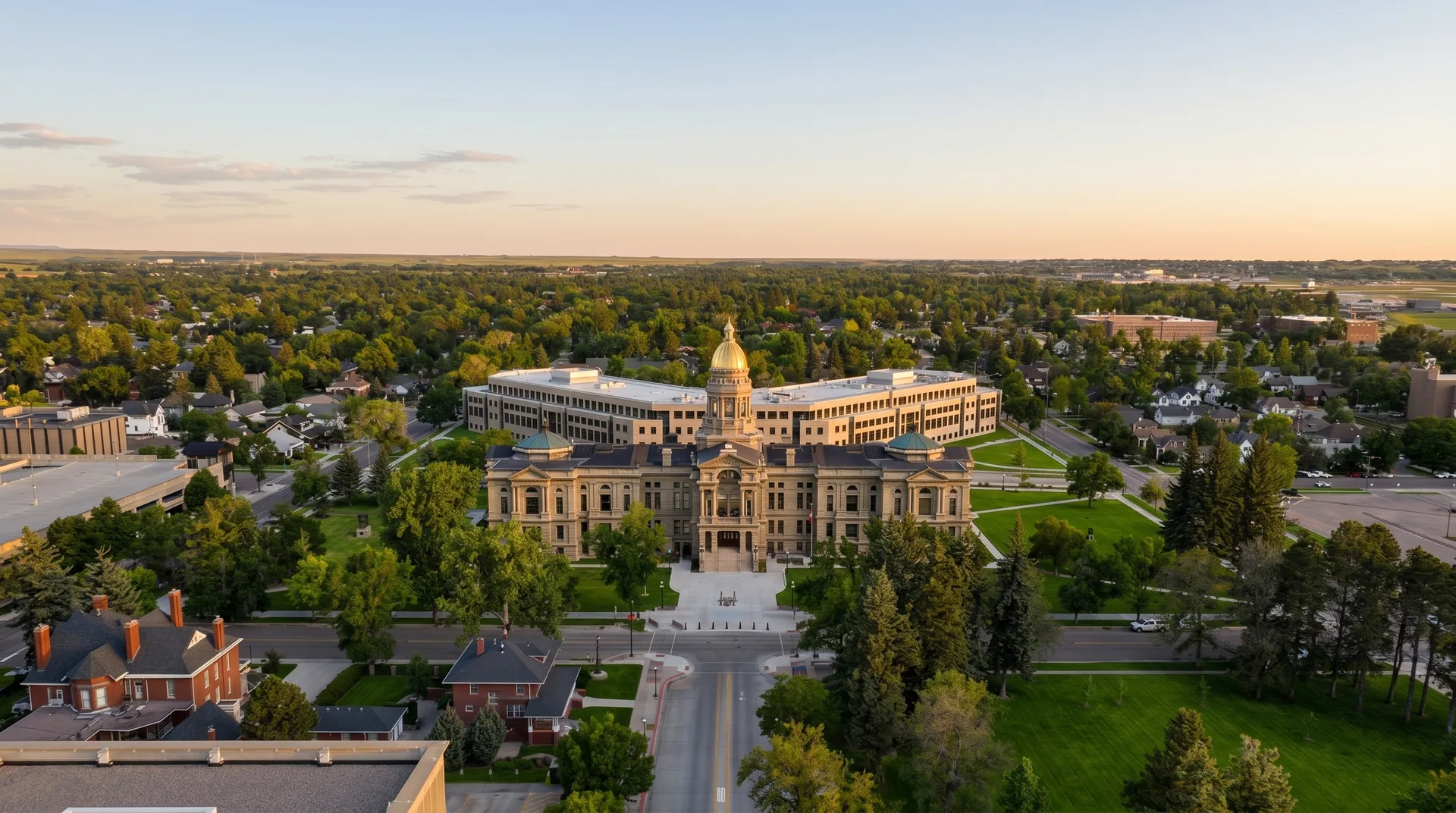
Cheyenne, Wyoming occupies a strategic position as the capital and largest city of the Cowboy State, serving as a crucial logistics gateway to the Rocky Mountain region. Located at the intersection of Interstates 25 and 80, Cheyenne provides direct access to major transportation corridors connecting the Midwest with the western United States. The city's elevation of 6,000 feet and proximity to the Front Range make it an ideal distribution point for goods moving into and out of Wyoming, Colorado, and surrounding mountain states.
The local economy centers around government services, energy production, and transportation. Cheyenne is home to significant military installations, including Warren Air Force Base, which contributes to the local economy and creates specialized freight transportation needs. The energy sector dominates Wyoming's economy, with coal, natural gas, and oil production requiring extensive logistics support for equipment, materials, and product distribution. Agriculture remains important, with cattle ranching and hay production creating seasonal freight demands. The city's industrial base includes manufacturing facilities, particularly those serving the energy and mining sectors, which rely on efficient transportation connections to suppliers and markets across the country.










