Austin to Charleston
Charleston → AustinFTL freight transportation service between Austin and Charleston. Reliable logistics solutions for your business.
Route Description
Everything you need to know about the corridor Austin - Charleston
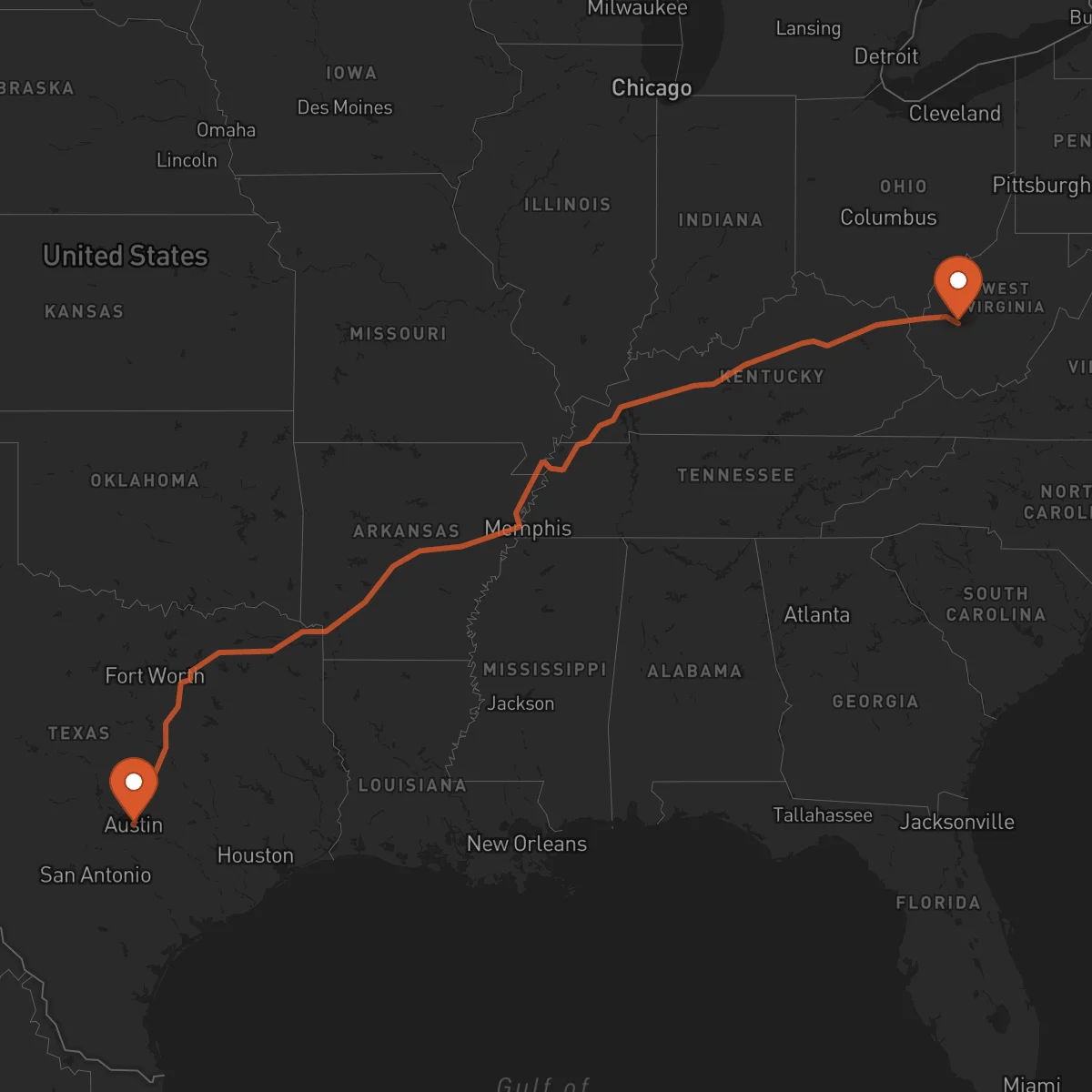
The Austin to Charleston corridor represents a vital domestic freight route connecting the economic heart of Texas with the industrial and commercial center of West Virginia. This 1727 km transportation link traverses diverse terrain and multiple state jurisdictions, serving as a critical artery for the movement of goods between the central and eastern United States. The corridor facilitates the flow of raw materials, finished products, and industrial equipment essential for maintaining supply chain continuity across multiple sectors.
The economic significance of this route extends beyond simple point-to-point transportation. Austin, known as a technology and innovation hub, generates high-value shipments requiring specialized handling, while Charleston serves as a gateway to the Appalachian region's manufacturing and energy sectors. This complementary relationship creates consistent freight demand moving in both directions, supporting year-round transportation opportunities for full truckload services.
Key industries utilizing this corridor include technology manufacturing, automotive components, energy equipment, and industrial machinery. The route accommodates diverse freight types, from sensitive electronic equipment to heavy industrial components, requiring specialized transportation solutions. Control Terrestre's expertise in handling varied cargo types ensures optimal equipment selection and route planning for each shipment.
Transportation infrastructure along this corridor includes major interstate highways such as I-35, I-40, and I-64, providing reliable connectivity between origin and destination. Control Terrestre leverages this infrastructure network, combined with our strategic carrier partnerships, to deliver consistent, efficient full truckload services that meet the demanding requirements of cross-country freight movement.
Services for this Route
Available services for the corridor Austin - Charleston
 Origin
Austin
Austin serves as a strategic logistics hub in central Texas, positioned at the intersection of major transportation networks. The city's location provides excellent access to I-35, the primary north-south corridor connecting Texas with the Midwest and Canada, as well as connections to major ports and border crossings. Austin's transportation infrastructure includes Austin-Bergstrom International Airport, extensive highway systems, and proximity to the Port of Houston, facilitating multimodal freight solutions.
The Austin metropolitan area is home to a diverse economic base dominated by technology, semiconductor manufacturing, and advanced electronics. Major technology companies and innovative startups create consistent demand for specialized freight services, particularly for high-value, time-sensitive shipments. The region's growing healthcare, biotechnology, and research sectors also contribute to freight volume, requiring reliable transportation of sensitive equipment and materials.
 Destination
Charleston
Charleston, as the capital and largest city of West Virginia, occupies a strategic position in the Appalachian region. Located at the confluence of the Elk and Kanawha Rivers, the city serves as a transportation nexus with access to river barge traffic, rail connections, and major highways including I-64 and I-77. The Yeager Airport provides additional air freight capabilities, creating a multimodal logistics environment.
The Charleston area's economy centers on energy production, particularly coal and natural gas, along with chemical manufacturing and healthcare services. The region's industrial base generates consistent demand for heavy equipment transportation, raw materials movement, and finished product distribution. Charleston's location provides access to the eastern U.S. market while serving as a gateway to the resource-rich Appalachian region, making it a critical node in the national supply chain network.










