Austin to Cheyenne
Cheyenne → AustinFTL freight transportation service between Austin and Cheyenne. Reliable logistics solutions for your business.
Route Description
Everything you need to know about the corridor Austin - Cheyenne
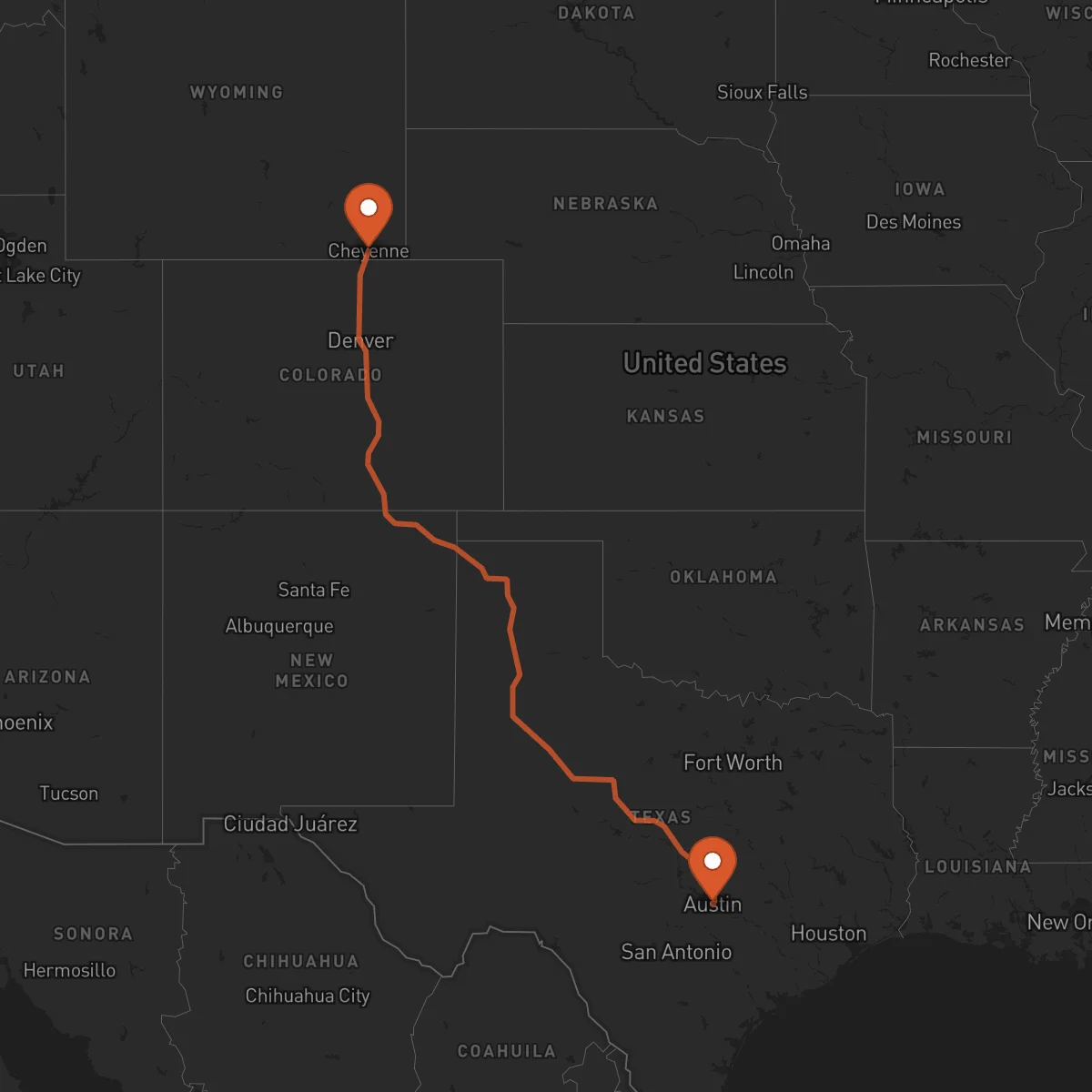
The Austin-Cheyenne corridor represents a vital logistics connection between Texas and Wyoming, spanning approximately 1,366 kilometers through the heart of the United States. This domestic route links two strategically positioned cities, facilitating the movement of goods across diverse economic regions. The corridor traverses multiple states, connecting the growing tech and manufacturing hub of Austin with the energy and logistics center of Cheyenne, creating essential supply chain links for businesses operating across the central United States.
The economic significance of this corridor is substantial, supporting industries ranging from technology and manufacturing to energy and agriculture. Austin's booming tech sector and Cheyenne's role as a major energy hub create complementary economic activities that drive consistent freight demand along this route. The corridor serves as a critical link for companies requiring efficient transportation of goods between Texas's industrial centers and Wyoming's resource-based economy, with freight volumes steadily increasing as both regions continue to grow.
Control Terrestre provides comprehensive FTL transportation services along this corridor, leveraging our extensive network of certified carriers and specialized equipment. Our expertise in managing full truckload shipments ensures that businesses can move their cargo efficiently and reliably between Austin and Cheyenne. We offer dedicated services, specialized handling for oversized or hazardous materials, and expedited options to meet varying business needs. Our commitment to safety, reliability, and customer service makes us the preferred logistics partner for companies operating along this important domestic route.
Services for this Route
Available services for the corridor Austin - Cheyenne
 Origin
Austin
Austin serves as a strategic logistics hub in central Texas, offering excellent connectivity through major highways including I-35, which runs north-south through the city, and US-290 connecting to Houston and beyond. The city's location provides access to major Texas ports and border crossings, making it an ideal origin point for domestic and international freight. Austin-Bergstrom International Airport and the nearby Port of Houston enhance the city's multimodal transportation capabilities, supporting efficient cargo movement across various transportation modes.
The city's economy is driven by technology, manufacturing, and healthcare sectors, with major employers including Dell, Apple, and numerous tech startups creating substantial freight demand. Austin's manufacturing base produces electronics, machinery, and aerospace components, while the healthcare industry requires specialized logistics for medical equipment and supplies. The growing population and business environment generate consistent demand for consumer goods transportation, making Austin a dynamic origin point for freight shipments across the United States.
 Destination
Cheyenne
Cheyenne's strategic location at the crossroads of I-25 and I-80 makes it a crucial logistics hub for the Rocky Mountain region and beyond. The city serves as a gateway to Wyoming's vast resource-rich territories and provides direct access to major transportation corridors connecting the Midwest, West Coast, and Mountain states. Cheyenne's transportation infrastructure includes extensive rail connections through Union Pacific and proximity to Denver International Airport, creating a robust multimodal logistics network that supports efficient freight movement throughout the region.
The local economy centers on energy, government, and logistics sectors, with Wyoming's coal, oil, and natural gas industries driving significant freight demand. Cheyenne's role as the state capital and its growing logistics sector create consistent demand for various freight services, from energy equipment to office supplies. The city's strategic position makes it an ideal distribution point for goods destined for Wyoming's rural communities and neighboring states, while its logistics infrastructure supports efficient handling of specialized cargo including oversized equipment and hazardous materials.










