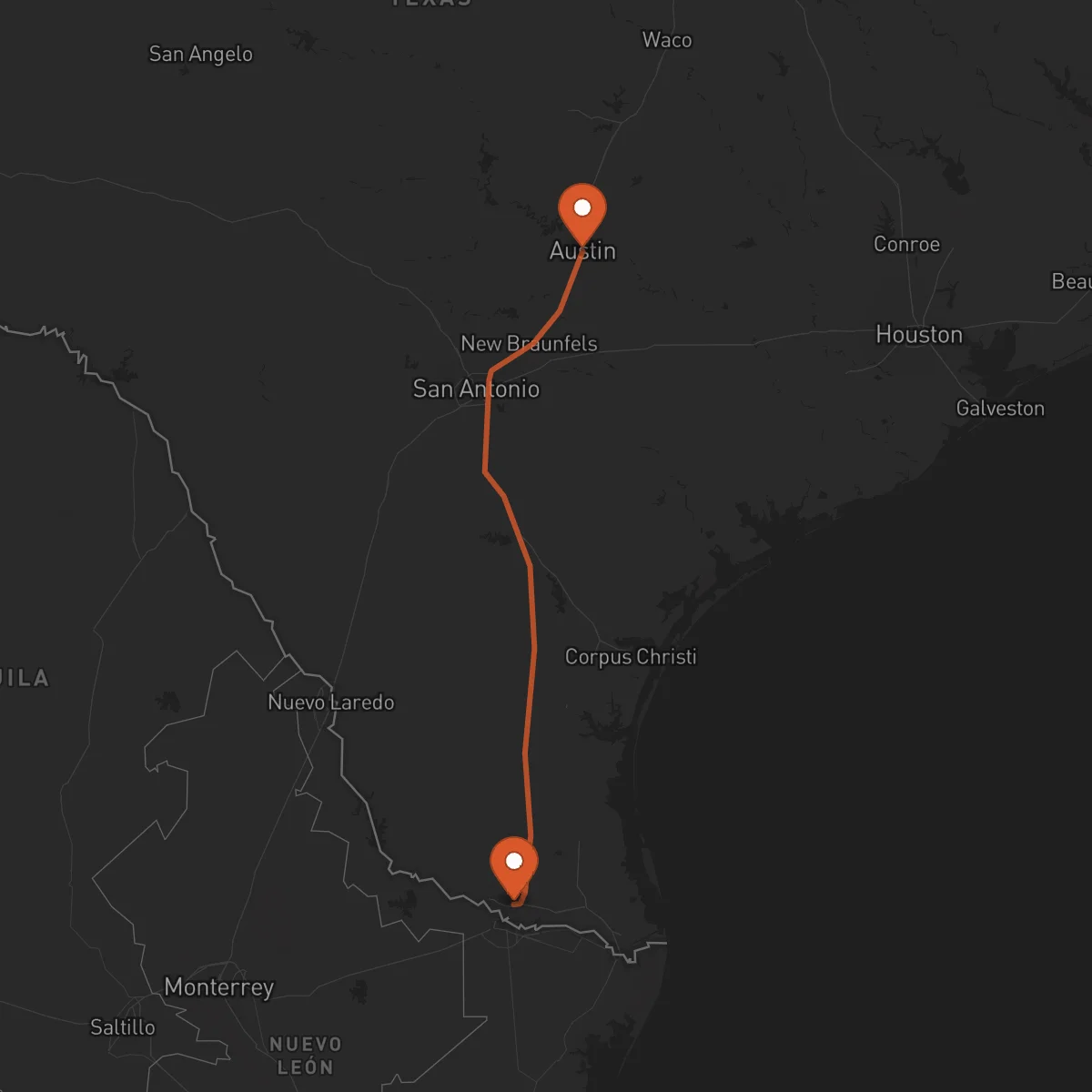
Austin to McAllen
McAllen → AustinFTL freight transportation service between Austin and McAllen. Reliable logistics solutions for your business.
Route Description
Everything you need to know about the corridor Austin - McAllen
The Austin-McAllen corridor represents a vital logistics connection in southern Texas, spanning approximately 454 kilometers through the heart of the Lone Star State. This domestic route links the capital city's thriving technology and government sectors with the bustling international trade hub of the Rio Grande Valley. The corridor follows a southwest trajectory through the Texas Hill Country and South Texas plains, traversing key economic regions that drive the state's commerce.
The transportation infrastructure along this route is anchored by Interstate 35 South, which provides a direct, high-capacity freight corridor between the two cities. This major highway offers multiple lanes in each direction, modern rest areas, and robust connectivity to other regional transportation networks. The route also benefits from excellent road conditions and strategic access points to secondary highways, facilitating efficient cargo movement throughout the region.
Control Terrestre leverages this well-established corridor to provide reliable full truckload (FTL) transportation services between Austin and McAllen. Our experienced network of carriers ensures consistent transit times and professional handling of diverse freight types. We understand the unique requirements of this route, from managing seasonal traffic patterns to navigating the transition from the urban core of Austin to the international border region near McAllen.
Services for this Route
Available services for the corridor Austin - McAllen
 Origin
Austin
Austin serves as a strategic logistics hub in central Texas, combining the advantages of a major metropolitan area with proximity to key transportation corridors. The city's location at the intersection of major highways, including Interstate 35, provides excellent connectivity to both national and regional markets. Austin's robust infrastructure includes Austin-Bergstrom International Airport, multiple freight rail terminals, and extensive warehousing facilities that support its diverse economic activities.
The city's economy is driven by technology, government, education, and healthcare sectors, creating a dynamic freight demand profile. The presence of numerous tech companies, state government offices, and the University of Texas generates consistent shipping volumes for specialized equipment, electronics, and time-sensitive materials. Austin's growing population and business community also contribute to steady demand for consumer goods transportation throughout the region.
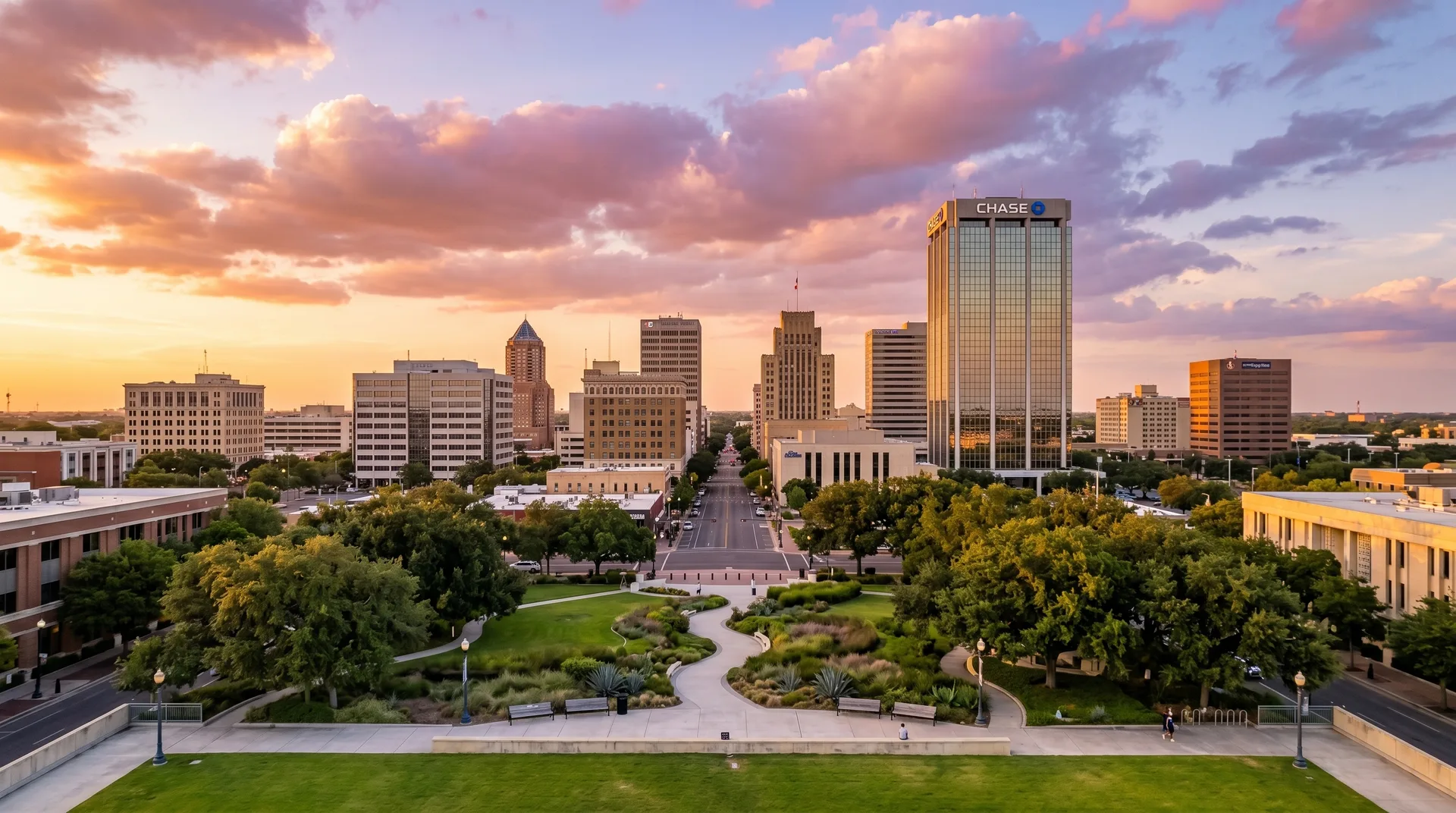 Destination
McAllen
McAllen occupies a strategic position in the Rio Grande Valley, serving as a critical gateway for international trade with Mexico. The city's location near the U.S.-Mexico border provides unique advantages for cross-border logistics operations, with direct access to major international bridges and customs facilities. McAllen's transportation infrastructure includes the McAllen Miller International Airport, extensive highway networks, and proximity to the Port of Harlingen for additional freight options.
The local economy is characterized by international trade, retail, healthcare, and manufacturing sectors. McAllen's role as a major distribution center for goods entering and exiting the United States creates substantial freight volumes, particularly for consumer products, electronics, and agricultural commodities. The region's growing industrial base and retail sector generate consistent demand for reliable transportation services to and from major Texas markets.










