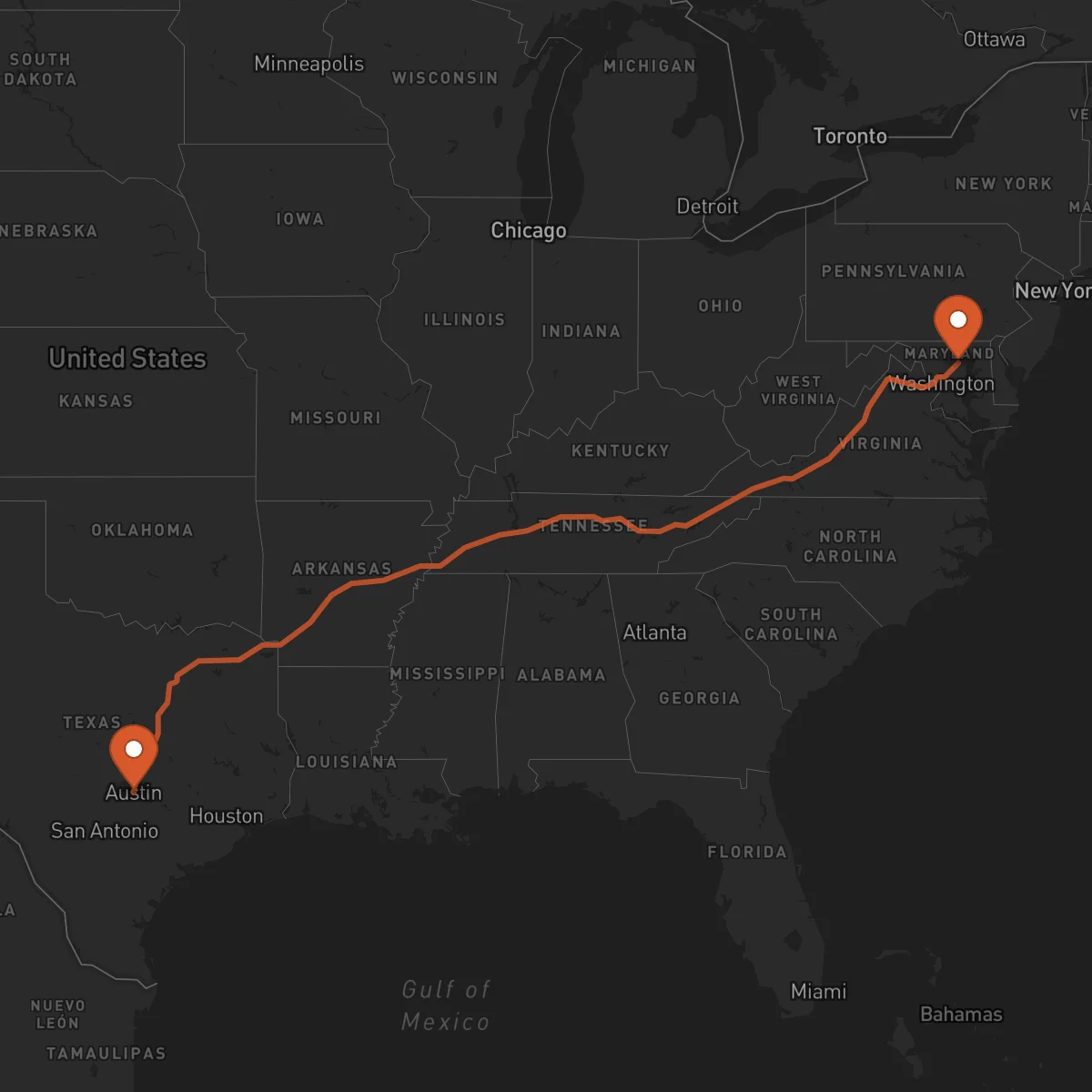
Austin to Baltimore
Baltimore → AustinFTL freight transportation service between Austin and Baltimore. Reliable logistics solutions for your business.
Route Description
Everything you need to know about the corridor Austin - Baltimore
The Austin to Baltimore corridor represents a crucial logistics connection between the dynamic technology hub of Texas and the strategic port city on the East Coast. This 2,168 km route traverses the heart of the United States, linking the innovation-driven economy of Austin with Baltimore's established industrial and maritime infrastructure. The corridor passes through key economic regions including Dallas, Nashville, and Pittsburgh, providing access to major population centers and industrial zones.
The economic significance of this corridor is substantial, connecting Austin's thriving technology, semiconductor, and advanced manufacturing sectors with Baltimore's strengths in healthcare, logistics, and international trade. This route facilitates the movement of high-value electronics, automotive components, and specialized industrial equipment from Texas to the East Coast, while supporting reverse logistics and supply chain optimization for companies operating across both regions.
Control Terrestre optimizes operations on this corridor through our specialized FTL services, leveraging our network of certified carriers and strategic partnerships. Our dedicated transportation solutions ensure consistent transit times, real-time tracking, and specialized handling for sensitive cargo. We provide seamless door-to-door service, coordinating with our extensive provider network to maintain service quality across the entire route, from the tech corridors of Austin to the port facilities of Baltimore.
Services for this Route
Available services for the corridor Austin - Baltimore
 Origin
Austin
Austin serves as a strategic logistics hub in the heart of Texas, combining its position as a technology and innovation center with excellent transportation infrastructure. The city benefits from its location within the Texas Triangle, providing access to major freight corridors and proximity to key ports like Houston and Corpus Christi. Austin's economic landscape is dominated by technology companies, semiconductor manufacturing, and advanced electronics production, creating consistent demand for specialized freight transportation. The city's infrastructure includes multiple interstate highways (I-35, I-10, I-45), Austin-Bergstrom International Airport, and rail connections through Union Pacific, supporting efficient distribution of high-value and time-sensitive cargo.
 Destination
Baltimore
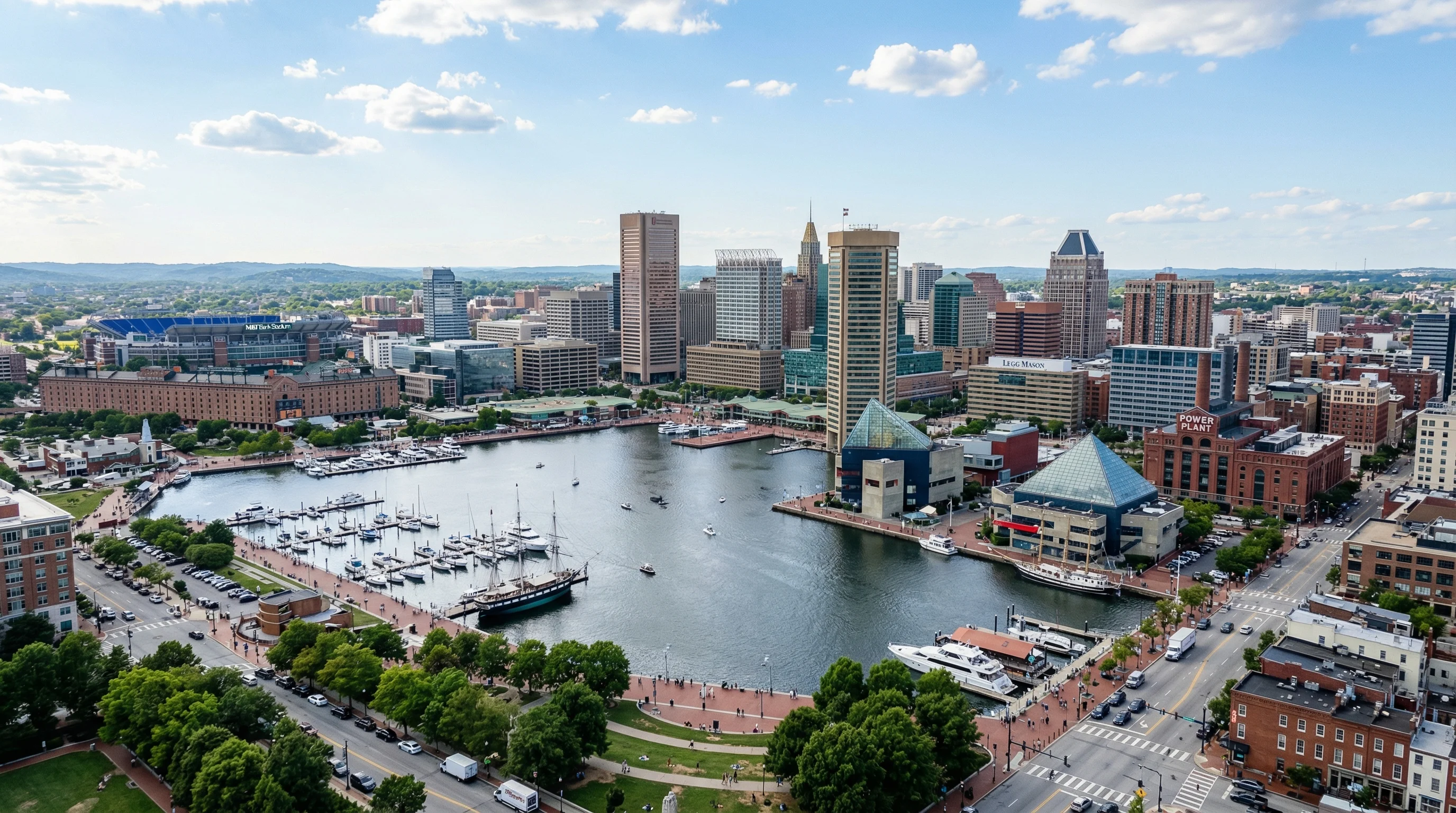
Baltimore stands as a strategic logistics gateway on the East Coast, anchored by one of the busiest ports in the United States and extensive transportation networks. The city's location provides immediate access to major East Coast markets within a day's drive, while the Port of Baltimore handles significant volumes of international cargo, particularly automobiles and specialized equipment. Baltimore's economy is diverse, with strengths in healthcare, biotechnology, logistics, and advanced manufacturing. The region benefits from multiple interstate highways (I-95, I-70, I-83), the Baltimore/Washington International Airport, and comprehensive rail services through CSX and Norfolk Southern, creating a multimodal transportation hub that efficiently connects to national and international supply chains.










