If your company moves goods by road in Mexico, the bill of lading is not just another formality — it is the document that legally covers every transfer. And since 2021, errors in its completion can be costly.
This guide is for the logistics, procurement, or administration team that coordinates shipments but is not necessarily an expert in SAT tax matters.
What is the bill of lading and why does it affect you even if you are not a carrier?
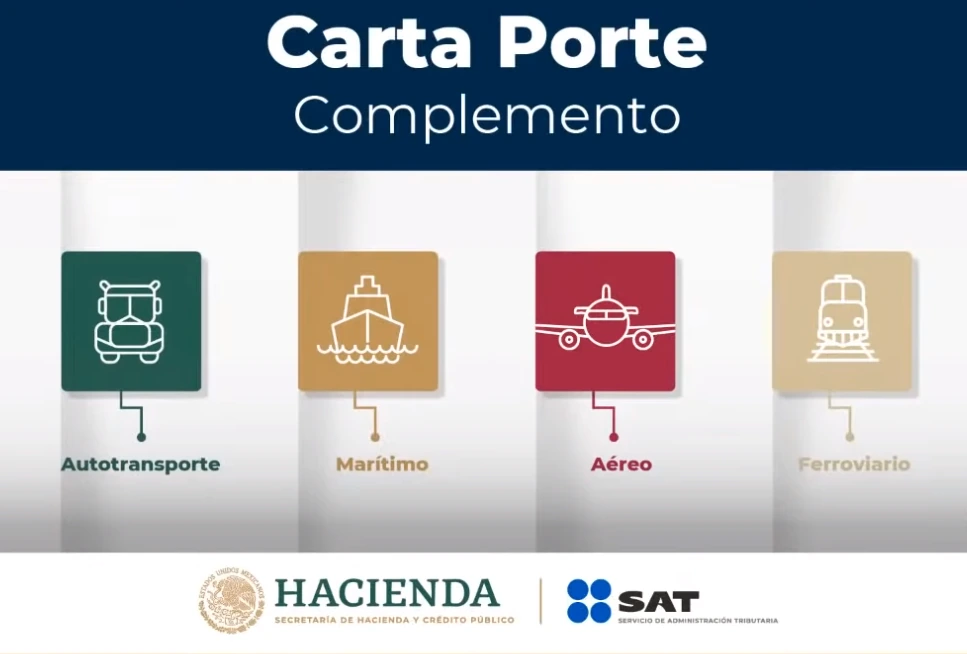
The bill of lading is a complement added to the CFDI (electronic invoice) that covers the transfer of goods. Although the carrier issues it, you as the shipper are responsible for ensuring that your company's data, your merchandise, and your destination are correct.
If there is an error in your RFC, in the product description, or in the destination coordinates, the document can be rejected at a checkpoint — and the truck stops. The Tax Administration Service details the technical specifications of the complement on its official portal.
Step 1 — Verify your RFC before giving any instructions
The simplest data point is also the one that generates the most errors. Before coordinating a shipment, confirm that the RFC you are going to give the carrier is exactly the one registered with the SAT, including the homoclave. You can verify it directly on the SAT portal.
A single incorrect character invalidates the document.
Step 2 — Describe your merchandise with the correct SAT code
The SAT has an official product and service catalog. Each type of merchandise has its specific code — you cannot write a generic description like "construction material" without the corresponding code.
Ask your tax department or your billing provider for the correct code for what you normally ship. If you handle different types of products, create a reference list so you don't have to improvise on every shipment.
Step 3 — Confirm the weight and unit of measure
The weight must be in kilograms and the unit of measure must be from the SAT catalog — not just any denomination. If your warehouse handles pallets or boxes, make sure the carrier knows the actual gross weight of the load before generating the CFDI.
An incorrectly declared weight can be interpreted as an attempt at tax evasion by the Secretaría de Hacienda.
Step 4 — Provide the destination address with precision
The bill of lading requires geographic coordinates for both the origin and destination points. Simply putting "Monterrey, N.L." is not enough — you need the full address: street, number, neighborhood, municipality, state, and postal code.
Many companies maintain an internal catalog of their clients with this data already verified. If you don't have one, it's time to create it.
Step 5 — Verify that the CFDI is stamped before the truck leaves
This is the most costly error: the carrier departs without having generated the fiscal folio (UUID). The document must be stamped before the transfer begins — not en route, not upon arrival.
Make this a requirement in your process: no shipment departure is authorized without the PDF of the CFDI with the bill of lading complement in hand. The Secretaría de Infraestructura, Comunicaciones y Transportes (SICT) can request it at any roadside checkpoint.
Which version of the complement should your carrier use?
Since January 2024, the current version is 3.1. If your transportation provider is still using earlier versions, the document is not valid before the SAT. Ask directly which version their system issues and, if necessary, request an update as a condition for continuing to work together. You can consult the official changes in the Diario Oficial de la Federación.
Do you want a logistics partner that already has this covered?
At Control Terrestre, we operate with verified documentation processes for every shipment. If your company needs a reliable carrier that complies with all SAT and SICT regulations, request a quote here — our team will get back to you quickly.
And if you want to receive content like this directly in your inbox, subscribe to our newsletter. We publish what the logistics team actually needs, with no filler.