Victoria to Tulsa
Tulsa → VictoriaFTL freight transportation service between Victoria and Tulsa. Reliable logistics solutions for your business.
Route Description
Everything you need to know about the corridor Victoria - Tulsa
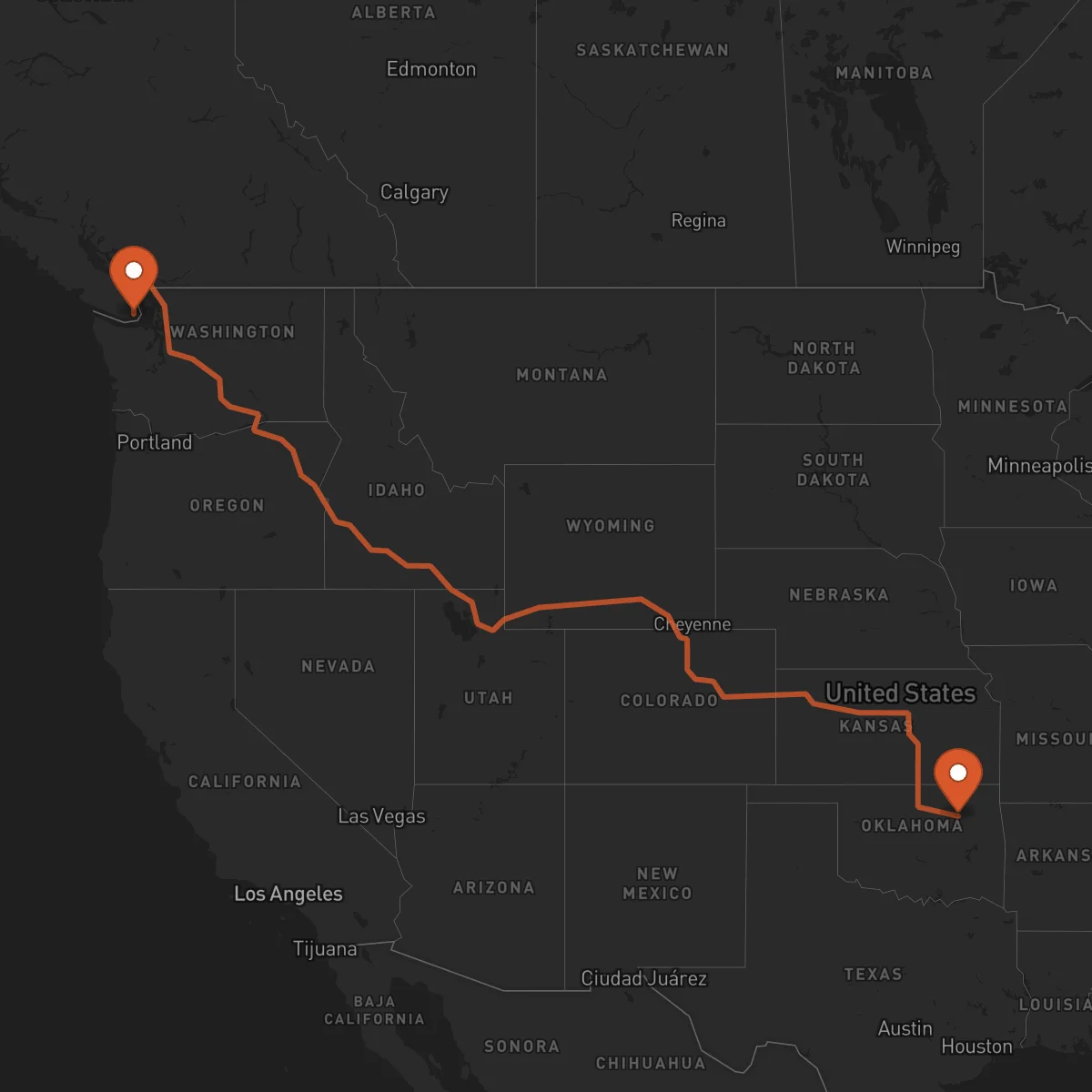
The Victoria to Tulsa corridor represents a vital cross-border freight route connecting British Columbia's Pacific port access with Oklahoma's industrial heartland. This 2,612 km transportation corridor traverses diverse terrain and crosses multiple state and provincial borders, making it essential for companies moving goods between Canada and the United States. The route serves as a critical link in North American supply chains, particularly for industries requiring efficient transit between Western Canada and the central United States.
The economic significance of this corridor extends beyond simple distance, as it connects Victoria's strategic Pacific position with Tulsa's central location in the U.S. manufacturing and energy sectors. This route facilitates trade in automotive parts, industrial equipment, agricultural products, and energy-related materials. The corridor's importance has grown with increasing trade volumes between Canada and the United States, particularly in sectors requiring specialized transportation solutions.
Key transportation infrastructure along this route includes major highways such as I-5, I-15, and I-44, providing reliable freight movement across international borders. The corridor crosses at significant border points where C-TPAT-certified carriers can expedite customs clearance. Control Terrestre's expertise in cross-border operations ensures seamless documentation, compliance with customs regulations, and efficient transit times, helping businesses maintain competitive supply chains between Victoria and Tulsa.
Services for this Route
Available services for the corridor Victoria - Tulsa
 Origin
Victoria
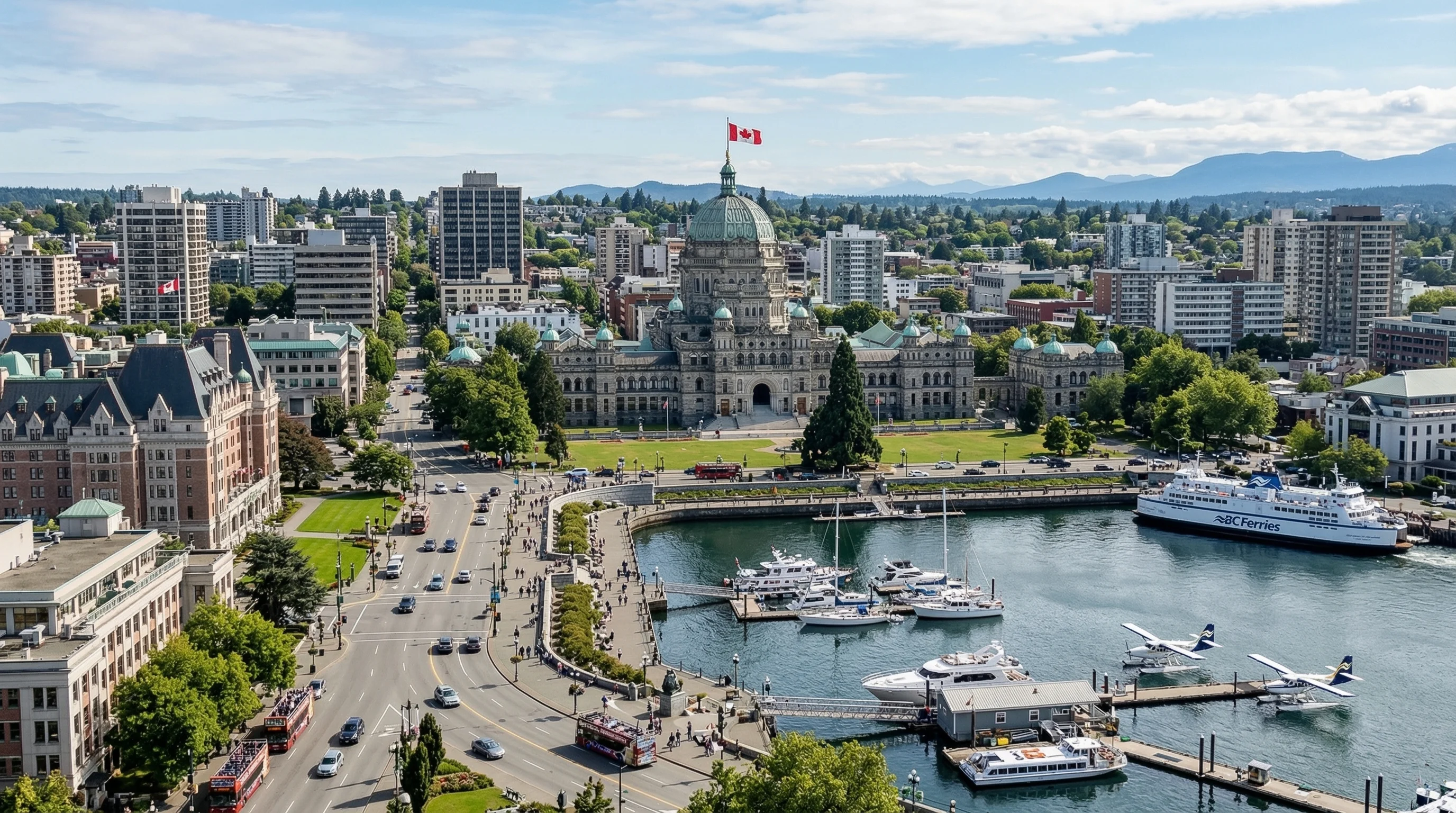
Victoria, located on Vancouver Island in British Columbia, serves as a strategic gateway for Pacific Northwest logistics operations. The city's proximity to major ports and its position as a transportation hub for Vancouver Island make it ideal for companies requiring efficient access to both maritime and overland freight routes. Victoria's economy is supported by technology, tourism, and government sectors, with growing logistics and distribution activities serving the broader Vancouver Island region.
The city benefits from comprehensive transportation infrastructure including ferry connections to mainland British Columbia and Washington State, as well as road networks connecting to Vancouver and other major centers. Victoria International Airport provides air cargo services, while the nearby Port of Vancouver offers extensive maritime shipping capabilities. This multimodal infrastructure makes Victoria an excellent origin point for freight destined for U.S. markets, particularly when combined with specialized cross-border transportation services.
 Destination
Tulsa
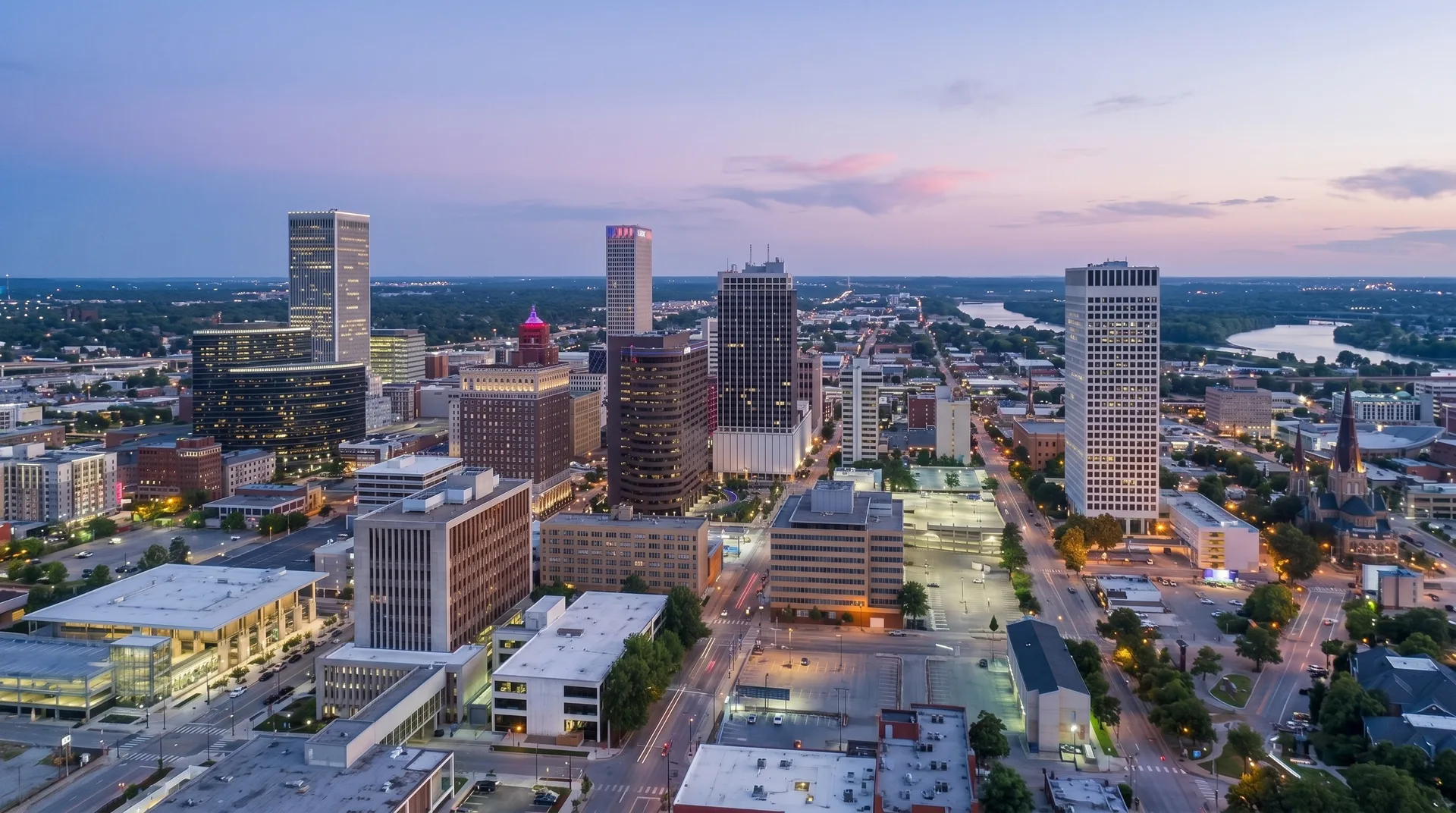
Tulsa, Oklahoma stands as a major logistics and distribution center in the central United States, strategically positioned at the crossroads of major freight corridors. The city's location provides excellent access to markets throughout the Midwest and Southern United States, making it a preferred destination for companies requiring efficient distribution networks. Tulsa's economy is anchored in energy, aerospace, manufacturing, and logistics sectors, with significant industrial activity driving freight demand.
The city boasts robust transportation infrastructure including Tulsa International Airport with dedicated cargo facilities, extensive highway networks (I-44, I-244, US-75), and rail connections through major freight railroads. Tulsa's relatively central location reduces transit times to major U.S. markets, while its industrial parks and distribution centers provide excellent facilities for freight consolidation and warehousing. This infrastructure, combined with the city's business-friendly environment, makes Tulsa an ideal destination for cross-border freight operations connecting Canadian suppliers with U.S. customers.










