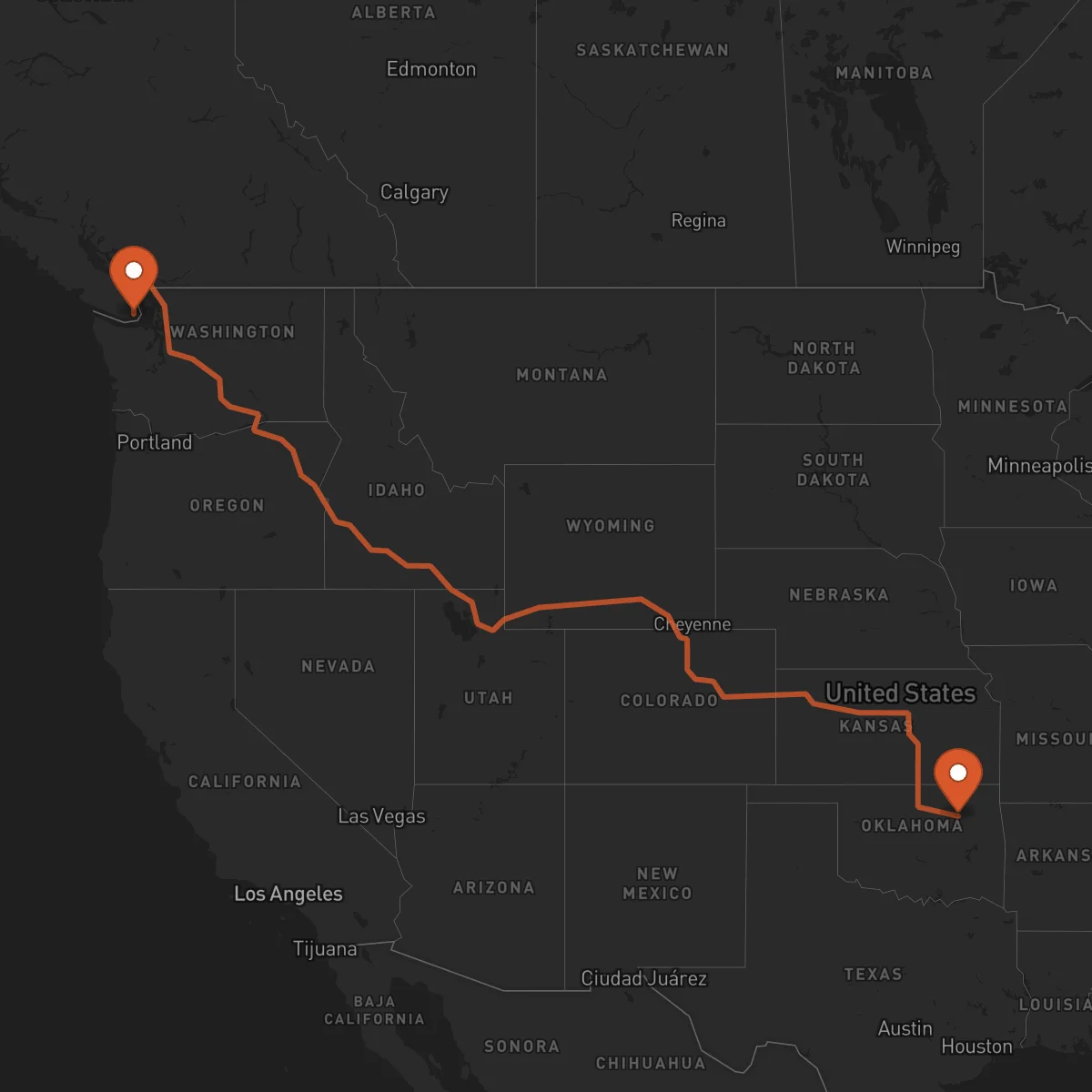
Tulsa to Victoria
Victoria → TulsaFTL freight transportation service between Tulsa and Victoria. Reliable logistics solutions for your business.
Route Description
Everything you need to know about the corridor Tulsa - Victoria
The logistics corridor between Tulsa, Oklahoma, and Victoria, British Columbia, represents a vital cross-border freight transportation route connecting the central United States with the Pacific Northwest of Canada. This 2,612 km corridor serves as a crucial link for companies moving goods between the industrial heartland of America and Canada's western ports and markets. The route facilitates the movement of diverse cargo types, from manufactured goods and agricultural products to industrial equipment and consumer merchandise.
The economic significance of this corridor is substantial, connecting Tulsa's manufacturing and energy sectors with Victoria's thriving technology, tourism, and service industries. Along the route, major economic centers including Kansas City, Omaha, and Calgary contribute to the freight volume, with goods moving through key border crossings such as Sweetgrass, Montana/Coutts, Alberta. This corridor supports industries ranging from automotive and aerospace to electronics and pharmaceuticals, making it a critical supply chain artery for North American trade.
Transportation infrastructure along this corridor includes major interstate highways such as I-44, I-70, and I-90, transitioning to Canadian routes including the Trans-Canada Highway. The route features multiple transportation modes, with intermodal capabilities allowing seamless transitions between truck, rail, and port facilities. Control Terrestre specializes in managing the complexities of this cross-border operation, ensuring efficient customs clearance, regulatory compliance, and timely delivery across the entire route.
Services for this Route
Available services for the corridor Tulsa - Victoria
 Origin
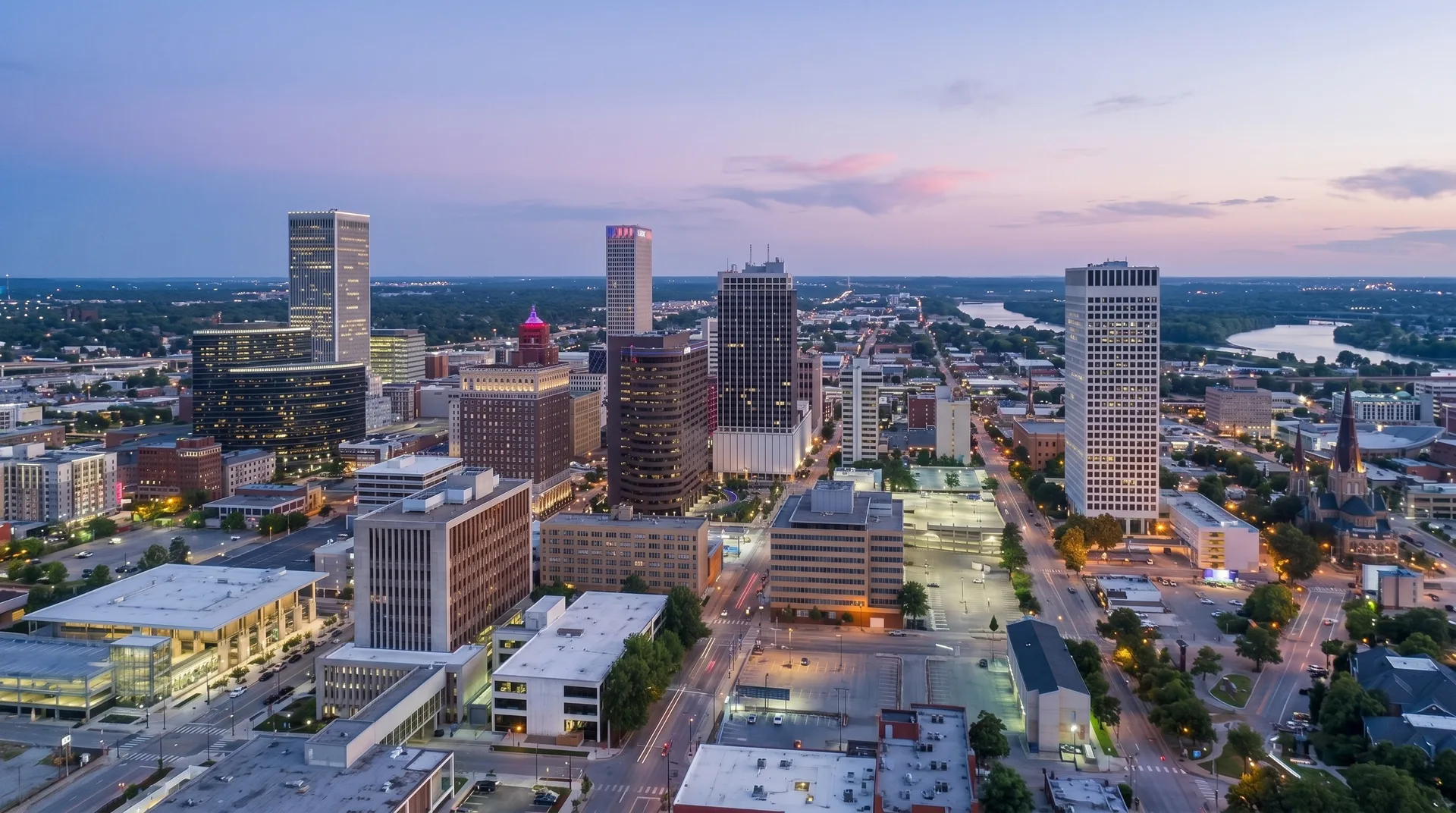
Tulsa
Tulsa, Oklahoma serves as a strategic logistics hub in the central United States, offering excellent connectivity to major freight corridors and distribution networks. The city's location provides direct access to I-44, connecting eastward to St. Louis and westward to Oklahoma City, while its proximity to major rail yards and the Tulsa Port of Catoosa on the McClellan-Kerr Arkansas River Navigation System enhances multimodal transportation capabilities. Tulsa's central location within a day's drive of 75% of the U.S. population makes it an ideal origin point for freight distribution.
The economic landscape of Tulsa is diverse, with strong presence in energy, aerospace, manufacturing, and logistics sectors. Major employers include energy companies, aircraft manufacturers, and industrial equipment producers, all of which generate significant freight volumes. The city's robust industrial base, combined with its transportation infrastructure, creates a dynamic environment for freight movement, making it an optimal starting point for cross-border shipments to Canada.
 Destination
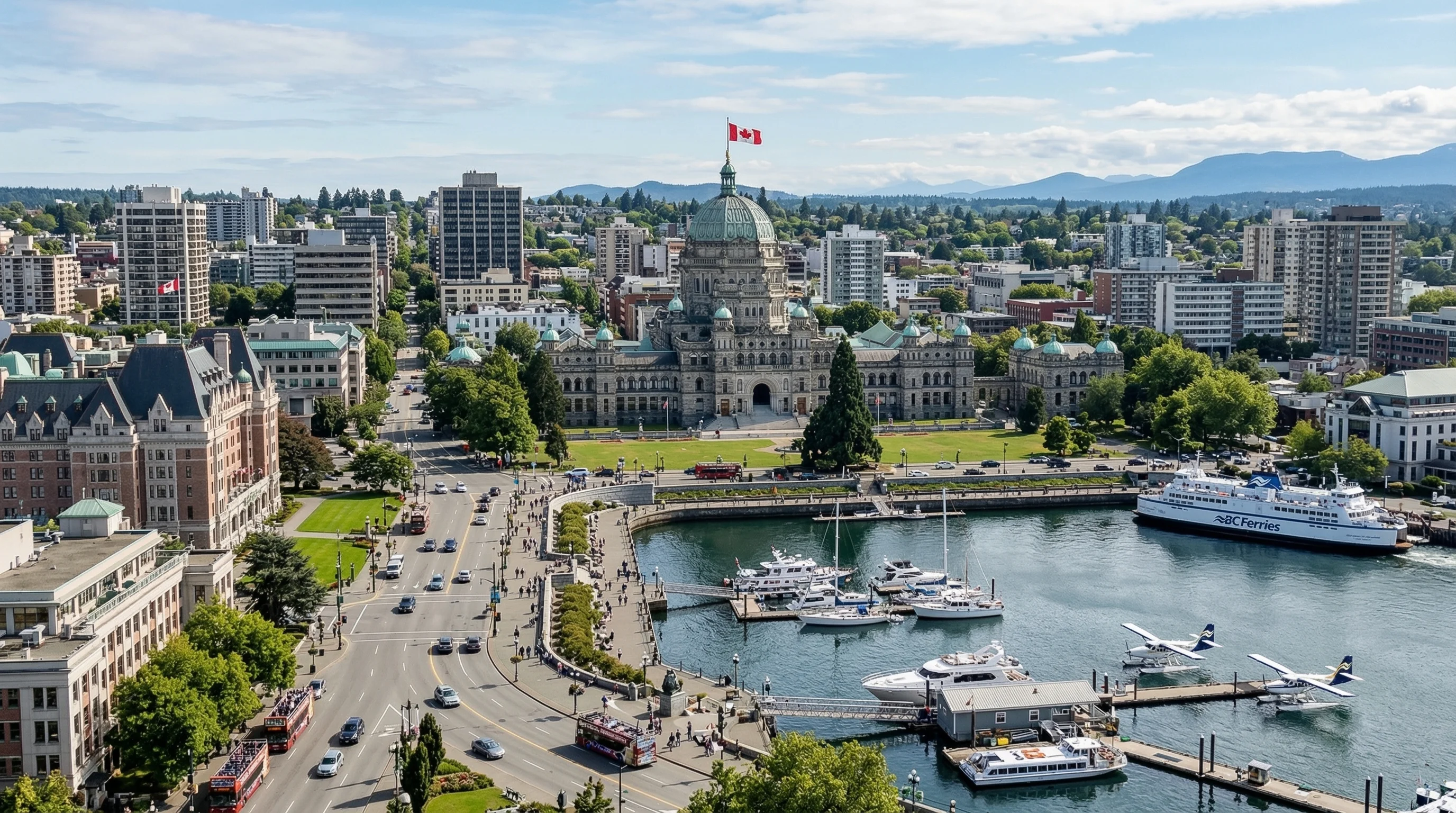
Victoria
Victoria, British Columbia, located on Vancouver Island, serves as a strategic endpoint for cross-border freight operations, connecting mainland transportation networks with island-based industries and markets. While primarily accessible by ferry from mainland ports such as Vancouver and Seattle, Victoria's location makes it a crucial gateway for goods entering Vancouver Island's thriving technology, tourism, and service sectors. The city's port facilities and logistics infrastructure support efficient cargo handling and distribution throughout the island region.
The economic environment in Victoria is characterized by a strong technology sector, government services, tourism, and education, all of which require reliable freight transportation services. The city's strategic position as the capital of British Columbia and its growing population create consistent demand for goods ranging from office supplies and technology equipment to retail merchandise and construction materials. Victoria's transportation network, including its ferry connections and local distribution capabilities, ensures seamless final-mile delivery for cross-border shipments arriving from the United States.










