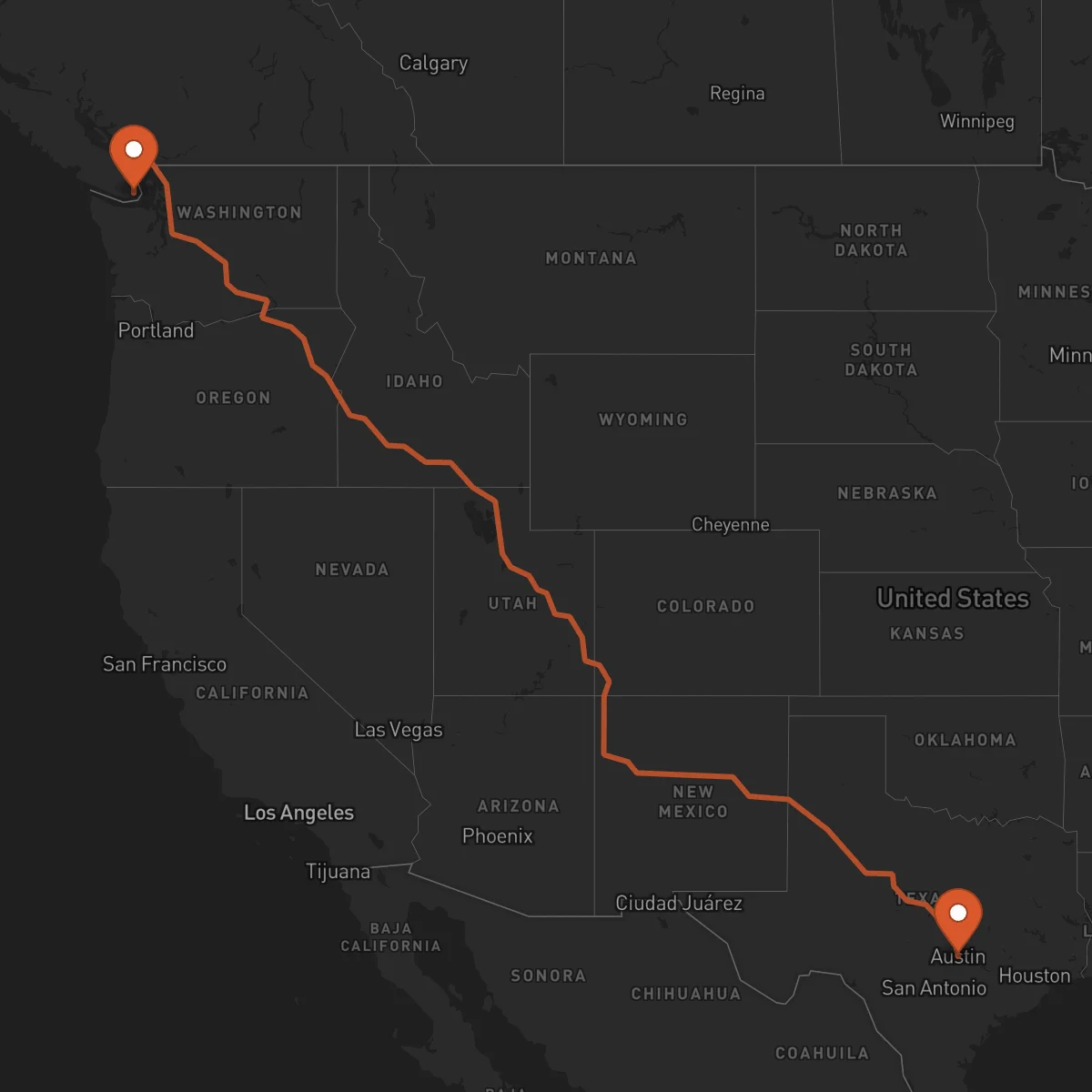
Victoria to Austin
Austin → VictoriaFTL freight transportation service between Victoria and Austin. Reliable logistics solutions for your business.
Route Description
Everything you need to know about the corridor Victoria - Austin
The Victoria-Austin corridor represents a vital cross-border freight transportation route connecting Canada and the United States through an extensive network of highways and border crossings. This 2,962 km corridor links the Pacific Northwest with the heart of Texas, facilitating the movement of goods between two major economic regions. The route traverses diverse landscapes and crosses international borders, making it a complex but essential logistics pathway for businesses operating in both countries.
The corridor's strategic importance is underscored by its role in connecting major industrial centers and facilitating trade between Canada and the United States. The Pacific Northwest region, including Victoria, is known for its robust technology, aerospace, and natural resource sectors, while Austin serves as a major hub for technology, manufacturing, and distribution. This complementary economic relationship drives significant freight volumes along this corridor, supporting industries ranging from electronics and automotive to agricultural products and consumer goods.
Transportation infrastructure along this corridor includes major highways such as I-5, I-15, and I-35, providing efficient north-south connectivity. Key border crossings, including those near Blaine, Washington, and Sweetgrass, Montana, serve as critical points for customs clearance and cargo inspection. Control Terrestre specializes in navigating these complex cross-border operations, offering comprehensive FTL services that ensure seamless freight movement from Victoria to Austin. Our expertise in customs documentation, compliance with international regulations, and coordination with certified carriers makes us the ideal partner for businesses requiring reliable cross-border transportation solutions.
Services for this Route
Available services for the corridor Victoria - Austin
 Origin
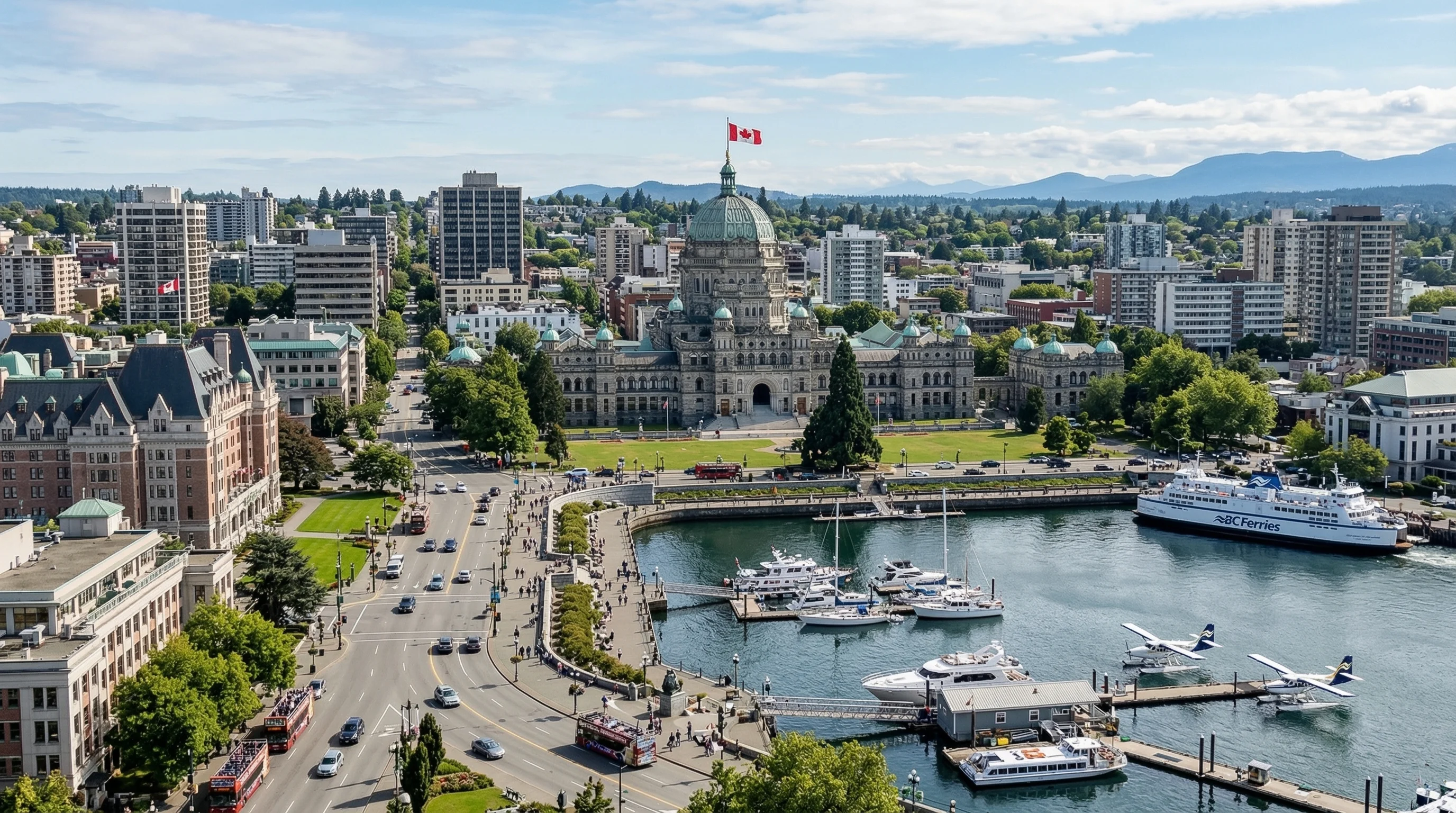
Victoria
Victoria, located on Vancouver Island in British Columbia, Canada, serves as a strategic gateway for international trade and logistics operations. The city's proximity to major ports and its well-developed transportation infrastructure make it an ideal origin point for cross-border freight movements. Victoria's economy is characterized by a strong presence in technology, aerospace, and advanced manufacturing sectors, along with significant contributions from tourism and government services. The region's commitment to sustainable practices and green technology aligns with modern logistics requirements, making it a forward-thinking logistics hub.
The transportation infrastructure in Victoria includes comprehensive road networks, rail connections, and port facilities that facilitate efficient cargo handling and distribution. The city's location provides access to major Canadian and U.S. markets, with well-maintained highways connecting to mainland British Columbia and beyond. Victoria's strategic position allows for seamless integration with international shipping routes and provides businesses with multiple options for freight consolidation and distribution. The presence of specialized logistics providers and freight forwarders in the region ensures that companies can access comprehensive transportation solutions tailored to their specific needs.
 Destination
Austin
Austin, Texas, stands as a dynamic logistics and economic center in the southern United States, offering strategic advantages for freight distribution and supply chain operations. The city's rapid growth and diverse economy have established it as a major hub for technology, manufacturing, and distribution activities. Austin's central location within Texas provides excellent connectivity to major markets across the southern and southwestern United States, making it an ideal destination for cross-border freight movements. The region's business-friendly environment and skilled workforce contribute to its attractiveness as a logistics destination.
The transportation infrastructure in Austin includes an extensive network of highways, including I-35, which serves as a major north-south corridor, and connections to other key routes such as I-10 and I-45. The city is served by multiple airports, rail facilities, and a well-developed road network that facilitates efficient cargo movement. Austin's proximity to major Texas ports and its integration with the broader U.S. transportation system make it an ideal location for distribution centers and logistics operations. The presence of specialized logistics providers and freight forwarders in the Austin area ensures that businesses can access comprehensive transportation solutions and benefit from the region's strategic advantages for cross-border trade.










