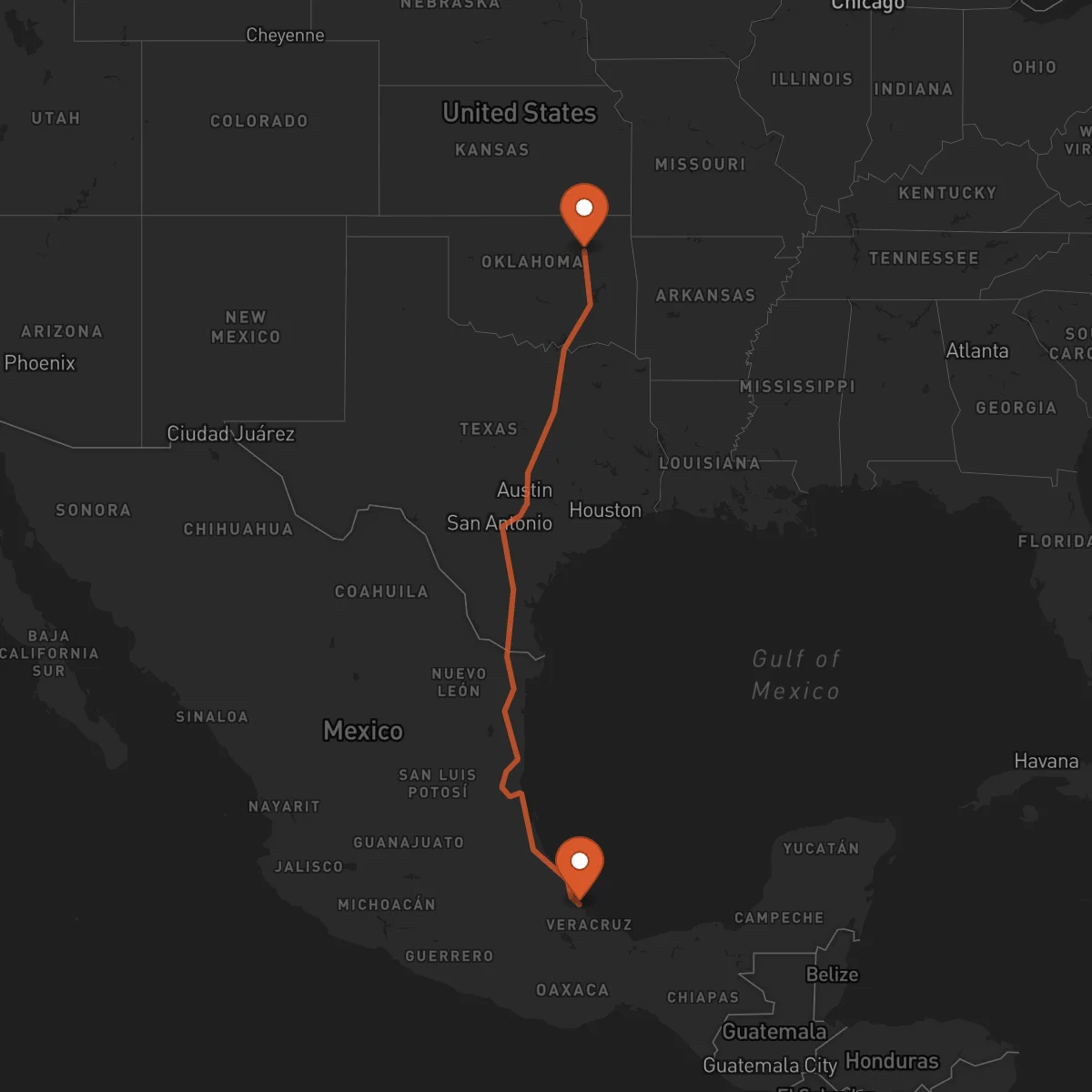
Tulsa to Veracruz
Veracruz → TulsaFTL freight transportation service between Tulsa and Veracruz. Reliable logistics solutions for your business.
Route Description
Everything you need to know about the corridor Tulsa - Veracruz
The Tulsa-Veracruz corridor represents a vital trade link between the industrial heartland of the United States and one of Mexico's most important port cities. This cross-border route spans approximately 1,888 kilometers, connecting Oklahoma's manufacturing and energy sectors with Veracruz's strategic maritime infrastructure. The corridor facilitates the movement of goods between Tulsa's distribution centers and Veracruz's port facilities, enabling efficient trade flows between North American markets.
This transportation corridor traverses diverse terrain and crosses multiple state lines, requiring expert knowledge of cross-border regulations and customs procedures. The route primarily utilizes major interstate highways in the United States before transitioning to Mexico's federal highways, with key passage through Laredo-Nuevo Laredo, one of North America's busiest commercial border crossings. Control Terrestre's expertise in managing cross-border documentation and compliance ensures seamless transit through these critical checkpoints.
The economic significance of this corridor continues to grow as trade between the United States and Mexico expands. Industries ranging from automotive and aerospace to agricultural products and consumer goods rely on this transportation link. Control Terrestre provides specialized FTL services along this corridor, offering dedicated equipment and experienced drivers who understand the unique requirements of cross-border freight movement. Our C-TPAT and FAST certifications facilitate expedited processing at border crossings, reducing transit times and ensuring reliable delivery schedules for our clients' critical shipments.
Services for this Route
Available services for the corridor Tulsa - Veracruz
 Origin
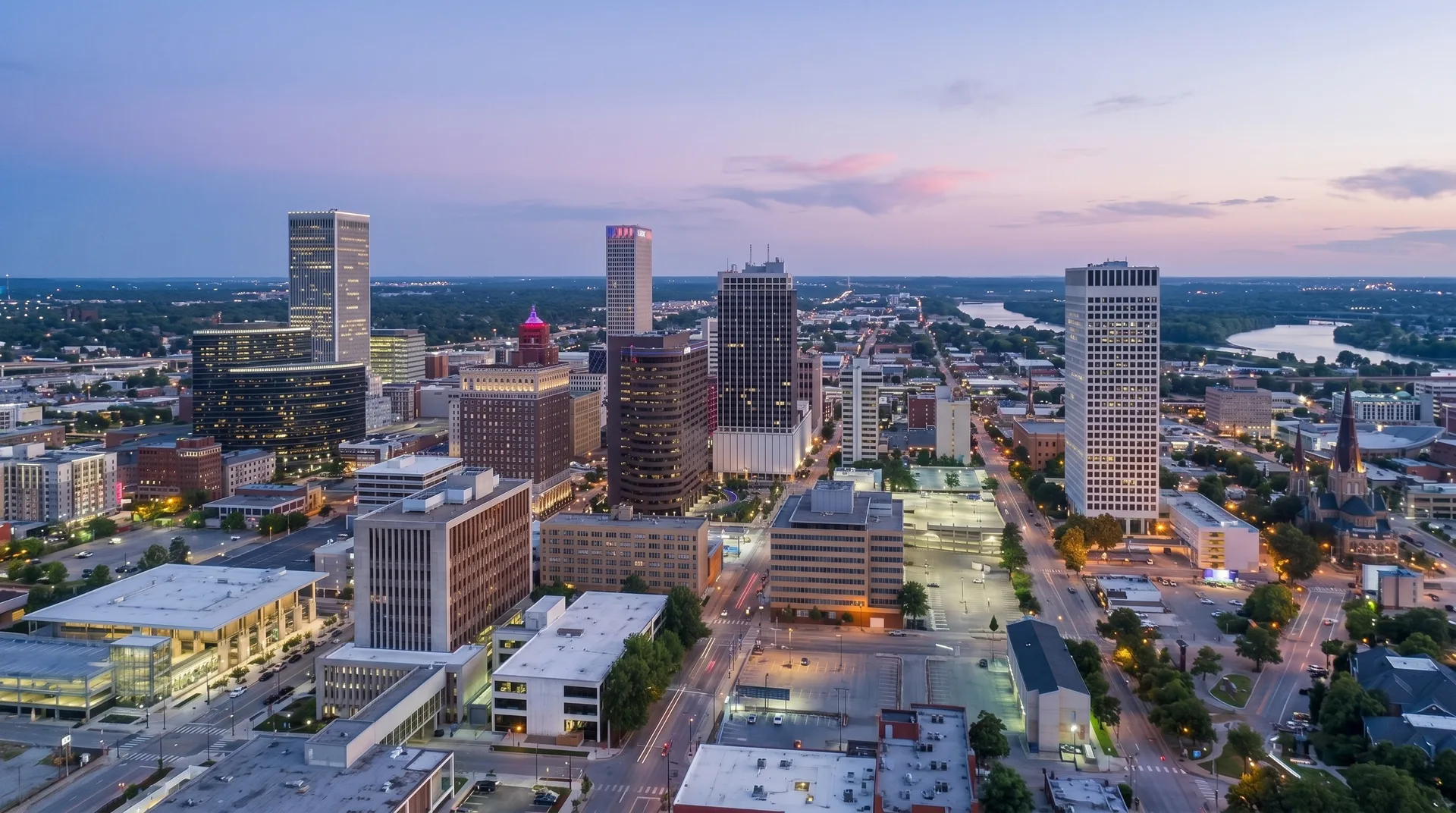
Tulsa
Tulsa, Oklahoma serves as a strategic logistics hub in the southern-central United States, positioned at the intersection of major transportation networks. The city's location provides excellent connectivity to regional distribution centers and manufacturing facilities throughout the Midwest and southern states. Tulsa's economy is anchored by energy, aerospace, and manufacturing sectors, with numerous warehouses and industrial parks supporting freight consolidation and distribution operations. The city benefits from access to multiple interstate highways, including I-44 and I-244, facilitating efficient north-south and east-west freight movements. Tulsa International Airport and nearby rail terminals complement the robust ground transportation infrastructure, making it an ideal origin point for cross-border freight shipments to Mexico.
 Destination
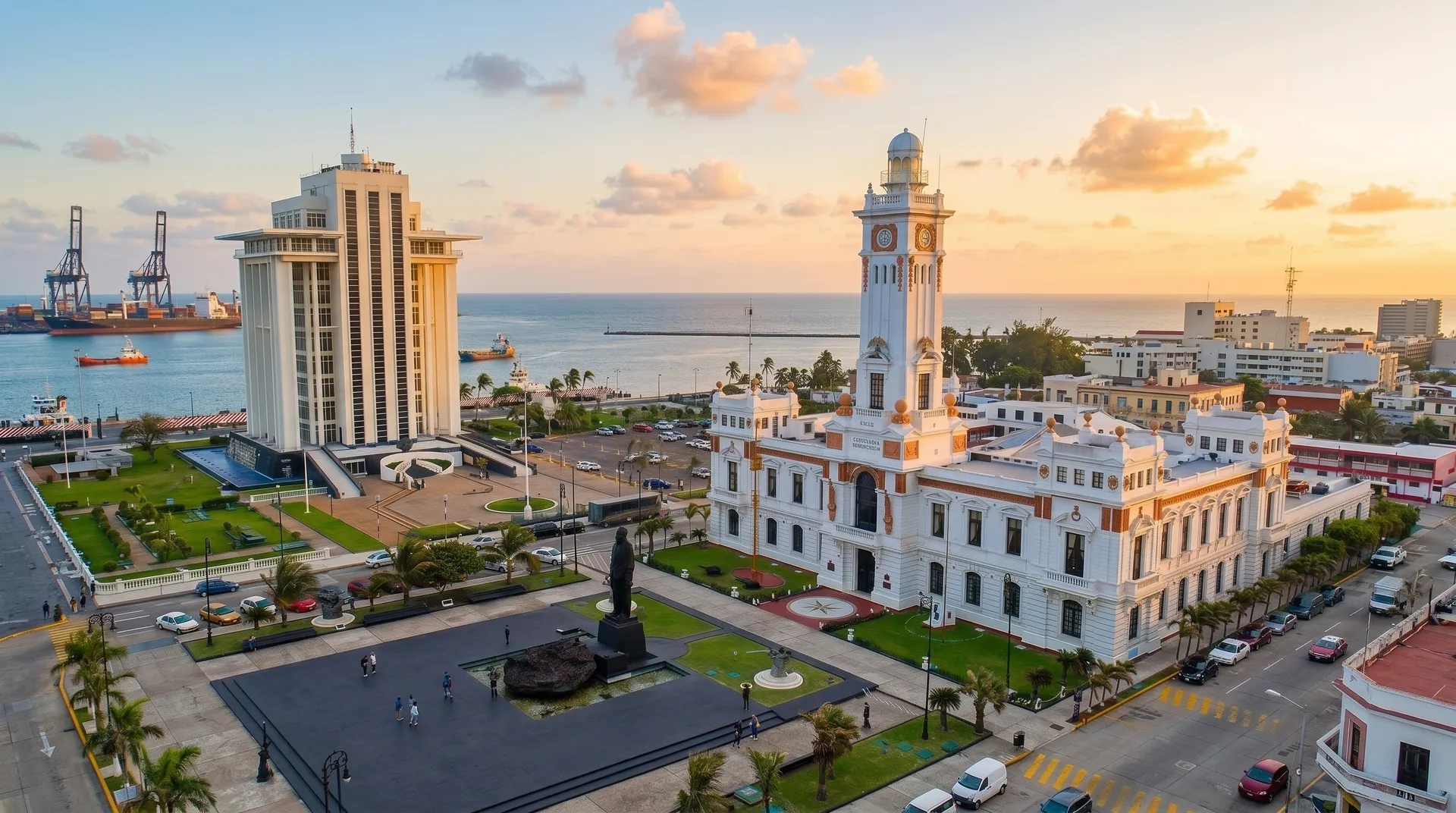
Veracruz, located on Mexico's Gulf coast, stands as one of the country's most strategic port cities and logistics centers. The Port of Veracruz, along with the nearby Port of Coatzacoalcos, forms a critical maritime gateway for both imports and exports, handling diverse cargo including petroleum products, agricultural goods, and manufactured items. Veracruz's strategic coastal position provides direct ocean access to international markets, while its proximity to Mexico's industrial heartland facilitates efficient distribution throughout the country. The city is connected to Mexico's extensive highway network via federal routes including the Mexico 150D toll road, enabling reliable ground transportation links to the United States border and beyond. Veracruz's logistics infrastructure includes modern warehousing facilities, specialized cargo terminals, and customs processing centers that support the efficient movement of cross-border freight.










