Tulsa to Tucson
Tucson → TulsaFTL freight transportation service between Tulsa and Tucson. Reliable logistics solutions for your business.
Route Description
Everything you need to know about the corridor Tulsa - Tucson
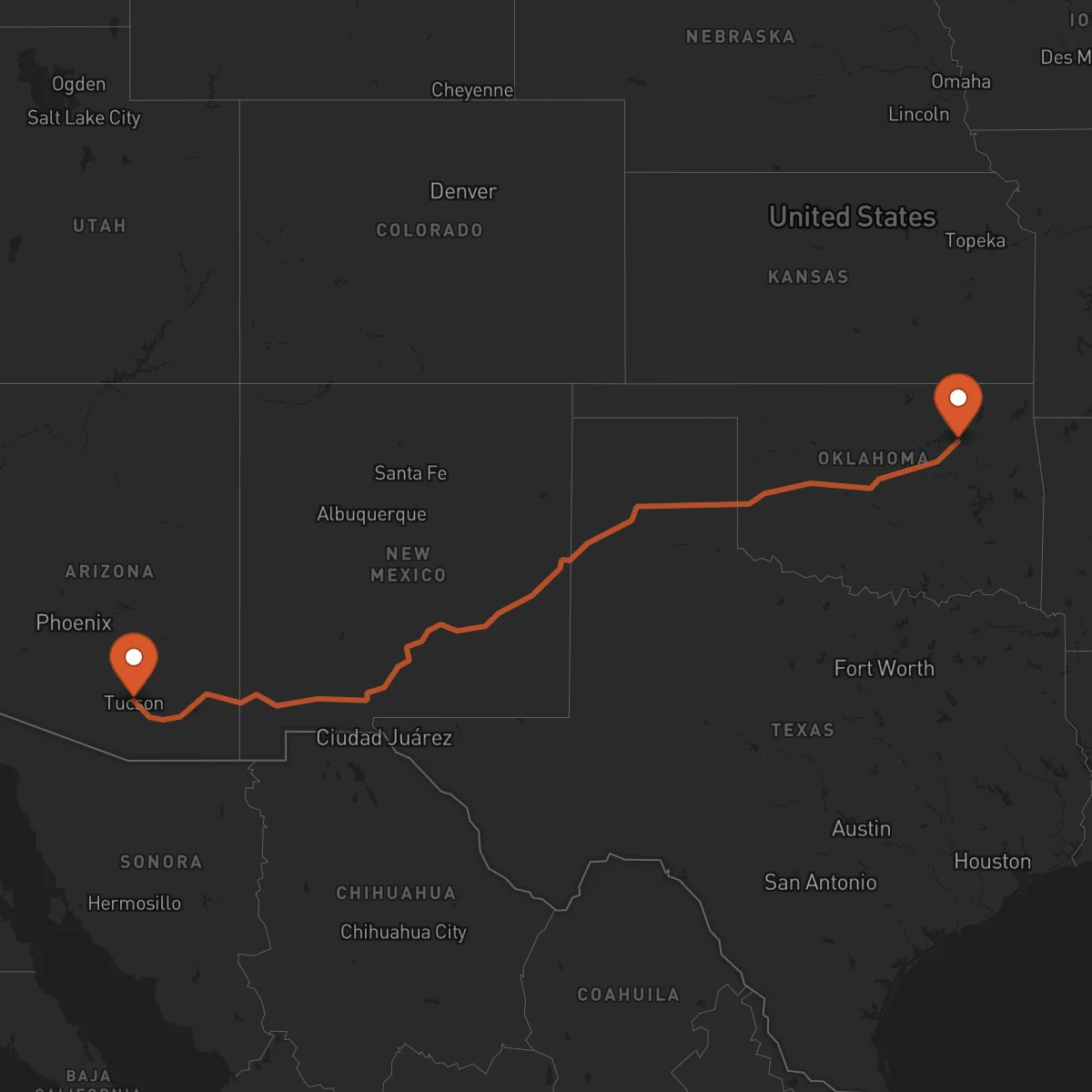
The Tulsa to Tucson corridor represents a vital domestic freight route connecting Oklahoma's industrial heartland with Arizona's growing logistics hub. This 1443 km journey traverses diverse landscapes and economic zones, facilitating the movement of goods between two strategically important regions of the United States. The corridor serves as a crucial link in the national supply chain, enabling businesses to efficiently transport products across state lines while maintaining reliable delivery schedules.
The economic significance of this route cannot be overstated. Tulsa, known for its energy sector and manufacturing base, generates substantial freight volume that requires efficient transportation to markets in the Southwest. Tucson, with its expanding aerospace, defense, and technology industries, represents a growing consumer of goods and materials from the Midwest and beyond. This corridor supports the economic vitality of both regions by ensuring timely delivery of essential commodities, raw materials, and finished products.
Key industries utilizing this freight corridor include oil and gas equipment, automotive parts, agricultural products, electronics, and industrial machinery. The route primarily follows major interstate highways, including I-44, I-40, and I-10, providing reliable and well-maintained transportation infrastructure. These highways offer multiple lanes, rest areas, and fuel stations, ensuring smooth transit for commercial vehicles. Control Terrestre leverages this established infrastructure to provide comprehensive FTL (Full Truckload) services, offering dedicated transportation solutions that meet the specific needs of businesses operating along this corridor.
Services for this Route
Available services for the corridor Tulsa - Tucson
 Origin
Tulsa
Tulsa, Oklahoma stands as a strategic logistics hub in the Midwest, benefiting from its central location and robust transportation infrastructure. The city serves as a gateway to the Great Plains region, with easy access to major highways including I-44, which connects directly to the national interstate system. Tulsa's economy is anchored by the energy sector, aerospace manufacturing, and logistics operations, making it a critical origin point for diverse freight shipments. The city's logistics infrastructure includes the Tulsa Port of Catoosa, providing barge access to the Mississippi River system, and Tulsa International Airport, which supports air freight operations. These multimodal capabilities make Tulsa an ideal starting point for freight movements to destinations across the southwestern United States.
 Destination
Tucson
Tucson, Arizona has emerged as a strategic logistics destination in the Southwest, driven by its proximity to the U.S.-Mexico border and growing industrial base. The city's location offers unique advantages for companies seeking access to both domestic and international markets. Tucson's economy is characterized by aerospace and defense industries, with major employers including Raytheon Missiles & Defense and Bombardier Aerospace. The presence of the University of Arizona also contributes to a thriving technology and research sector. Transportation infrastructure in Tucson includes major highways such as I-10, which provides direct connections to Los Angeles and Phoenix, and Tucson International Airport, which supports both passenger and cargo operations. The city's rail connections through Union Pacific further enhance its logistics capabilities, making it an attractive destination for freight shipments from across the country.










