Tulsa to Richmond
Richmond → TulsaFTL freight transportation service between Tulsa and Richmond. Reliable logistics solutions for your business.
Route Description
Everything you need to know about the corridor Tulsa - Richmond
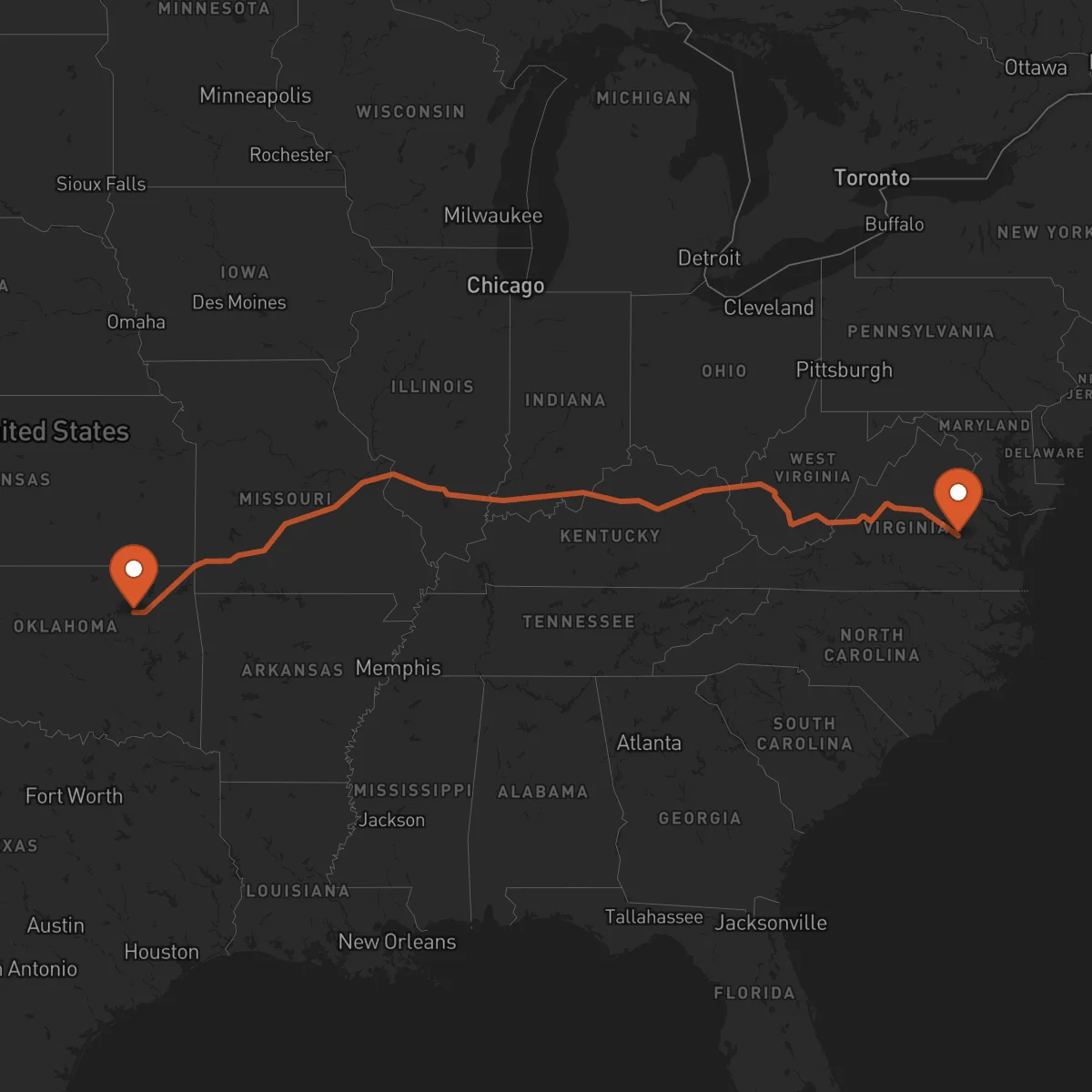
The logistics corridor connecting Tulsa, Oklahoma to Richmond, Virginia represents a crucial east-west transportation route across the United States. This 1,655 km corridor traverses diverse geographic regions and connects the industrial heartland with the Atlantic seaboard. The route strategically links the manufacturing and energy sectors of the Midwest with the ports, distribution centers, and consumer markets of the East Coast, making it an essential artery for domestic freight movement.
The corridor passes through multiple states and crosses several major economic regions, including the Ozarks, the Appalachian Mountains, and the Piedmont region. This route serves as a vital link between Tulsa's energy and manufacturing base and Richmond's position as a logistics hub for the Mid-Atlantic region. The transportation infrastructure along this corridor supports a wide range of industries, from automotive and aerospace to retail and e-commerce distribution.
Control Terrestre specializes in providing reliable full truckload (FTL) transportation services along this corridor. Our extensive network of certified carriers ensures consistent capacity and service quality for shipments moving between Tulsa and Richmond. We understand the unique challenges of this route, including varying terrain, weather conditions, and regulatory requirements across state lines, and we optimize our operations to ensure timely and secure delivery of your freight.
Services for this Route
Available services for the corridor Tulsa - Richmond
 Origin
Tulsa
Tulsa, Oklahoma serves as a strategic logistics hub in the Southern Plains region, with its location providing excellent access to major transportation networks. The city is situated at the crossroads of several interstate highways, including I-44 and I-244, facilitating efficient movement of goods in all directions. Tulsa's BNSF and Union Pacific rail yards further enhance its connectivity, making it an ideal origin point for freight distribution across the United States.
The Tulsa metropolitan area is home to diverse industries including energy, aerospace, manufacturing, and logistics. The region's strong energy sector, particularly oil and natural gas, drives significant freight movement, while the presence of major aerospace companies creates demand for specialized transportation services. Tulsa's Port of Catoosa, the largest inland river port in the United States, provides additional multimodal transportation options for cargo moving through the region.
 Destination
Richmond
Richmond, Virginia occupies a strategic position in the Mid-Atlantic region, serving as a critical logistics hub for the East Coast. The city's location at the fall line of the James River has historically made it a transportation nexus, and today it continues to benefit from excellent connectivity through I-95, I-64, and I-295. Richmond's proximity to major ports like Norfolk and its access to the Port of Virginia via rail and highway make it an ideal destination for freight distribution throughout the Eastern Seaboard.
The Richmond metropolitan area features a diverse economic base including government services, finance, biotechnology, and advanced manufacturing. The region's strong logistics and distribution sector is supported by multiple intermodal facilities and distribution centers. Richmond's central location within the Washington-Richmond-Atlanta triangle positions it as a key node in the national freight network, handling significant volumes of consumer goods, industrial products, and raw materials moving to and from the Southeast and Northeast markets.










