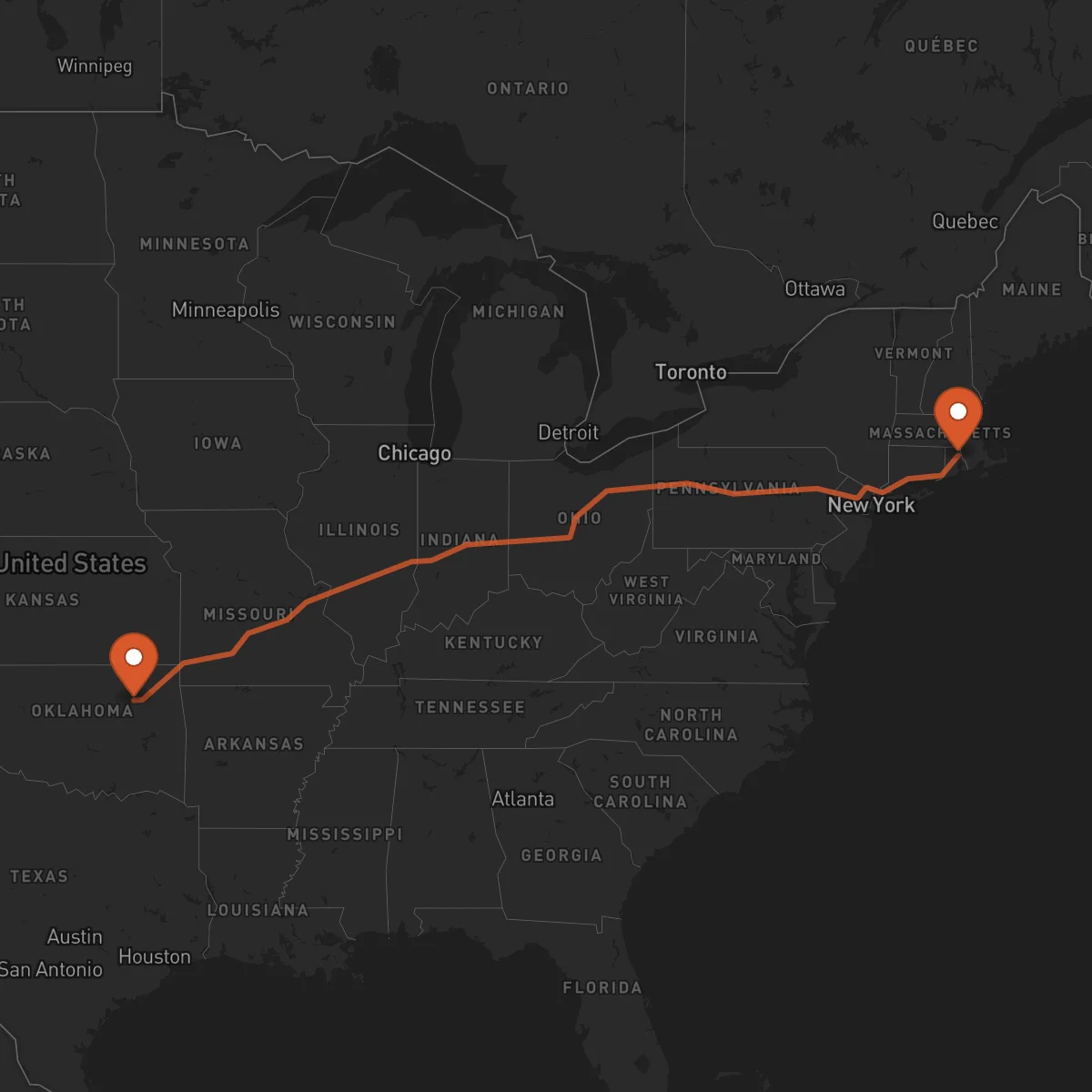
Tulsa to Providence
Providence → TulsaFTL freight transportation service between Tulsa and Providence. Reliable logistics solutions for your business.
Route Description
Everything you need to know about the corridor Tulsa - Providence
The logistics corridor connecting Tulsa, Oklahoma, to Providence, Rhode Island, spans approximately 2,207 kilometers and represents a vital domestic freight transportation route across the United States. This east-west connection links the industrial heartland of the Midwest with the bustling Northeast corridor, facilitating the movement of goods between two economically significant regions. The route traverses multiple states, crossing diverse geographical and economic landscapes, making it a strategic pathway for companies requiring reliable freight transportation between these key markets.
The corridor serves numerous industries, with manufacturing, automotive, aerospace, and consumer goods being among the primary sectors utilizing this route. Tulsa's strong presence in energy, telecommunications, and aviation industries creates a steady flow of specialized freight heading eastward, while Providence's position as a hub for education, healthcare, and maritime commerce generates consistent inbound shipments. The route also supports the agricultural sector, with food products and commodities moving between these regions, particularly given Tulsa's proximity to major farming areas.
Transportation infrastructure along this corridor includes major interstate highways such as I-44, I-70, and I-90, providing multiple routing options for freight carriers. Control Terrestre leverages this robust infrastructure network to offer full truckload (FTL) services that ensure timely and secure delivery of cargo. Our strategic partnerships with certified transportation providers enable us to maintain consistent service quality across the entire route, addressing the unique logistical challenges of this long-distance corridor.
Services for this Route
Available services for the corridor Tulsa - Providence
 Origin
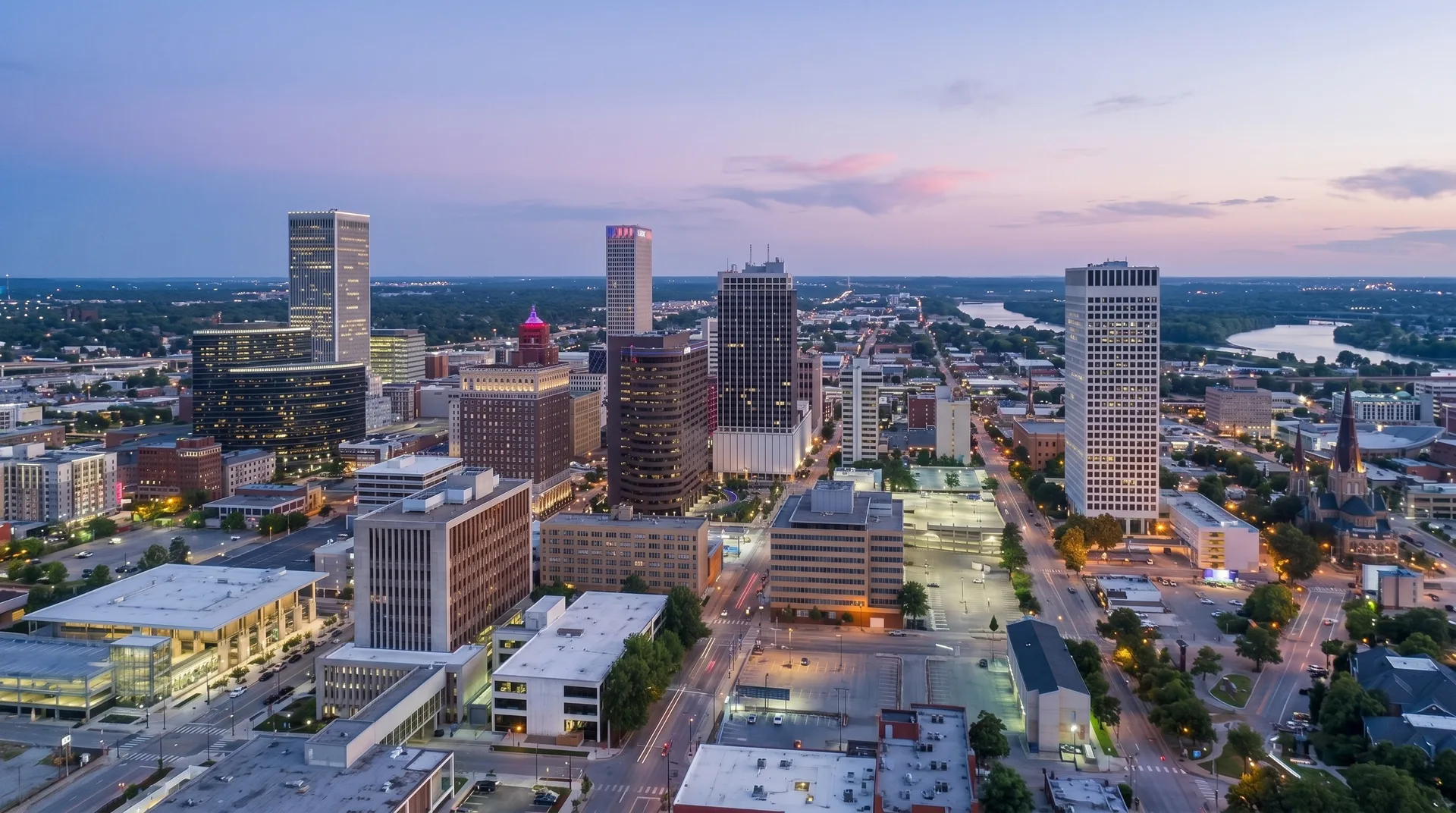
Tulsa
Tulsa, Oklahoma, serves as a strategic logistics hub in the southern-central United States, offering excellent connectivity for freight transportation. The city's location provides access to major transportation networks, including interstate highways, rail systems, and the Tulsa International Airport, facilitating efficient distribution throughout the region and beyond. Tulsa's economic foundation in energy, aerospace, and manufacturing creates a diverse industrial base that generates substantial freight volume, making it an ideal origin point for logistics operations.
The city hosts numerous warehouses and distribution centers, supported by a skilled workforce and business-friendly environment. Tulsa's proximity to major agricultural regions and its role as a center for oil and gas operations contribute to a steady flow of specialized freight, including hazardous materials and oversized equipment. The Port of Catoosa, located nearby, extends Tulsa's reach to international markets via the McClellan-Kerr Arkansas River Navigation System, further enhancing its strategic importance in the logistics landscape.
 Destination
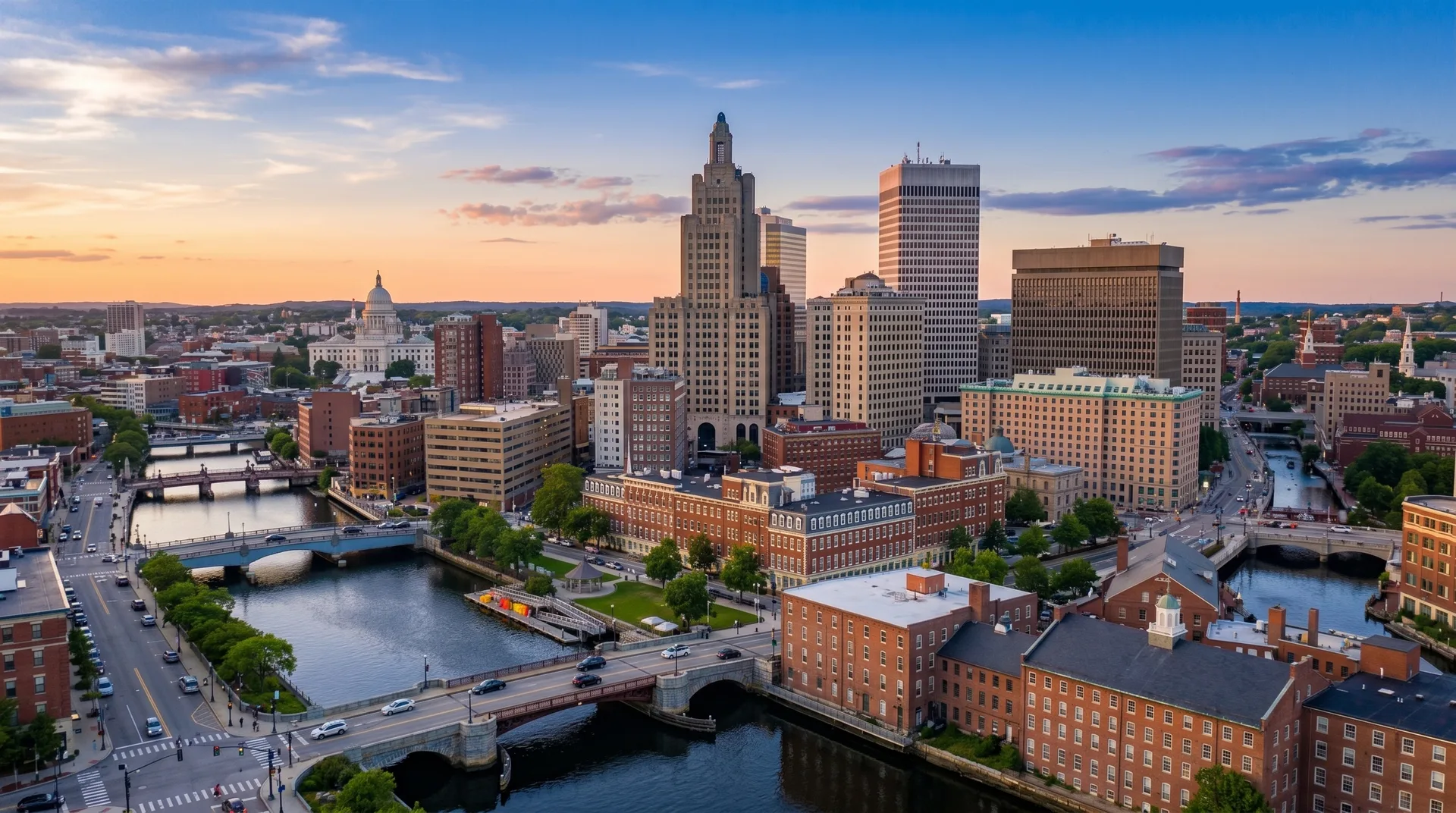
Providence
Providence, Rhode Island, stands as a crucial logistics node in the Northeast United States, offering strategic access to major markets in the region. The city's location provides excellent connectivity to Boston, New York, and other major metropolitan areas within a few hours' drive, making it an ideal destination for freight distribution. Providence's economy, anchored in education, healthcare, and maritime commerce, generates consistent demand for inbound freight, particularly from manufacturing and consumer goods sectors.
The Port of Providence serves as a vital gateway for international trade, handling various cargo types and connecting to global supply chains. The city's infrastructure includes multiple interstate highways, rail connections, and T.F. Green Airport, facilitating efficient cargo movement. Providence's position in the Northeast megalopolis creates opportunities for last-mile distribution, with its dense population and concentration of businesses requiring reliable freight services to support their operations.










