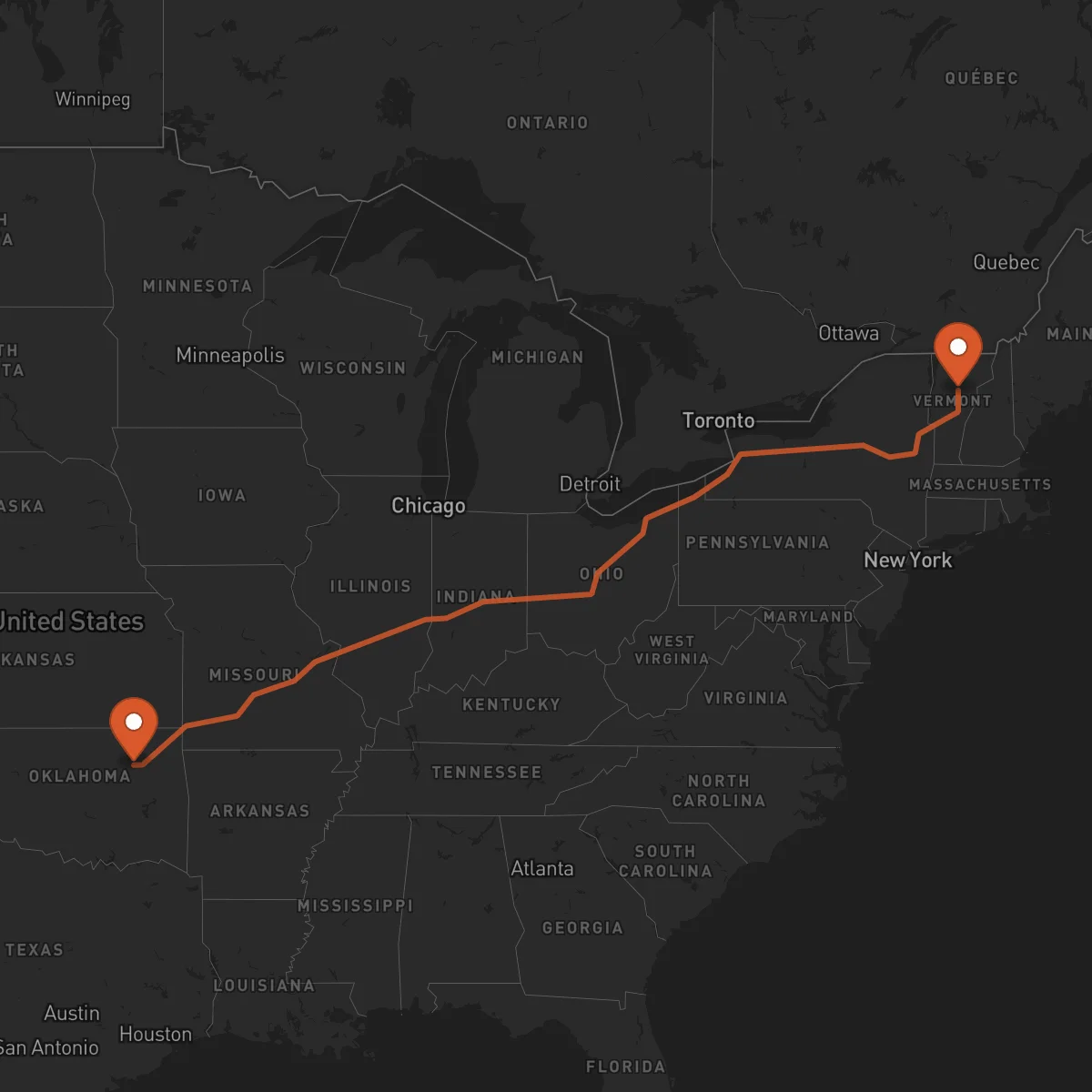
Tulsa to Montpelier
Montpelier → TulsaFTL freight transportation service between Tulsa and Montpelier. Reliable logistics solutions for your business.
Route Description
Everything you need to know about the corridor Tulsa - Montpelier
The freight transportation corridor between Tulsa, Oklahoma and Montpelier, Vermont represents a crucial connection between the central United States and the Northeast, spanning approximately 2,173 kilometers across diverse geographic and economic regions. This domestic route traverses multiple states, connecting the industrial heartland with the New England market, facilitating the movement of goods essential to both regional and national supply chains.
The corridor serves as a vital link between Oklahoma's energy and manufacturing sectors and Vermont's specialized manufacturing and agricultural industries. Major highways such as I-44, I-70, and I-90 form the backbone of this transportation route, providing reliable access through Missouri, Illinois, Indiana, Ohio, Pennsylvania, New York, and finally into Vermont. The route passes through key logistics hubs including St. Louis, Indianapolis, Columbus, Pittsburgh, and Albany, offering multiple options for cross-docking and distribution.
Control Terrestre specializes in managing full truckload (FTL) freight movements along this corridor, understanding the unique challenges of long-haul transportation across diverse terrain and weather conditions. Our experienced network of carriers ensures consistent, reliable service for industries ranging from automotive parts and industrial equipment to agricultural products and specialty goods. We provide dedicated transportation solutions that maintain cargo integrity throughout the journey, with real-time tracking and proactive communication to keep your supply chain running smoothly.
Services for this Route
Available services for the corridor Tulsa - Montpelier
 Origin
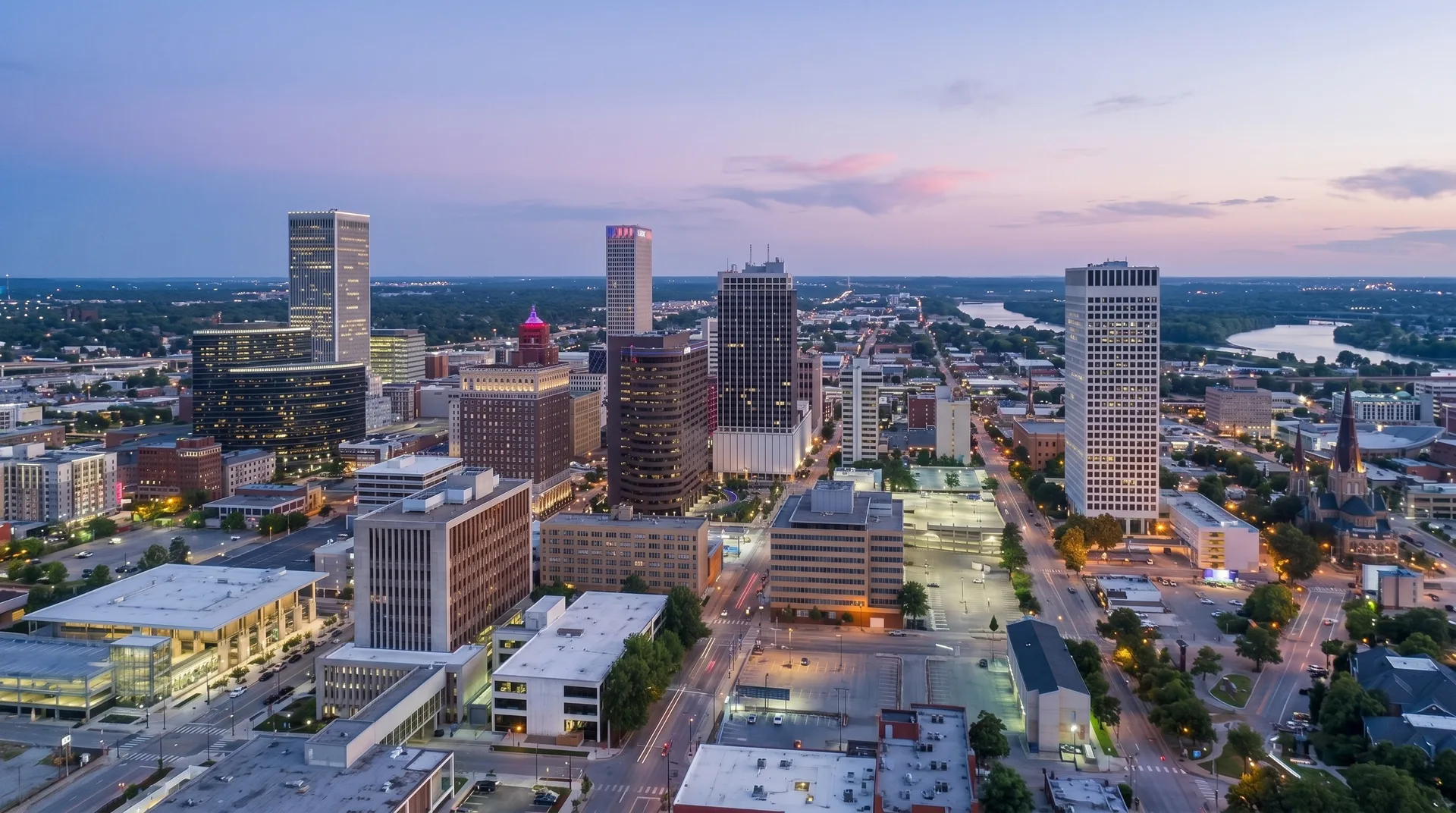
Tulsa
Tulsa, Oklahoma serves as a strategic logistics hub in the central United States, positioned at the crossroads of major freight corridors connecting the Southwest with the Midwest and Eastern markets. The city's location provides excellent access to interstate highways including I-44, facilitating efficient distribution throughout the region. Tulsa's economy is anchored by the energy sector, aerospace manufacturing, and transportation equipment production, creating consistent demand for freight services. The city's logistics infrastructure includes multiple warehousing facilities, intermodal yards, and a robust network of carriers specializing in various freight types. Tulsa's proximity to major freight generators in Oklahoma and neighboring states makes it an ideal origin point for long-haul shipments to destinations across the country.
 Destination
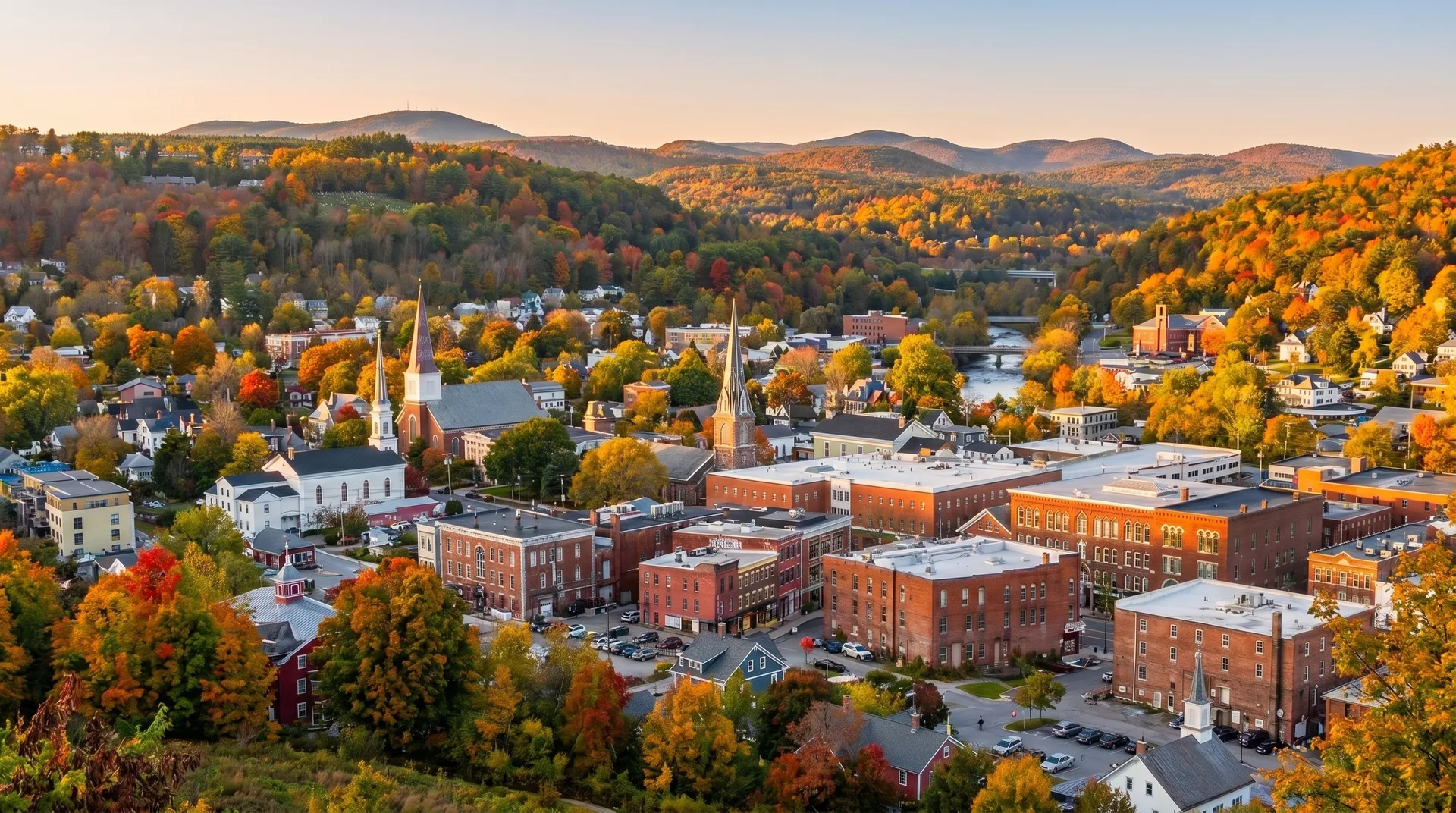
Montpelier
Montpelier, Vermont, while smaller than many state capitals, occupies a strategic position within New England's logistics network. Located in the heart of Vermont, it provides access to the broader New England market, including Boston, Montreal, and other major Northeast cities. The region's economy focuses on specialty manufacturing, craft industries, agricultural products, and technology sectors, creating demand for specialized freight services. Montpelier benefits from proximity to major transportation routes including I-89 and connections to Canadian markets via nearby border crossings. The area's logistics infrastructure includes regional distribution centers, cold storage facilities for agricultural products, and specialized carriers equipped to handle Vermont's unique terrain and seasonal weather conditions.










