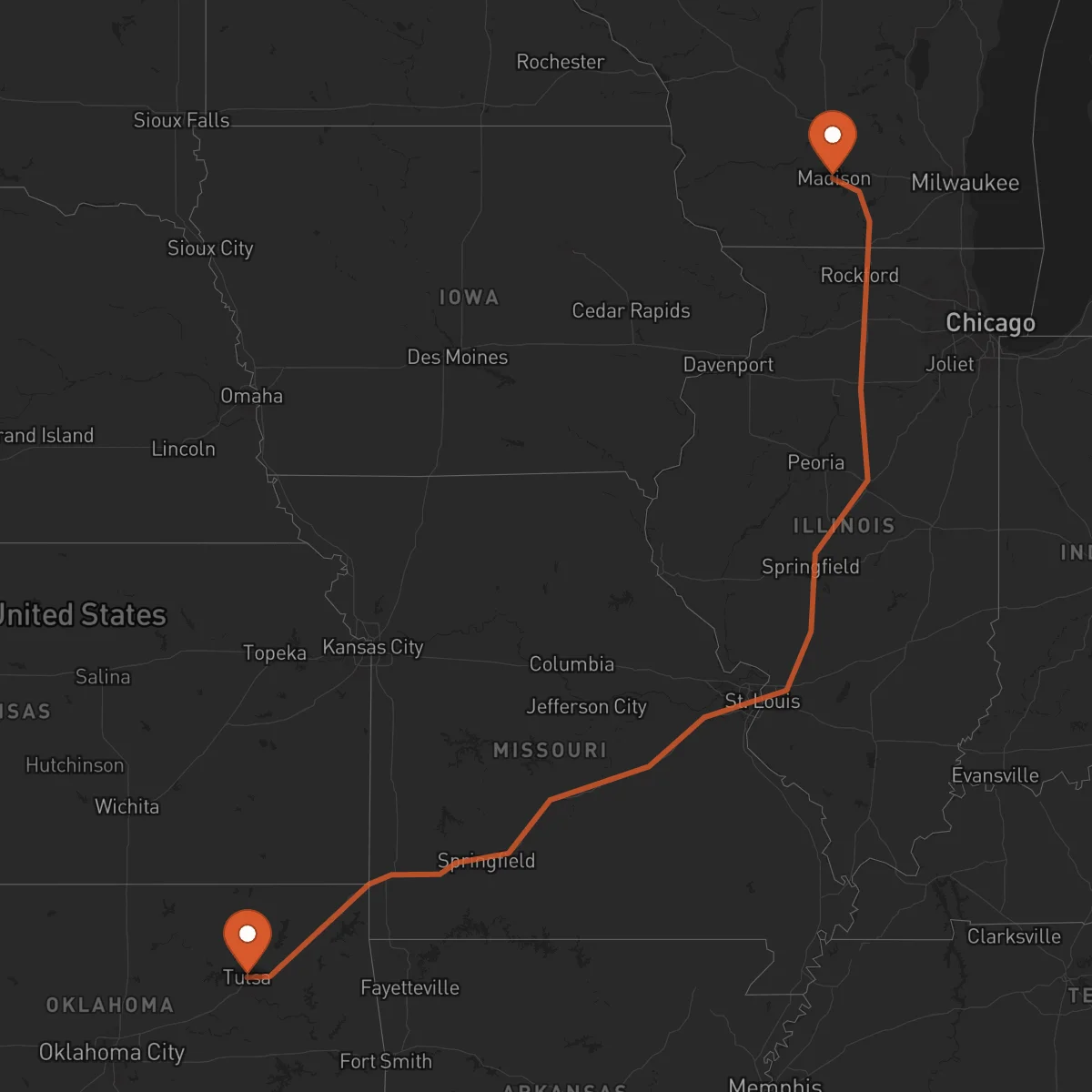
Tulsa to Madison
Madison → TulsaFTL freight transportation service between Tulsa and Madison. Reliable logistics solutions for your business.
Route Description
Everything you need to know about the corridor Tulsa - Madison
The logistics corridor between Tulsa, Oklahoma and Madison, Wisconsin represents a vital freight transportation route connecting the central United States. This 953 km corridor links the industrial heartland of Oklahoma with the economic center of Wisconsin, facilitating the movement of goods between two strategically important regions. The route traverses diverse terrain and crosses multiple state lines, requiring expert coordination and reliable transportation solutions to ensure efficient delivery.
The economic significance of this corridor cannot be overstated. Tulsa serves as a major energy and manufacturing hub, while Madison functions as a center for advanced manufacturing, healthcare, and technology. This complementary economic relationship creates consistent freight demand, with Tulsa's industrial output flowing north to Wisconsin's manufacturing facilities and distribution centers. The corridor supports critical supply chains for automotive parts, industrial equipment, and consumer goods.
Transportation infrastructure along this route includes major highways such as I-44, I-55, and I-39, providing multiple routing options for freight carriers. Control Terrestre leverages this robust infrastructure to offer dedicated full truckload (FTL) services, ensuring that cargo moves efficiently without intermediate stops or handling. Our network of certified carriers maintains strict schedules and provides real-time tracking, making us the trusted partner for companies requiring reliable transportation between Tulsa and Madison.
Services for this Route
Available services for the corridor Tulsa - Madison
 Origin
Tulsa
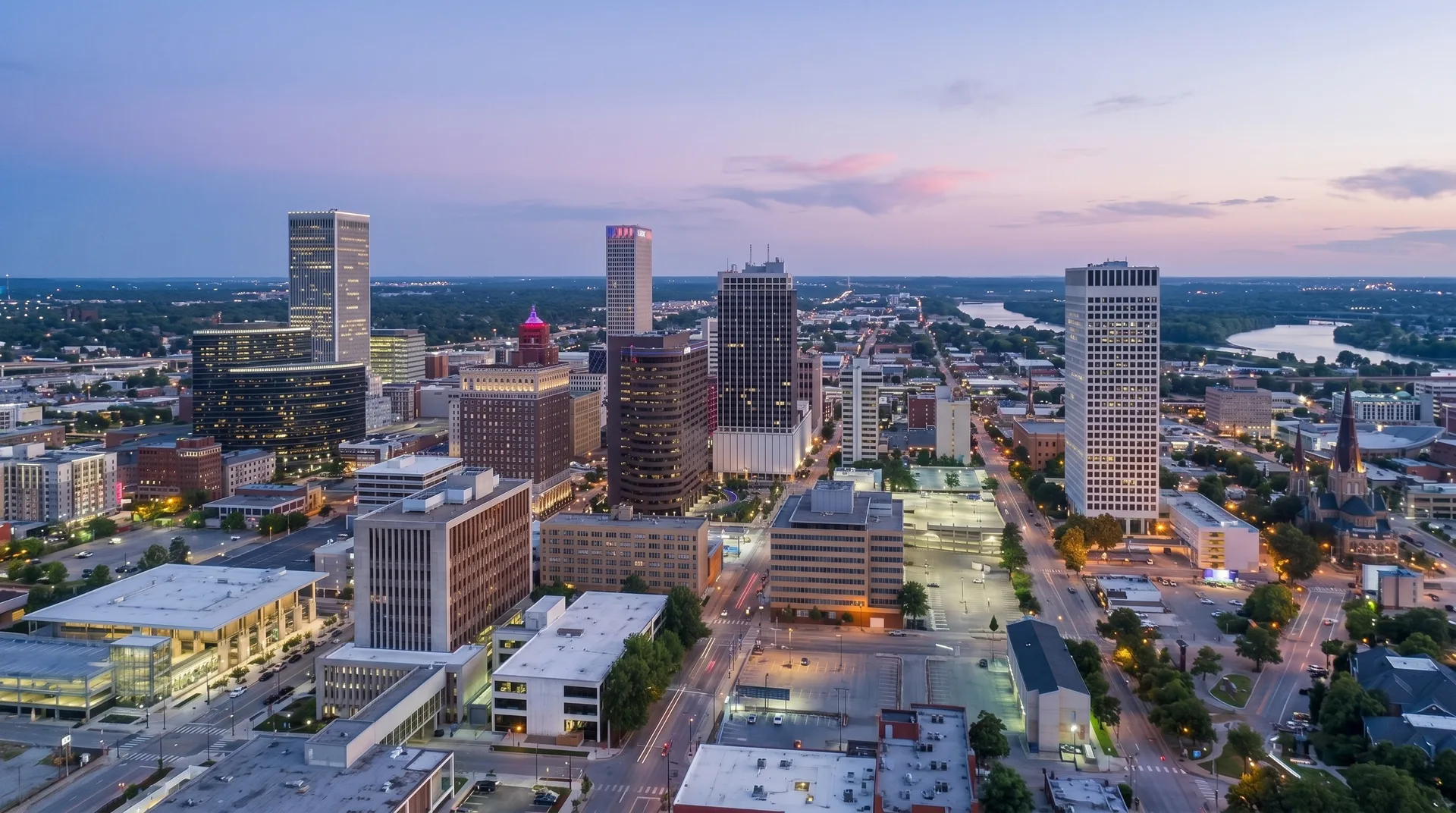
Tulsa, Oklahoma stands as a strategic logistics hub in the southern United States, offering exceptional connectivity for freight transportation. The city's location provides access to major rail networks, interstate highways, and the Tulsa International Airport, creating a multimodal transportation ecosystem. Tulsa's economy is anchored by energy production, aerospace manufacturing, and logistics services, with numerous warehouses and distribution centers supporting regional supply chains. The city's infrastructure includes the Tulsa Port of Catoosa, providing inland waterway access to the Mississippi River system, further enhancing its role as a transportation nexus.
 Destination
Madison
Madison, Wisconsin serves as a crucial logistics center in the upper Midwest, strategically positioned to serve both Wisconsin and neighboring states. The city benefits from its proximity to major population centers and its integration into the regional transportation network. Madison's economy features strong healthcare, biotechnology, and advanced manufacturing sectors, creating consistent freight demand. The city is served by Dane County Regional Airport and major highways including I-90 and I-94, providing efficient connections to Chicago and other key markets. Madison's infrastructure supports just-in-time manufacturing and distribution operations, making it an essential destination for time-sensitive freight.










