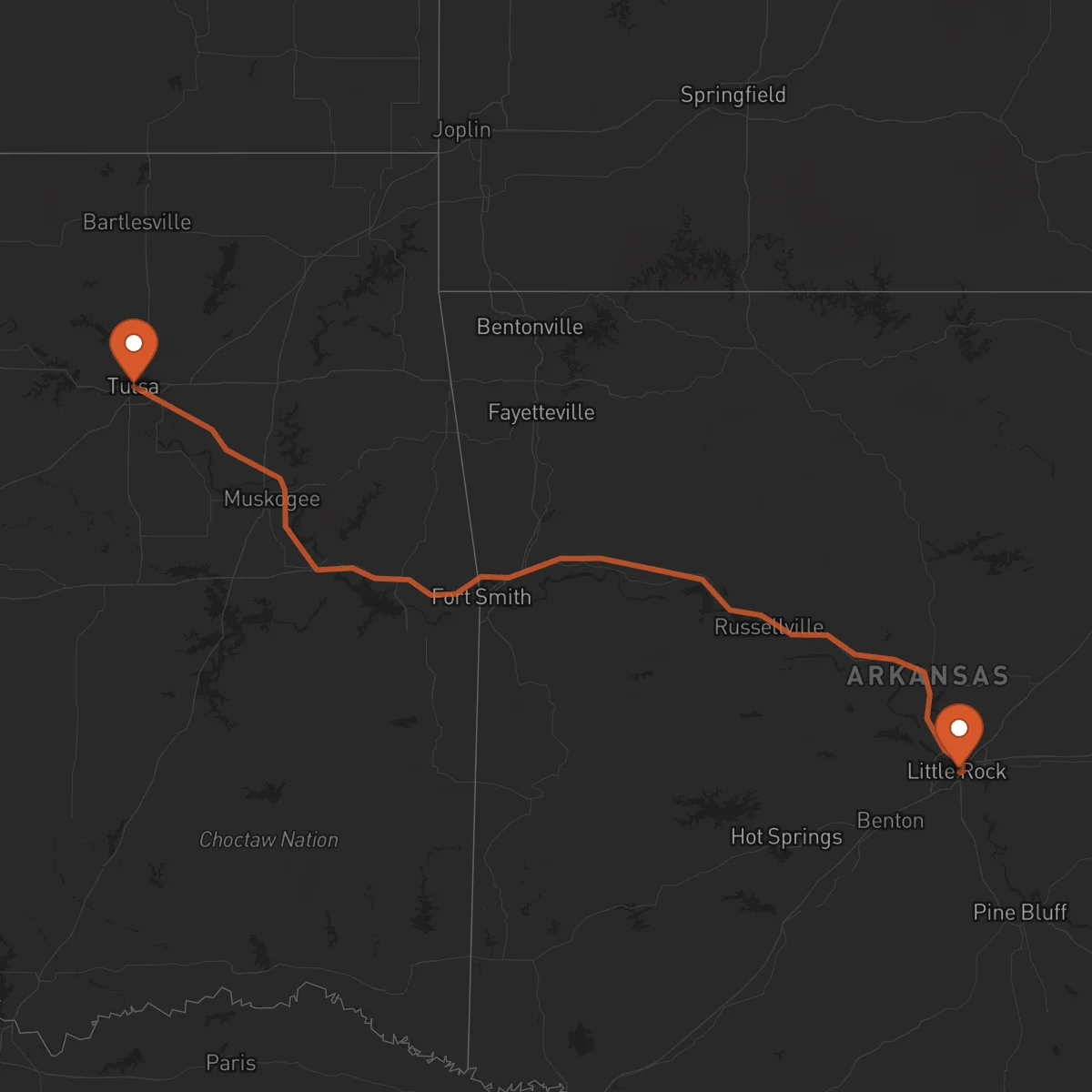
Tulsa to Little Rock
Little Rock → TulsaFTL freight transportation service between Tulsa and Little Rock. Reliable logistics solutions for your business.
Route Description
Everything you need to know about the corridor Tulsa - Little Rock
The logistics corridor connecting Tulsa, Oklahoma, to Little Rock, Arkansas, represents a vital transportation link in the central United States. Spanning approximately 371 kilometers, this domestic route facilitates the movement of goods between two strategically important economic centers. The corridor serves as a crucial connection for businesses operating in the heart of America, enabling efficient freight transportation across state lines and supporting regional supply chain operations.
The region's economic landscape is characterized by diverse industrial activities, with Tulsa serving as a major energy and manufacturing hub, while Little Rock functions as a key distribution center for Arkansas and surrounding states. The corridor benefits from its position within the broader Interstate 40 network, which forms part of the historic transcontinental transportation system. This infrastructure supports the movement of various cargo types, from industrial equipment to consumer goods, between the two metropolitan areas.
Control Terrestre provides specialized full truckload (FTL) transportation services along this corridor, leveraging our network of certified carriers and extensive experience in domestic freight movement. Our dedicated services ensure that businesses can rely on consistent, professional transportation solutions tailored to their specific cargo requirements. Whether you need standard dry van service or specialized equipment for unique freight, our team coordinates every aspect of the journey to maintain the integrity and timeliness of your shipments.
Services for this Route
Available services for the corridor Tulsa - Little Rock
 Origin
Tulsa
Tulsa, Oklahoma, stands as a major logistics hub in the southern central United States, offering exceptional connectivity for freight transportation. The city's strategic location along major interstate highways, including I-44 and I-244, provides direct access to regional and national transportation networks. Tulsa's economy is anchored by energy, aerospace, and manufacturing sectors, creating consistent demand for reliable freight services. The city's logistics infrastructure includes multiple warehousing facilities, intermodal yards, and distribution centers that support efficient cargo handling and storage. Tulsa International Airport and the Tulsa Port of Catoosa further enhance the region's multimodal transportation capabilities, making it an ideal origin point for domestic freight shipments.
 Destination
Little Rock
Little Rock, Arkansas, serves as the state capital and a key logistics center in the southeastern United States. The city's location at the intersection of I-30 and I-40 provides excellent connectivity for freight movement throughout the region. Little Rock's economy encompasses government services, healthcare, and retail distribution, creating diverse cargo transportation needs. The metropolitan area features modern warehousing facilities and distribution centers that support efficient freight operations. Clinton National Airport and the Port of Little Rock on the Arkansas River provide additional transportation options, enhancing the city's capabilities as a destination for freight shipments. The region's infrastructure is designed to accommodate various cargo types, making it a strategic endpoint for domestic transportation services.










