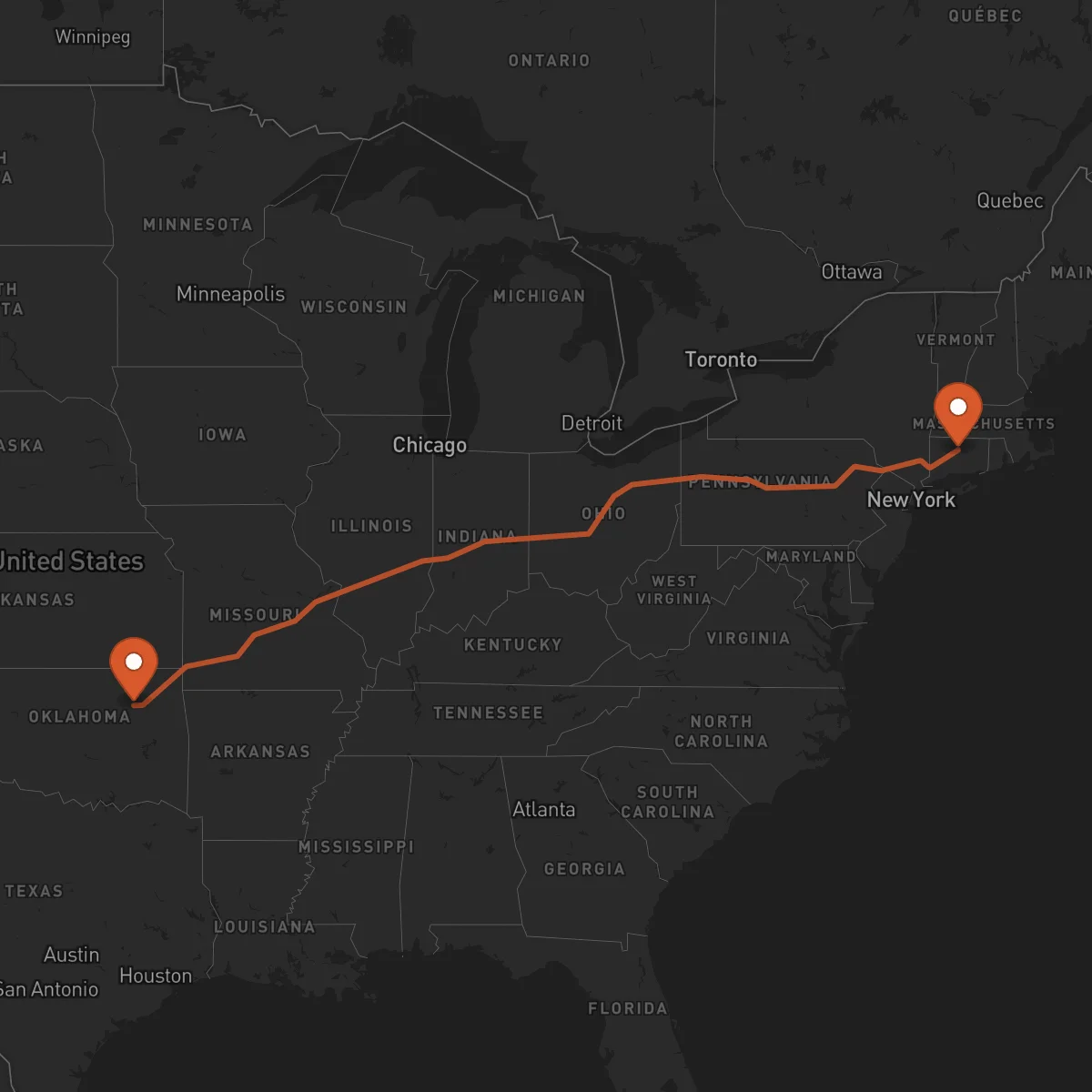
Tulsa to Hartford
Hartford → TulsaFTL freight transportation service between Tulsa and Hartford. Reliable logistics solutions for your business.
Route Description
Everything you need to know about the corridor Tulsa - Hartford
The Tulsa to Hartford corridor represents a vital freight transportation link connecting the industrial heart of Oklahoma with the strategic commercial hub of Connecticut. This 2,103 km route traverses diverse landscapes and crosses multiple states, serving as a crucial artery for domestic freight movement across the United States. The corridor efficiently connects the Midwest's manufacturing and energy sectors with the Northeast's distribution networks and consumer markets.
This transportation route passes through key economic regions including Missouri, Illinois, Indiana, Ohio, Pennsylvania, and New York before reaching Connecticut. The corridor benefits from excellent infrastructure, primarily utilizing major interstate highways such as I-44, I-70, I-76, and I-84, which provide reliable and efficient freight movement. These well-maintained highways ensure consistent transit times and minimize potential disruptions to supply chains.
Control Terrestre specializes in optimizing freight transportation along this corridor, offering dedicated full truckload (FTL) services that ensure your cargo moves directly from origin to destination without intermediate stops or handling. Our strategic partnerships with certified carriers and deep understanding of regional logistics enable us to provide reliable, efficient transportation solutions tailored to your specific cargo requirements, whether you're shipping industrial equipment, consumer goods, or specialized freight.
Services for this Route
Available services for the corridor Tulsa - Hartford
 Origin
Tulsa
Tulsa, Oklahoma stands as a strategic logistics hub in the southern-central United States, benefiting from its central location and robust transportation infrastructure. The city serves as a major center for the energy sector, aerospace manufacturing, and logistics operations, with numerous Fortune 500 companies maintaining significant operations in the area. Tulsa's economy thrives on its diverse industrial base, including oil and gas production, aerospace components manufacturing, and advanced technology development.
The city boasts exceptional transportation connectivity through multiple interstate highways, including I-44, which provides direct access to major freight corridors. Tulsa International Airport and the Tulsa Port of Catoosa on the McClellan-Kerr Arkansas River Navigation System further enhance the region's multimodal transportation capabilities. This comprehensive infrastructure network makes Tulsa an ideal origin point for nationwide freight distribution, offering reliable connections to both coastal markets and inland destinations.
 Destination
Hartford
Hartford, Connecticut serves as a strategic logistics gateway to the northeastern United States, positioned advantageously for access to major metropolitan markets including New York City, Boston, and Philadelphia. As Connecticut's capital and a key economic center, Hartford benefits from its proximity to major consumer markets and its role as a distribution hub for the New England region. The city's economy encompasses insurance, healthcare, education, and advanced manufacturing sectors, creating diverse freight transportation needs.
The region offers excellent transportation infrastructure, including proximity to Bradley International Airport and access to major interstate highways such as I-91 and I-84. These routes provide efficient connections to the broader northeastern freight network and facilitate seamless distribution throughout the region. Hartford's strategic location near major ports and its integration with the northeastern rail network further enhance its capabilities as a destination for inbound freight and a distribution point for regional markets.










