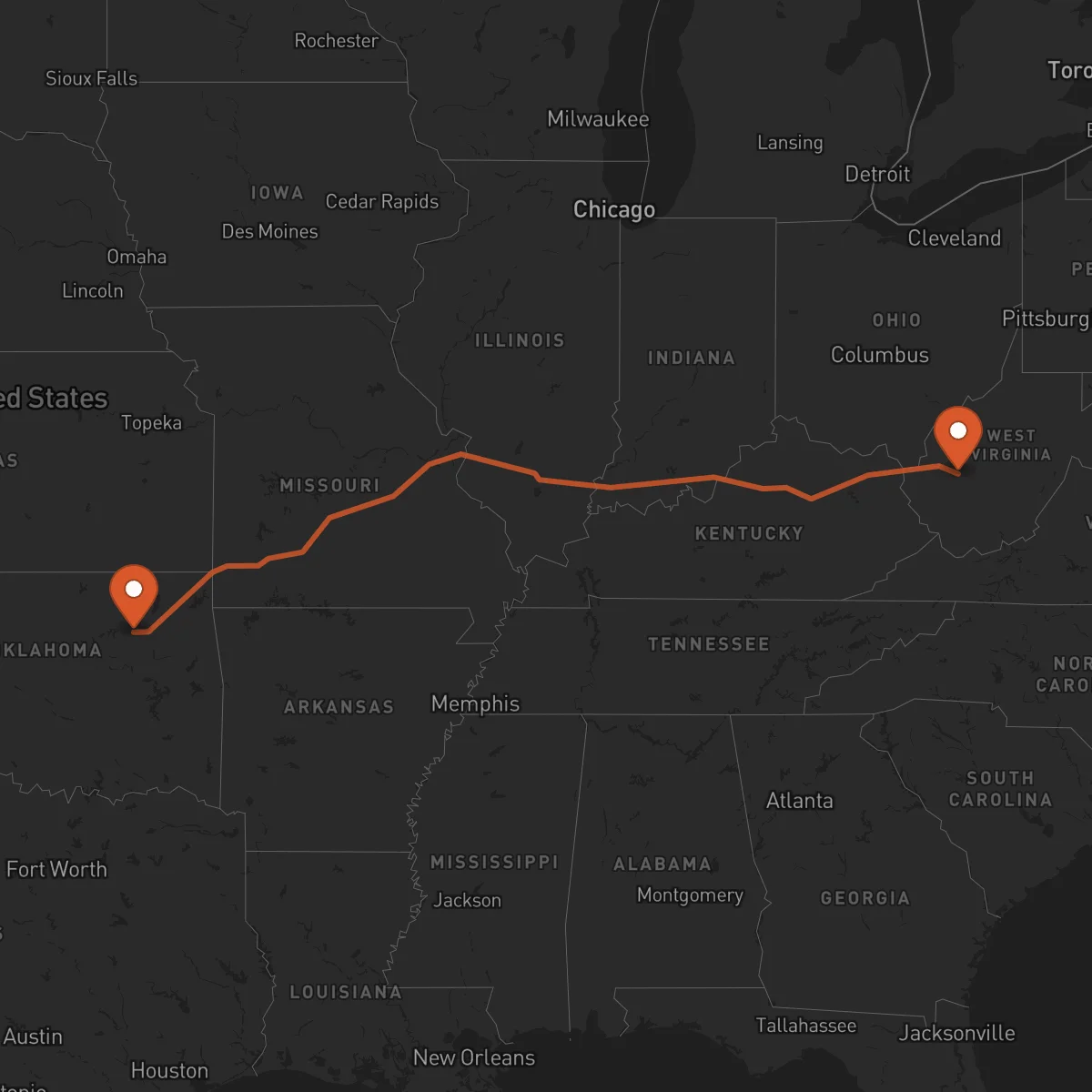
Tulsa to Charleston
Charleston → TulsaFTL freight transportation service between Tulsa and Charleston. Reliable logistics solutions for your business.
Route Description
Everything you need to know about the corridor Tulsa - Charleston
The logistics corridor between Tulsa, Oklahoma and Charleston, West Virginia spans approximately 1,293 kilometers, connecting two strategically important industrial centers in the United States. This domestic route traverses the heartland of America, crossing multiple states and serving as a vital link for freight transportation between the Midwest and the Appalachian region. The corridor is particularly significant for companies requiring reliable full truckload (FTL) services to transport goods across diverse terrain and through various economic zones.
The economic importance of this corridor is underscored by the industrial strength of both origin and destination points. Tulsa serves as a major energy and manufacturing hub, while Charleston anchors West Virginia's chemical, energy, and healthcare sectors. The route facilitates the movement of raw materials, finished products, and industrial equipment between these complementary economic regions. Major highways including I-44, I-40, and I-79 form the backbone of this transportation network, providing efficient north-south and east-west connectivity.
Control Terrestre specializes in optimizing freight operations along this corridor through our network of certified transportation providers. Our expertise in full truckload services ensures that cargo moves efficiently from Tulsa's distribution centers to Charleston's industrial facilities. We understand the unique challenges of this route, including varying terrain, weather conditions, and regulatory requirements across state lines. Our commitment to providing dedicated, reliable transportation solutions makes us the preferred partner for companies shipping between these two important economic centers.
Services for this Route
Available services for the corridor Tulsa - Charleston
 Origin
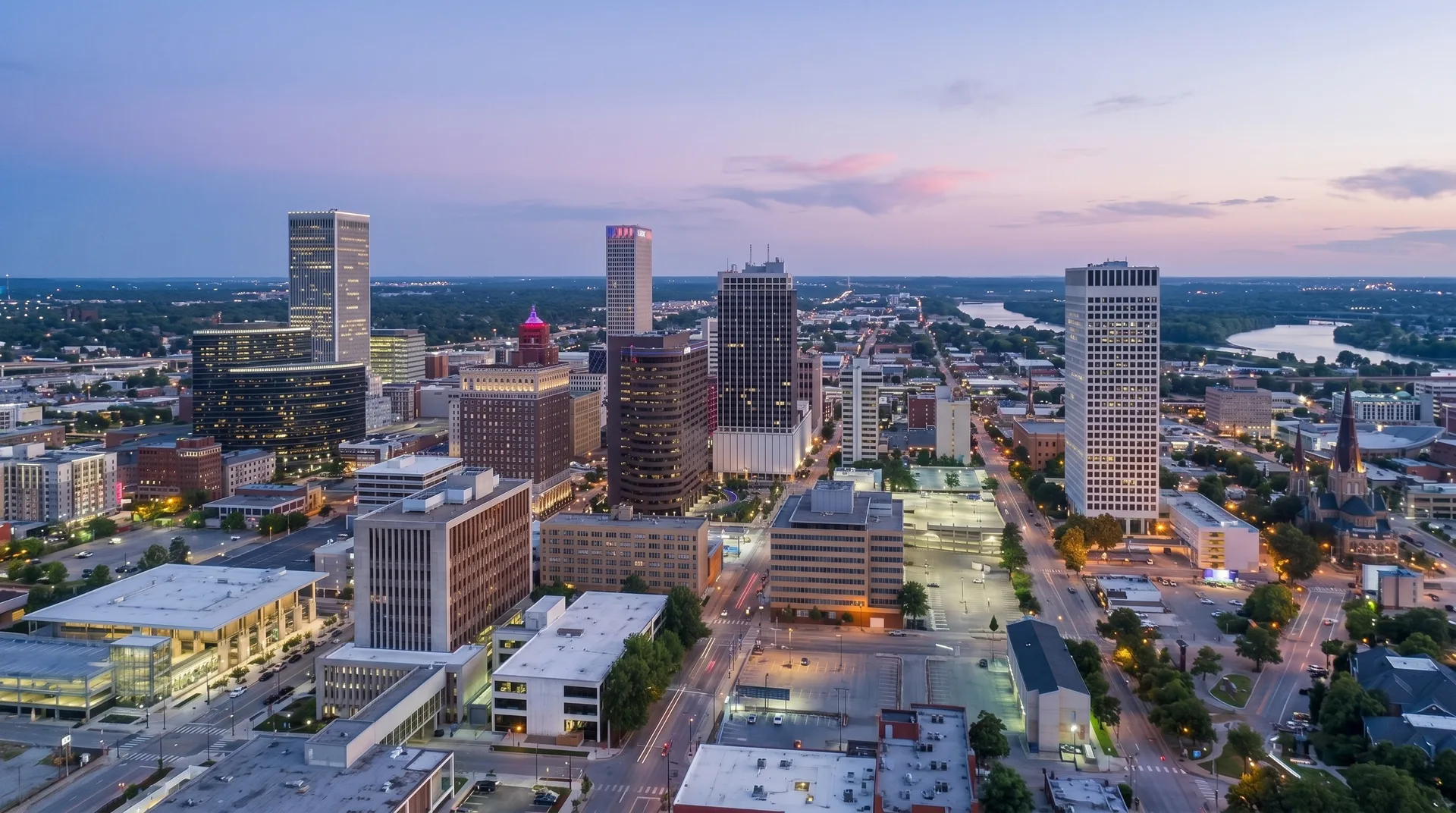
Tulsa
Tulsa, Oklahoma serves as a strategic logistics hub in the southern central United States, offering excellent connectivity to major freight corridors. The city's location provides access to key transportation networks, including major highways, rail connections, and nearby air cargo facilities. Tulsa's infrastructure supports efficient distribution operations, with numerous warehousing and logistics facilities strategically positioned throughout the metropolitan area. The city's central location within the continental United States makes it an ideal origin point for freight distribution to various regions.
The economic landscape of Tulsa is diverse, with strong presence in the energy sector, aerospace manufacturing, and logistics services. The city hosts headquarters for several Fortune 500 companies and maintains a robust industrial base. Tulsa's manufacturing sector produces a wide range of goods, from machinery and equipment to consumer products, creating consistent demand for freight transportation services. The region's agricultural processing and distribution activities also contribute to the freight volume moving through Tulsa's logistics network.
 Destination
Charleston
Charleston, West Virginia occupies a strategic position in the Appalachian region, serving as the state's capital and largest city with significant logistics capabilities. The city's location provides access to major transportation routes connecting the eastern seaboard with the Midwest, making it an important distribution point for the region. Charleston's infrastructure includes well-maintained highways, rail connections, and proximity to river transportation along the Kanawha River, offering multiple options for freight movement and distribution.
The Charleston metropolitan area is characterized by its strong presence in the chemical, energy, and healthcare industries. The region is home to numerous chemical manufacturing facilities, research institutions, and healthcare providers, creating substantial demand for specialized freight transportation services. Charleston's economic base also includes government services, education, and technology sectors, contributing to a diverse freight market. The city's industrial parks and distribution centers are equipped to handle various types of cargo, from raw materials to finished goods.










