Tulsa to Augusta
Augusta → TulsaFTL freight transportation service between Tulsa and Augusta. Reliable logistics solutions for your business.
Route Description
Everything you need to know about the corridor Tulsa - Augusta
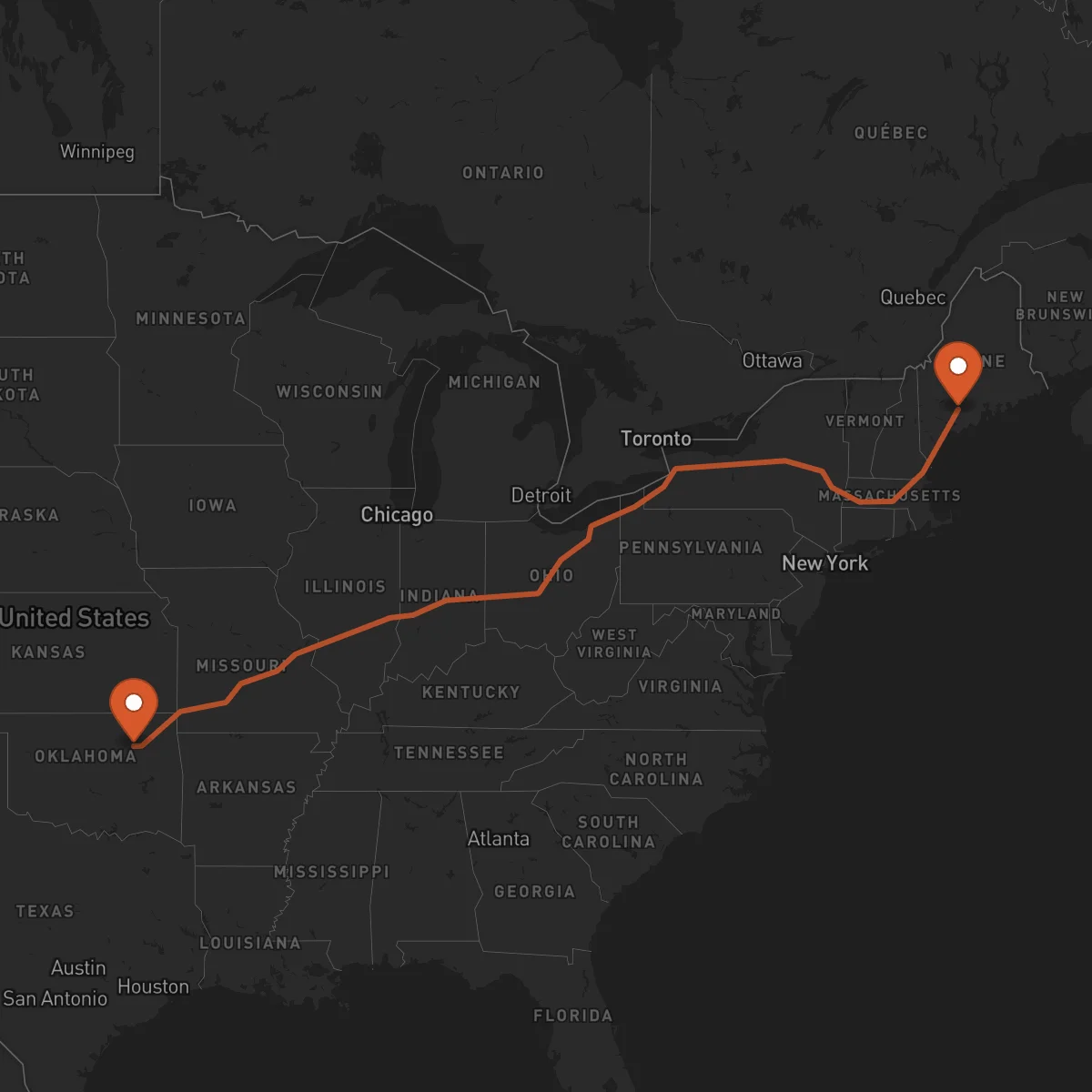
The Tulsa to Augusta corridor connects two vital economic regions of the United States, spanning approximately 2,391 kilometers across the heart of the country. This domestic route traverses multiple states, linking the industrial powerhouse of Oklahoma with the strategic port access of Maine. The corridor serves as a critical link for businesses moving goods between the central United States and the northeastern market, facilitating trade and commerce across diverse economic zones.
The economic significance of this corridor is substantial, connecting Tulsa's energy and manufacturing sectors with Augusta's growing logistics and distribution industry. Along the route, businesses benefit from access to major metropolitan areas including St. Louis, Indianapolis, and Pittsburgh. The corridor supports a wide range of industries including automotive parts, industrial equipment, consumer goods, and agricultural products moving between the Midwest and New England.
Transportation infrastructure along this corridor is robust, primarily utilizing Interstate 44 East to Interstate 70 East, then transitioning to Interstate 76 East and finally Interstate 80 East before connecting to Interstate 95 North. This multi-state route provides reliable access to major distribution hubs and manufacturing centers. Control Terrestre leverages this established infrastructure to provide efficient full truckload (FTL) transportation services, ensuring your cargo moves seamlessly from origin to destination with our network of certified transportation providers.
Services for this Route
Available services for the corridor Tulsa - Augusta
 Origin
Tulsa
Tulsa, Oklahoma serves as a strategic logistics hub in the central United States, offering exceptional connectivity for freight transportation. The city's location provides access to major rail networks and interstate highways, making it an ideal origin point for cross-country shipments. Tulsa's economy is anchored by the energy sector, aerospace manufacturing, and logistics services, with numerous distribution centers supporting regional and national supply chains. The city's transportation infrastructure includes the Tulsa Port of Catoosa, providing barge access to the Mississippi River system, and Tulsa International Airport for air cargo operations.
 Destination
Augusta
Augusta, Maine represents a strategic endpoint for freight moving to the northeastern United States, offering access to both domestic markets and international shipping through the Port of Portland. As the state capital, Augusta benefits from well-developed transportation infrastructure including Interstate 95, which connects directly to major northeastern cities. The region's economy encompasses healthcare, education, and government services, with growing logistics and distribution sectors serving the broader New England market. Augusta's location provides efficient access to Canadian markets and serves as a gateway for freight distribution throughout the northeastern states.










