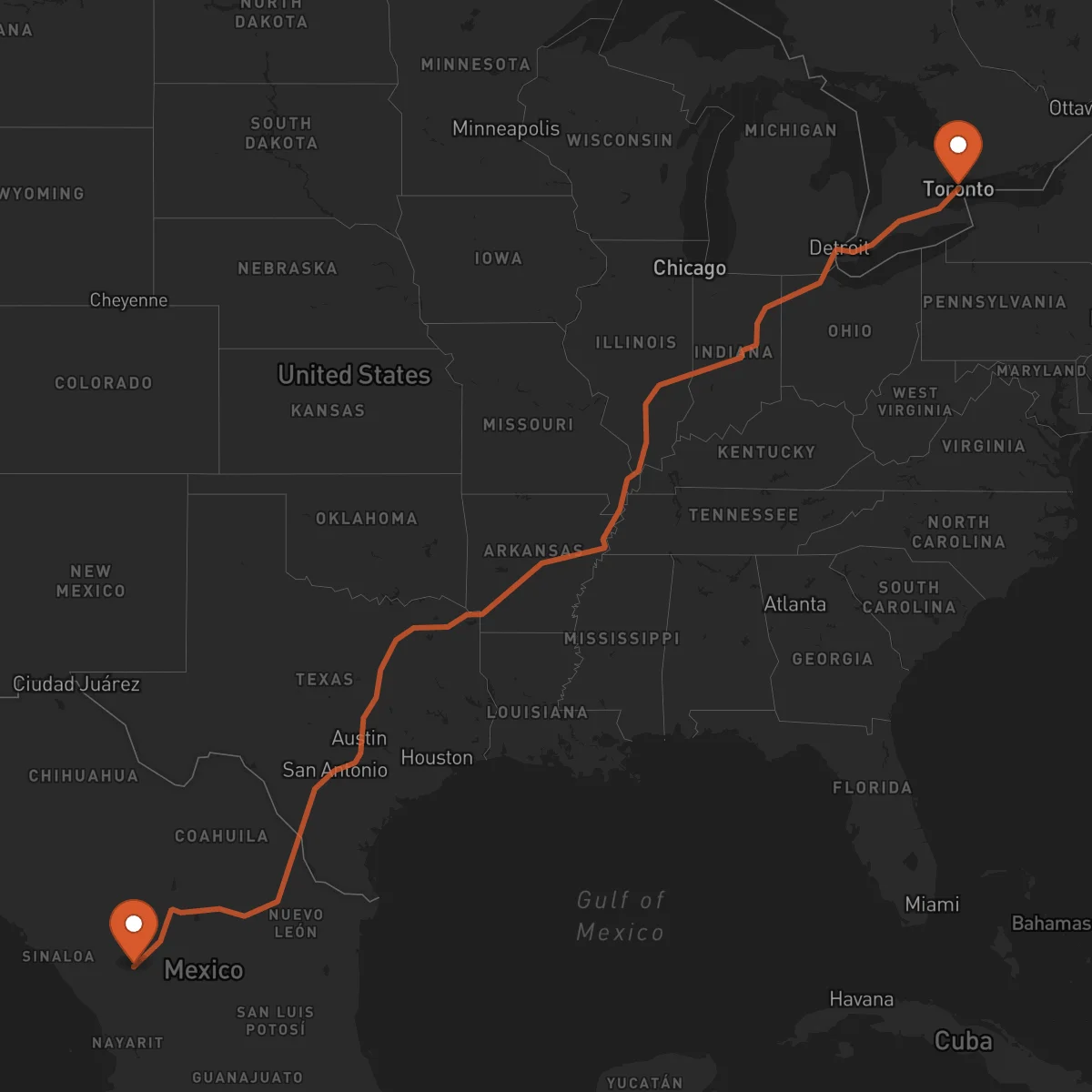
Toronto to Durango
Durango → TorontoFTL freight transportation service between Toronto and Durango. Reliable logistics solutions for your business.
Route Description
Everything you need to know about the corridor Toronto - Durango
The Toronto-Durango corridor represents a vital cross-border logistics route connecting Canada's economic powerhouse with Mexico's growing industrial center. This 3,172 km route traverses three countries, facilitating the movement of goods between North America's most dynamic manufacturing and distribution regions. The corridor's strategic importance continues to grow as trade agreements strengthen economic ties between Canada, the United States, and Mexico.
The route primarily follows major transportation arteries including Ontario's 401, Michigan's I-75, and Mexico's Federal Highway 45, passing through key industrial hubs and crossing at major border points. This infrastructure supports the efficient movement of freight between Toronto's port facilities and Durango's manufacturing centers. The corridor serves as a critical link in North American supply chains, particularly for automotive, aerospace, and electronics industries.
Control Terrestre's expertise in cross-border operations ensures seamless freight movement along this corridor. Our C-TPAT-certified carriers and experienced logistics team navigate customs requirements, documentation, and regulatory compliance across all three countries. We provide dedicated FTL services with real-time tracking and support, ensuring your cargo moves efficiently from origin to destination while maintaining the highest standards of safety and reliability.
Services for this Route
Available services for the corridor Toronto - Durango
 Origin
Toronto stands as Canada's premier logistics hub, strategically positioned on Lake Ontario with access to major rail networks and international airports. The Greater Toronto Area (GTA) hosts over 40% of Canada's businesses and serves as the country's primary manufacturing and distribution center. Its extensive transportation infrastructure includes Pearson International Airport, one of North America's busiest cargo facilities, and the Port of Toronto, providing both air and maritime freight options.
The region's economy thrives on diverse sectors including automotive manufacturing, aerospace, technology, and financial services. Toronto's proximity to the U.S. border and its connection to major highways like the 401 make it an ideal starting point for cross-border freight operations. The city's robust logistics ecosystem supports businesses with warehousing, distribution centers, and specialized freight services, making it a natural gateway for international trade.
 Destination
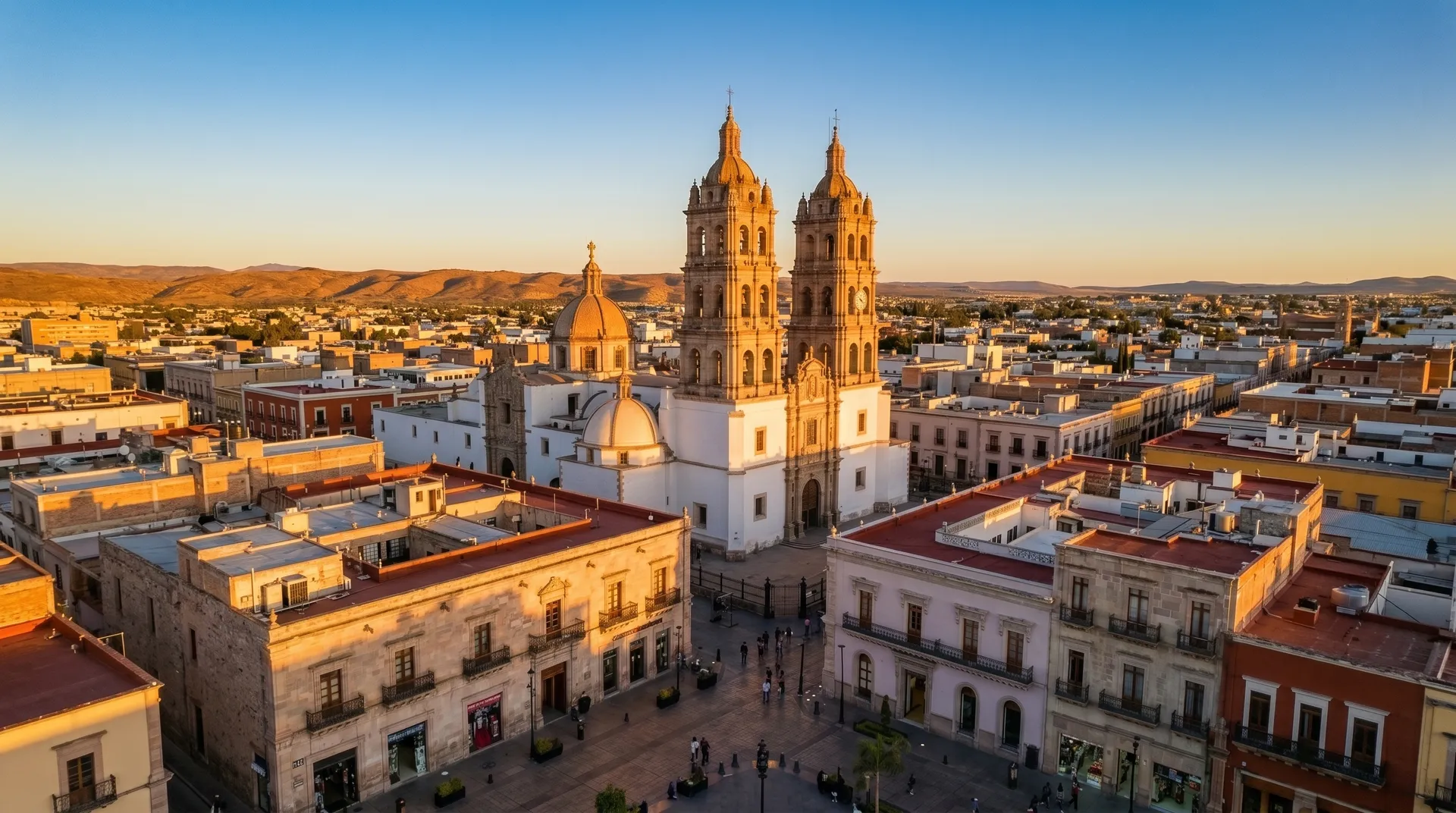
Durango has emerged as a significant industrial center in Mexico's north, strategically located in the central-western part of the country. The city benefits from its position within Mexico's industrial corridor, offering excellent connectivity to major markets in the United States and other Mexican industrial centers. Durango's growing infrastructure includes modern highways connecting to the U.S. border and other key Mexican cities, supporting efficient freight movement.
The region has developed strong manufacturing capabilities, particularly in automotive parts, electronics, and aerospace components. Durango's industrial parks house numerous maquiladoras and manufacturing facilities, creating substantial demand for reliable freight transportation services. The city's economic growth has been supported by investments in logistics infrastructure, including industrial parks with integrated warehousing and distribution facilities, making it an increasingly important destination for cross-border freight.










