Tijuana to Laredo
Laredo → TijuanaFTL freight transportation service between Tijuana and Laredo. Reliable logistics solutions for your business.
Route Description
Everything you need to know about the corridor Tijuana - Laredo
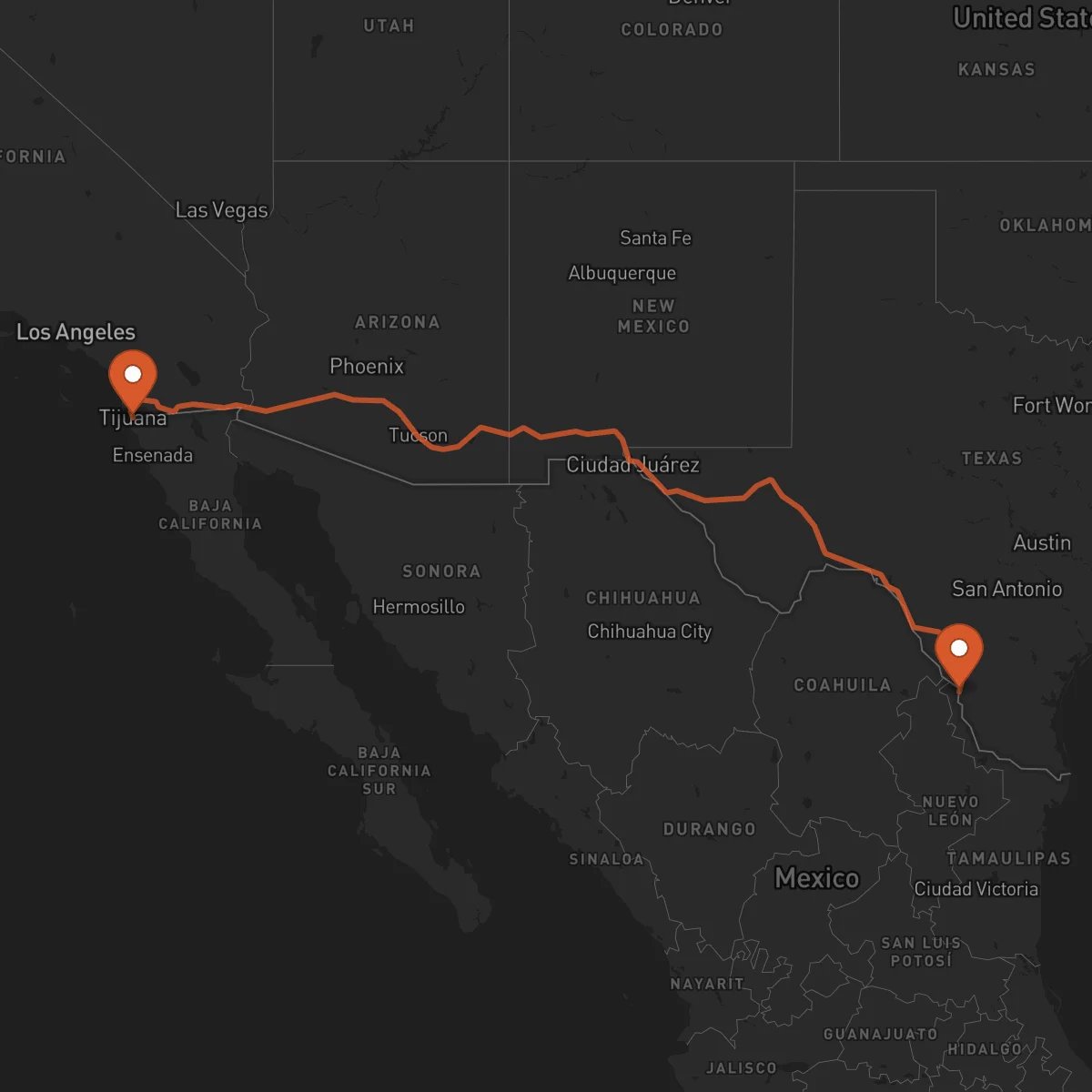
The Tijuana-Laredo corridor represents one of the most critical logistics routes in North America, connecting Mexico's Pacific industrial hub with the United States' largest inland port of entry. This 1,774 km cross-border route facilitates the movement of goods between two major economic zones, serving as a vital artery for international trade. The corridor traverses diverse terrain from Baja California's coastal plains through the Sierra Madre Oriental, connecting manufacturing powerhouses on both sides of the border.
The region's economic significance stems from Tijuana's role as a manufacturing and technology center, complemented by Laredo's position as a gateway to the U.S. interior. This route serves industries including automotive, electronics, medical devices, and consumer goods, with manufacturing facilities on both ends creating substantial freight volumes. The corridor's importance continues to grow with increasing nearshoring trends and the expansion of maquiladora operations in northern Mexico.
Transportation infrastructure along this route includes Mexico's Federal Highway 2 and Federal Highway 1, transitioning to Interstate 35 in the United States. The corridor features multiple border crossing options, with Laredo handling over 40% of all U.S.-Mexico trade. Control Terrestre's expertise in navigating these complex cross-border operations ensures seamless freight movement, with our C-TPAT-certified carriers and experienced teams managing customs clearance, documentation, and compliance requirements to minimize delays and optimize transit times.
Services for this Route
Available services for the corridor Tijuana - Laredo
 Origin
Tijuana
Tijuana stands as a strategic logistics hub on Mexico's Pacific coast, offering unique advantages for freight transportation. Its proximity to major U.S. West Coast ports and southern California markets, combined with extensive manufacturing infrastructure, makes it an ideal origin point for cross-border shipments. The city's industrial parks house numerous maquiladoras and manufacturing facilities, particularly in aerospace, medical devices, and electronics sectors. Tijuana's transportation infrastructure includes the Tijuana International Airport, rail connections to the U.S. network, and direct highway access to California's major transportation corridors, facilitating efficient freight movement to both U.S. and Mexican destinations.
 Destination
Laredo
Laredo, Texas serves as the United States' busiest inland port, strategically positioned to handle massive volumes of cross-border freight. Located on the U.S.-Mexico border, Laredo provides direct access to Interstate 35, which runs north-south through the heart of the United States. The city's logistics infrastructure includes multiple highway connections, extensive warehousing facilities, and advanced customs operations. Laredo's economic base centers on international trade, with major distribution centers, manufacturing facilities, and logistics companies establishing operations to capitalize on its unique border position. The city's Foreign Trade Zone and proximity to major U.S. markets make it an essential destination for freight moving between Mexico and the United States.










