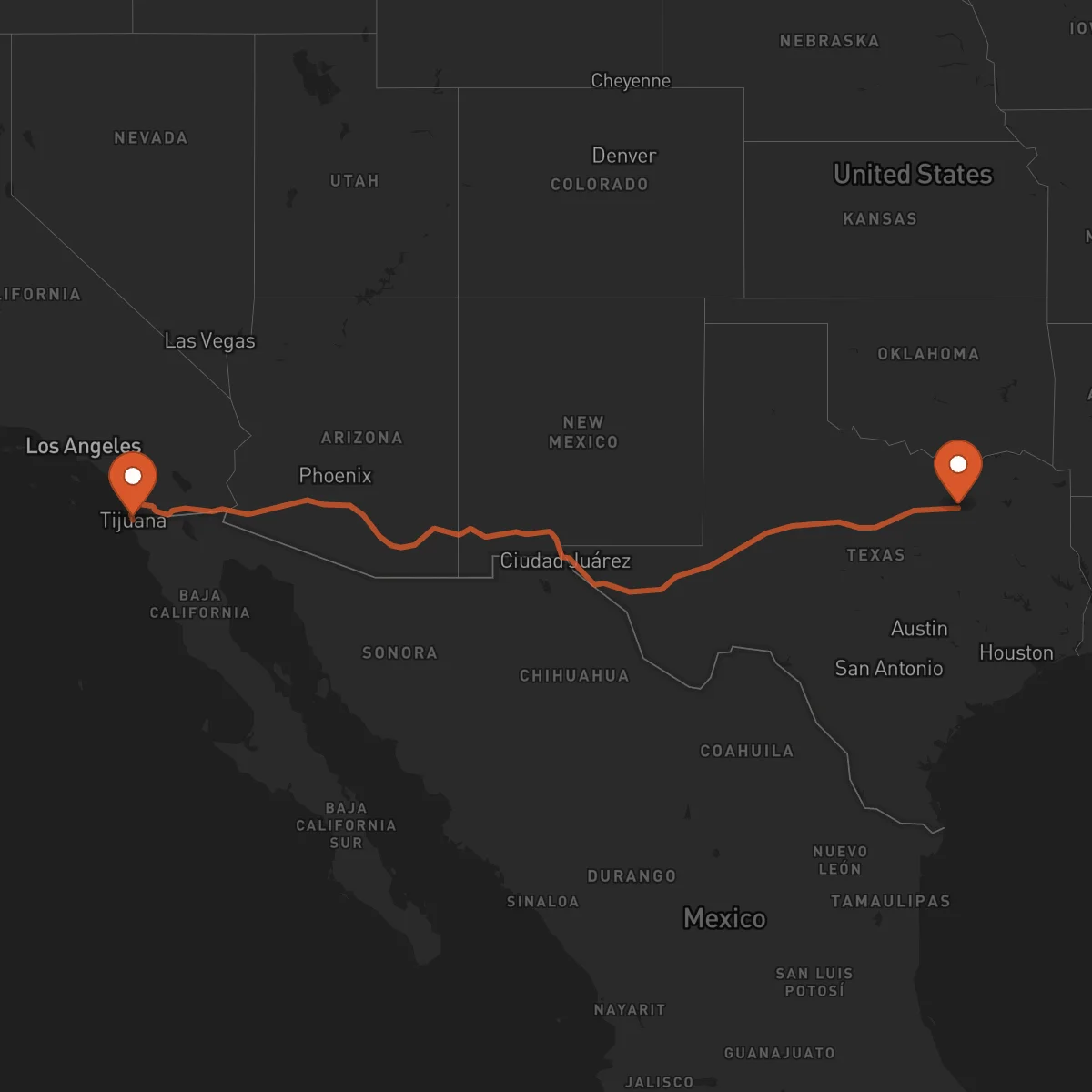
Tijuana to Dallas
Dallas → TijuanaFTL freight transportation service between Tijuana and Dallas. Reliable logistics solutions for your business.
Route Description
Everything you need to know about the corridor Tijuana - Dallas
The Tijuana-Dallas corridor represents a vital trade link between Mexico and the United States, connecting the bustling industrial hub of Baja California with the economic powerhouse of Texas. This 1,890 km cross-border route serves as a strategic artery for manufacturing, automotive, and technology industries, facilitating the seamless movement of goods between two major economic regions. The corridor's significance has grown exponentially with the rise of nearshoring and the increasing integration of North American supply chains.
The transportation infrastructure along this route is robust, featuring major highways including Interstate 35 and Mexican Federal Highway 2. The Otay Mesa border crossing provides efficient access between Tijuana and the U.S., while the corridor passes through key logistics hubs in California, Arizona, and Texas. Control Terrestre's expertise in cross-border operations ensures smooth customs clearance and compliance with all regulatory requirements, minimizing delays and optimizing transit times for our clients.
This corridor primarily serves industries such as automotive manufacturing, electronics, aerospace, and medical devices. Companies in these sectors rely on dedicated FTL services to transport high-value components, finished products, and time-sensitive materials. Control Terrestre's specialized equipment options, including refrigerated units and flatbed trailers, accommodate diverse cargo requirements. Our network of certified carriers and real-time tracking capabilities provide the reliability and visibility that businesses need to maintain efficient operations across this critical trade route.
Services for this Route
Available services for the corridor Tijuana - Dallas
 Origin
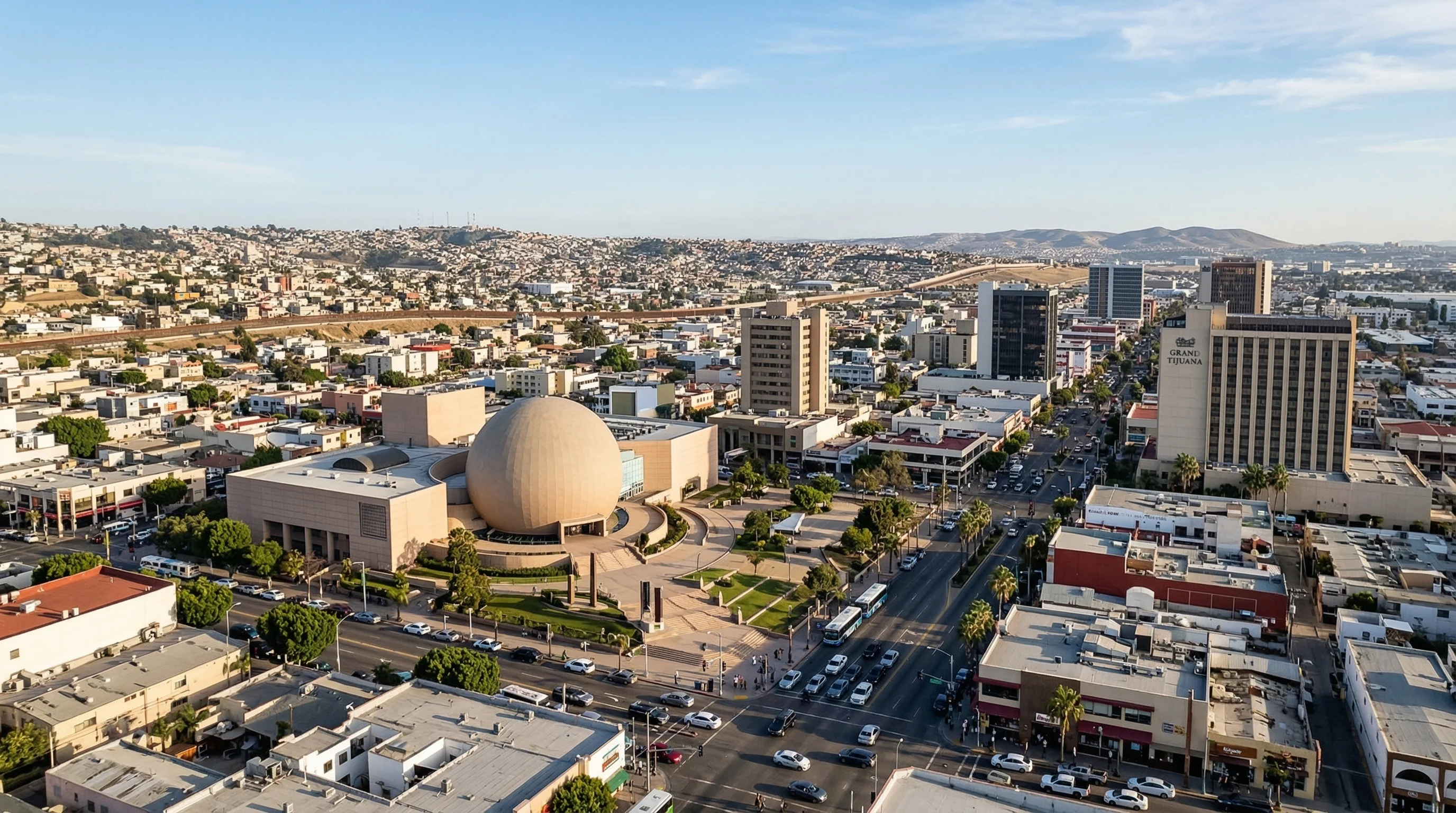
Tijuana
Tijuana stands as a strategic logistics gateway on Mexico's northern border, offering unparalleled access to both the U.S. market and Pacific trade routes. The city's proximity to San Diego creates a unique binational economic zone that has attracted significant foreign investment, particularly in manufacturing and technology sectors. Tijuana's modern transportation infrastructure includes the Tijuana International Airport, major port facilities, and extensive highway connections to the U.S. border.
The region's economy is dominated by the maquiladora industry, with strong presence in electronics, medical devices, and aerospace manufacturing. The city's industrial parks are equipped with state-of-the-art facilities that cater to global supply chains. Tijuana's strategic location makes it an ideal origin point for cross-border freight, with multiple border crossing options and dedicated cargo lanes that expedite the movement of goods into the United States.
 Destination
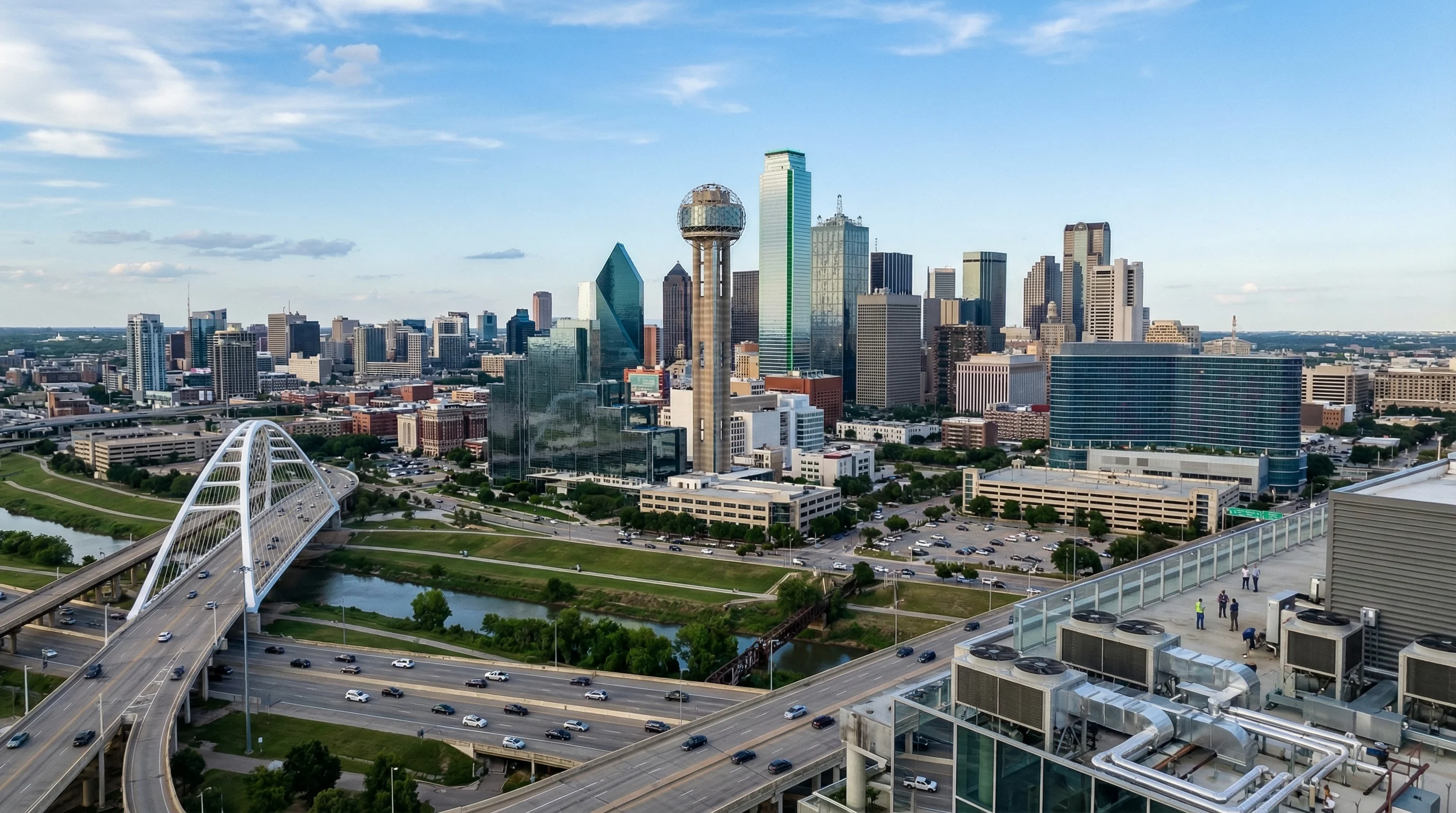
Dallas
Dallas serves as a major logistics and distribution hub in the heart of Texas, offering exceptional connectivity to the rest of the United States. The city's central location makes it an ideal destination for freight transportation, with access to multiple interstate highways including I-35, I-20, and I-45. Dallas/Fort Worth International Airport ranks among the busiest cargo airports in the country, while the city's extensive rail network provides additional multimodal transportation options.
The Dallas metropolitan area is home to a diverse industrial base, with strong presence in technology, telecommunications, healthcare, and advanced manufacturing. The region's logistics infrastructure includes numerous warehousing and distribution centers, making it a natural convergence point for supply chains. Dallas's business-friendly environment and skilled workforce have attracted major corporations, creating a robust demand for efficient freight transportation services to support its dynamic economy.










