Tijuana to Charlotte
Charlotte → TijuanaFTL freight transportation service between Tijuana and Charlotte. Reliable logistics solutions for your business.
Route Description
Everything you need to know about the corridor Tijuana - Charlotte
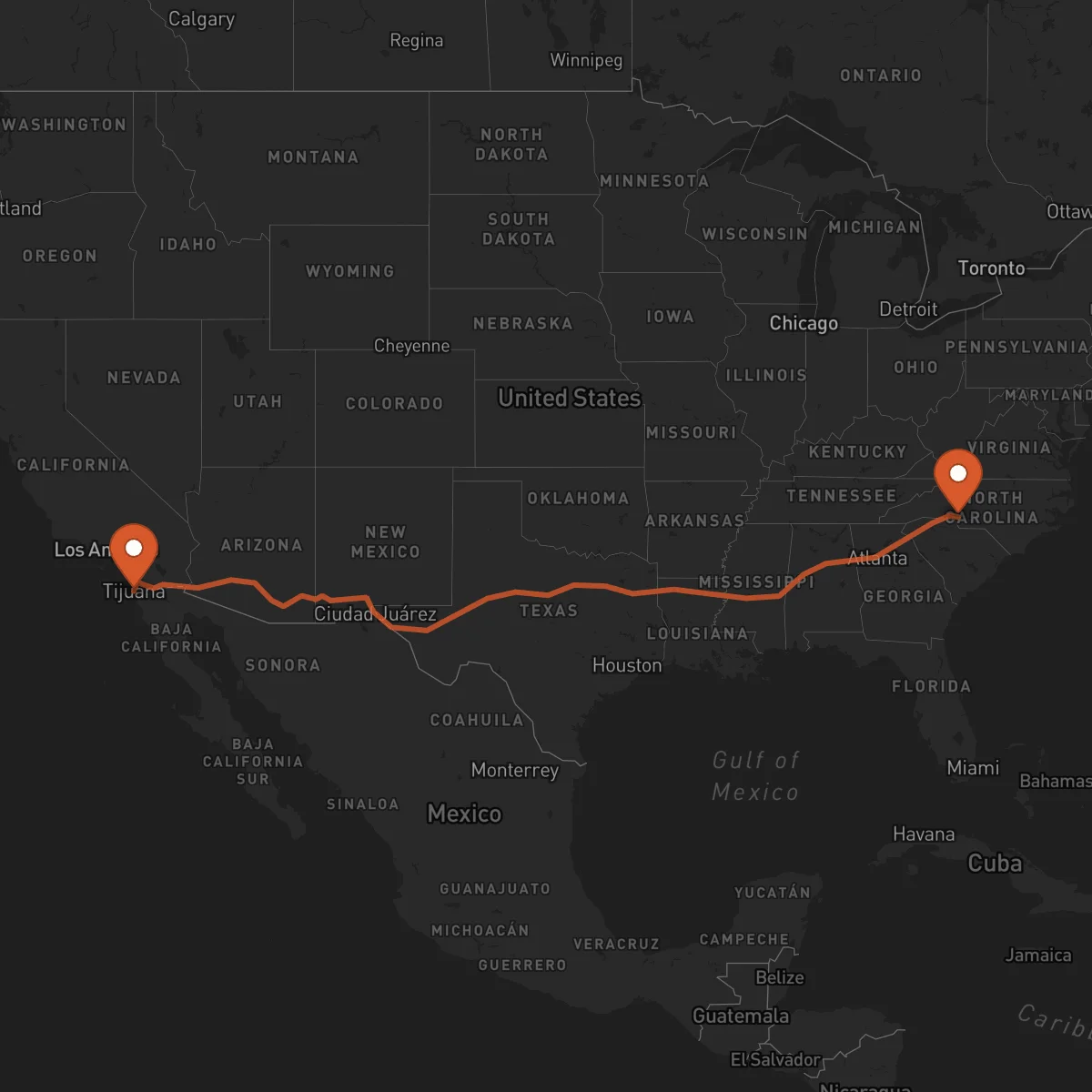
The Tijuana-Charlotte corridor represents a vital connection between Mexico's northern border and the southeastern United States, spanning approximately 3,335 kilometers. This cross-border route links one of Mexico's most dynamic industrial regions with Charlotte, a major financial and logistics hub in North Carolina. The corridor facilitates the movement of goods between two highly industrialized regions, supporting the integrated supply chains that characterize North American trade. Control Terrestre's expertise in managing this route ensures seamless cross-border operations, addressing the complexities of international freight transportation while maintaining the efficiency required by today's just-in-time logistics demands.
Services for this Route
Available services for the corridor Tijuana - Charlotte
 Origin
Tijuana
Tijuana, located in Baja California, Mexico, serves as a strategic gateway for international trade, positioned directly across the border from San Diego, California. This proximity to the United States makes Tijuana a critical logistics hub for companies operating in both countries. The city is a powerhouse of manufacturing and technology, with a strong presence of maquiladoras (manufacturing plants) producing electronics, medical devices, aerospace components, and automotive parts. Tijuana's transportation infrastructure includes the Tijuana International Airport, a comprehensive network of highways connecting to major Mexican cities, and the Otay Mesa and San Ysidro border crossings that provide direct access to California's extensive transportation network.
 Destination
Charlotte
Charlotte, North Carolina, stands as a strategic logistics center in the southeastern United States, benefiting from its location within a day's drive of major metropolitan areas along the East Coast. As the second-largest financial center in the nation, Charlotte hosts numerous corporate headquarters and has developed sophisticated distribution networks. The city's economy is diverse, with strong representation in banking, energy, healthcare, and advanced manufacturing sectors. Charlotte's transportation infrastructure includes the Charlotte Douglas International Airport, extensive interstate highway connections (I-85, I-77, I-485), and proximity to major East Coast ports, making it an ideal distribution point for companies serving the southeastern and mid-Atlantic regions.










