Charlotte to Tijuana
Tijuana → CharlotteFTL freight transportation service between Charlotte and Tijuana. Reliable logistics solutions for your business.
Route Description
Everything you need to know about the corridor Charlotte - Tijuana
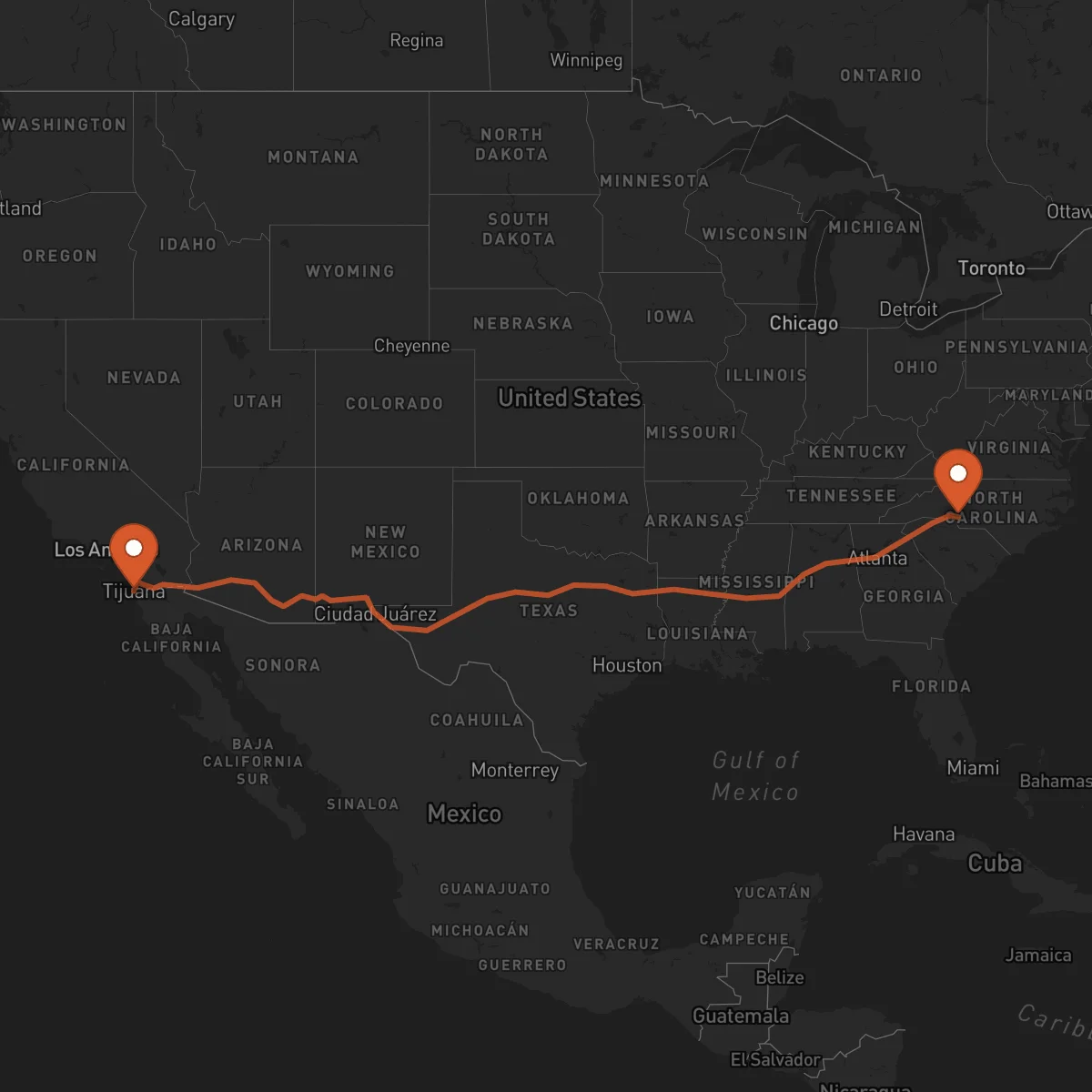
The Charlotte-Tijuana corridor represents a vital logistics connection between the southeastern United States and the Pacific coast of Mexico. This 3,335 km cross-border route links North Carolina's manufacturing powerhouse with Baja California's dynamic industrial region, facilitating seamless freight movement across international borders. The corridor serves as a critical artery for North American trade, connecting major production centers with key distribution hubs.
This route traverses diverse economic landscapes, from Charlotte's thriving financial and manufacturing sectors to Tijuana's robust maquiladora industry. The corridor supports industries including automotive, aerospace, electronics, medical devices, and consumer goods. Companies along this route benefit from Charlotte's strategic position in the southeastern U.S. supply chain and Tijuana's proximity to major West Coast ports and its role as a gateway to Latin American markets.
Key transportation infrastructure includes major highways such as I-85, I-40, and I-10, providing efficient cross-country connectivity. The corridor culminates at the San Ysidro border crossing, one of the busiest commercial ports of entry between the U.S. and Mexico. Control Terrestre's expertise in cross-border operations ensures smooth customs clearance and compliance with all regulatory requirements, minimizing delays and optimizing transit times for full truckload shipments between these strategic locations.
Services for this Route
Available services for the corridor Charlotte - Tijuana
 Origin
Charlotte
Charlotte, North Carolina stands as a major logistics hub in the southeastern United States, offering strategic advantages for freight transportation. The city's location provides excellent access to major East Coast ports, including Charleston and Norfolk, while its robust infrastructure supports efficient distribution throughout the region. Charlotte's extensive network of highways, including I-77 and I-85, connects seamlessly to national freight corridors.
The region's economy is driven by diverse industries including banking and finance, automotive manufacturing, energy, and technology. Major employers include Bank of America, Duke Energy, and numerous manufacturing facilities. Charlotte's international airport serves as a significant cargo hub, complementing ground transportation capabilities. The city's pro-business environment and skilled workforce make it an ideal origin point for companies seeking reliable full truckload shipping solutions to destinations throughout North America.
 Destination
Tijuana
Tijuana, Baja California represents a strategic logistics gateway on Mexico's Pacific coast, offering unique advantages for cross-border freight operations. The city's location just south of California provides immediate access to major U.S. markets while serving as a critical entry point for goods destined for Latin America. Tijuana's proximity to the Port of Ensenada and its connectivity to Mexico's highway network make it an essential logistics node.
The region has evolved into a major manufacturing center, particularly in aerospace, medical devices, electronics, and automotive industries. Tijuana hosts numerous maquiladoras and has developed sophisticated industrial parks to support these sectors. The city's infrastructure includes modern highways connecting to Mexico's interior and the U.S. border, with the Otay Mesa and San Ysidro crossings facilitating efficient cross-border movement. Tijuana's growing reputation as a technology and innovation hub continues to attract investment and expand its logistics capabilities.










