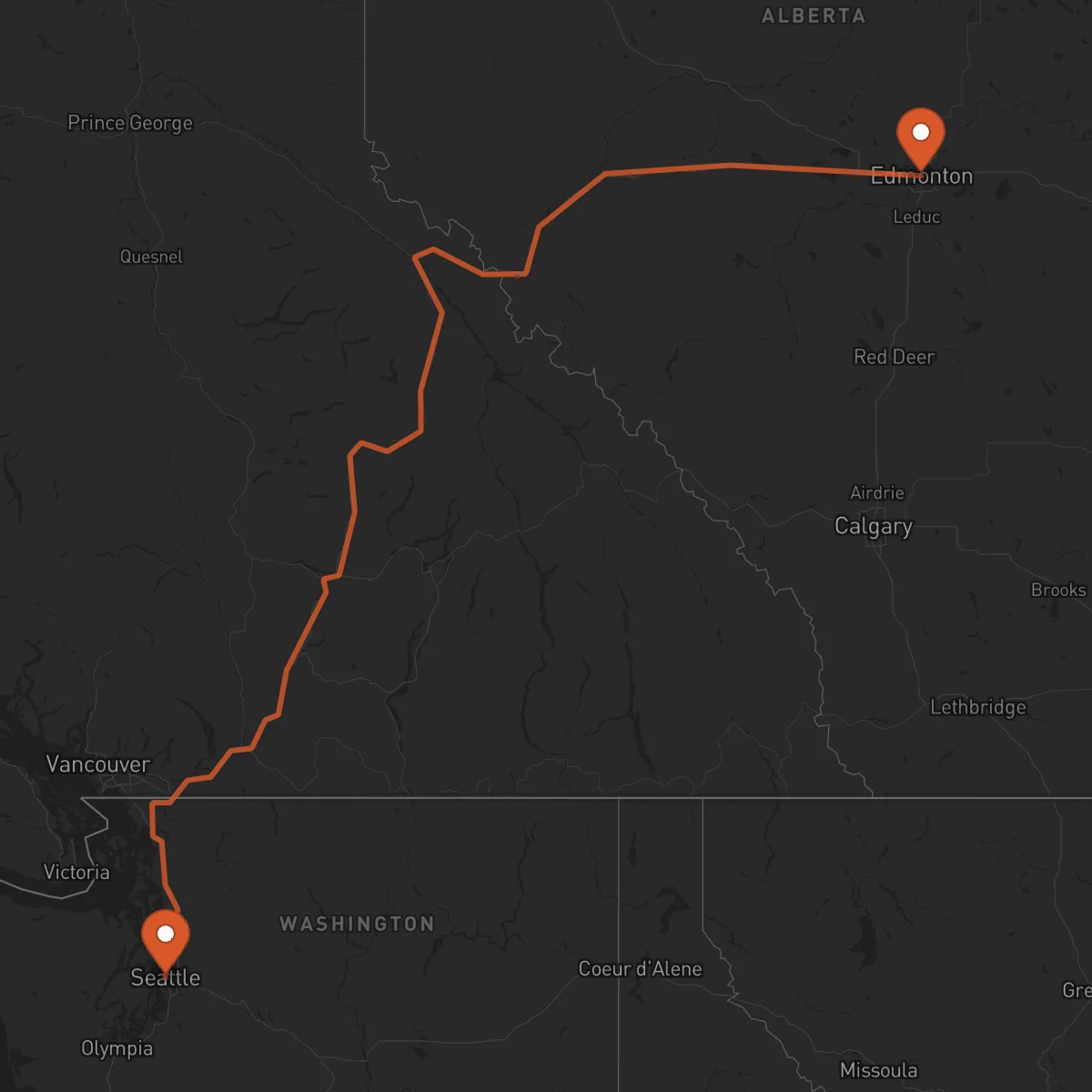
Seattle to Edmonton
Edmonton → SeattleFTL freight transportation service between Seattle and Edmonton. Reliable logistics solutions for your business.
Route Description
Everything you need to know about the corridor Seattle - Edmonton
The logistics corridor connecting Seattle, Washington, to Edmonton, Alberta, represents a vital cross-border freight transportation route between the United States and Canada. This 907-kilometer corridor serves as a critical link between the Pacific Northwest and Canada's western provinces, facilitating the movement of goods between two major economic regions. The route traverses diverse terrain and crosses the international border, requiring specialized knowledge of customs procedures and cross-border regulations.
The economic significance of this corridor is substantial, connecting Seattle's major port and industrial facilities with Edmonton's energy sector and manufacturing base. This route supports the flow of raw materials, finished goods, and industrial equipment between the two countries. The corridor is particularly important for the technology, aerospace, and energy industries, as well as for agricultural products moving between the regions.
Transportation infrastructure along this corridor includes major highways such as Interstate 5 and Highway 1, providing reliable freight movement. The border crossing at Blaine, Washington/Peace Arch, and other points of entry require careful coordination and documentation to ensure smooth transit. Control Terrestre's expertise in cross-border operations ensures efficient customs clearance and minimizes delays, with our C-TPAT-certified carriers providing secure and compliant transportation solutions throughout the journey.
Services for this Route
Available services for the corridor Seattle - Edmonton
 Origin
Seattle
Seattle, Washington serves as a strategic gateway for international trade, with its major port facilities and proximity to Asia-Pacific markets. The city is a hub for technology, aerospace (home to Boeing), and maritime industries, with a robust manufacturing sector and distribution networks. Seattle's transportation infrastructure includes the Port of Seattle, extensive highway systems (I-5, I-90), rail connections, and Seattle-Tacoma International Airport, providing multiple options for freight movement and distribution.
 Destination
Edmonton, Alberta is strategically located in Canada's western region, serving as a key distribution center for Alberta and beyond. The city is the capital of Alberta and a major center for the energy sector, particularly oil and gas, as well as manufacturing and technology industries. Edmonton's transportation infrastructure includes major highways (Yellowhead Trail/Highway 16, QEII Highway), the Port of Edmonton (inland port), Edmonton International Airport, and extensive rail connections, making it an ideal hub for freight distribution throughout western Canada.










