Seattle to Calgary
Calgary → SeattleFTL freight transportation service between Seattle and Calgary. Reliable logistics solutions for your business.
Route Description
Everything you need to know about the corridor Seattle - Calgary
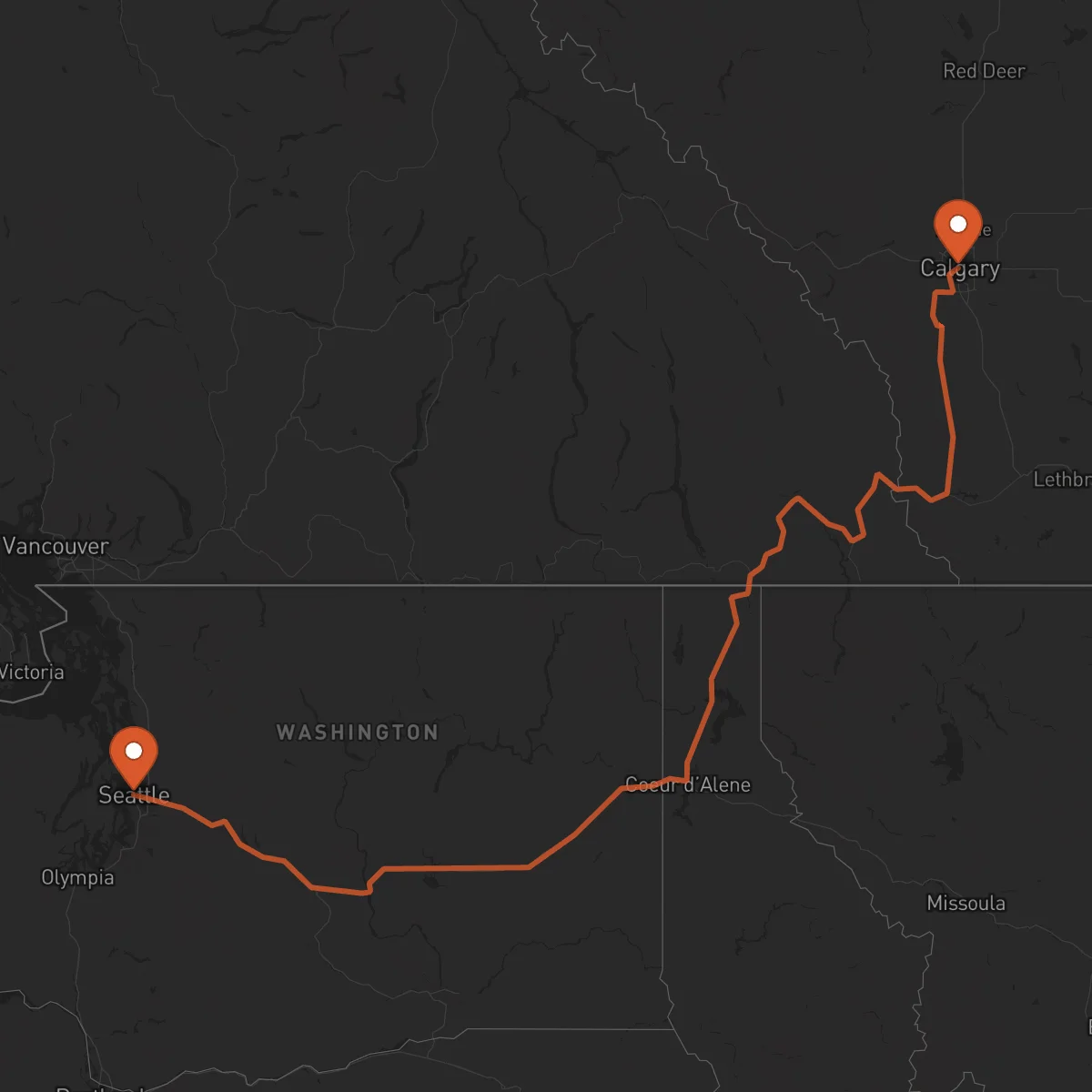
The logistics corridor connecting Seattle, Washington, to Calgary, Alberta, represents a vital cross-border freight route in North America. This 710-kilometer corridor links the Pacific Northwest with Canada's economic powerhouse in Alberta, facilitating the movement of goods between the United States and Canada. The route traverses diverse landscapes, from the coastal plains of Washington through the Rocky Mountain foothills, requiring specialized transportation expertise to ensure efficient and reliable delivery.
The economic significance of this corridor is substantial, connecting two major metropolitan areas with complementary industrial bases. Seattle serves as a gateway to Asian markets and a hub for technology and aerospace industries, while Calgary stands as the center of Canada's energy sector and a growing hub for logistics and distribution. The corridor supports the movement of high-value technology components, industrial equipment, agricultural products, and energy-related materials between these regions.
Key transportation infrastructure along this route includes Interstate 5 and Interstate 90 in the United States, connecting to Alberta Highway 1 and the Trans-Canada Highway in Canada. The primary border crossing at Coutts/Sweet Grass, MT, facilitates the majority of commercial traffic, though other crossings like Kingsgate/Paterson are also utilized. Control Terrestre's expertise in cross-border operations ensures seamless customs clearance, compliance with both US and Canadian regulations, and efficient coordination of FTL shipments across this international boundary.
Services for this Route
Available services for the corridor Seattle - Calgary
 Origin
Seattle
Seattle, Washington, serves as a strategic logistics hub on the West Coast of the United States. Located on Puget Sound, the city provides direct access to maritime shipping routes connecting North America with Asia-Pacific markets. Seattle's Port is one of the busiest on the West Coast, handling millions of containers annually and serving as a critical gateway for international trade. The city's extensive transportation infrastructure includes major interstate highways (I-5 and I-90), a comprehensive rail network, and proximity to Sea-Tac International Airport, creating multiple freight transportation options.
The region's economy is driven by technology giants, aerospace manufacturing (Boeing's major presence), healthcare, and maritime industries. Seattle's position as a logistics center is further enhanced by its proximity to major distribution centers and warehousing facilities in the surrounding area. The city's infrastructure supports 24/7 freight operations, with specialized facilities for handling various cargo types, including refrigerated goods, hazardous materials, and oversized equipment.
 Destination
Calgary, Alberta, stands as a major logistics and economic center in Western Canada, strategically positioned at the crossroads of national transportation networks. Located in the foothills of the Canadian Rockies, Calgary serves as the primary gateway to Alberta's vast energy resources and agricultural heartland. The city's logistics infrastructure includes the Calgary International Airport, extensive rail connections via Canadian Pacific Railway and Canadian National Railway, and a network of provincial highways that connect to major trade corridors throughout Canada and into the United States.
The Calgary economy is anchored by the energy sector, with significant activities in oil, natural gas, and renewable energy. The region is also home to a growing technology sector, financial services, and manufacturing industries. Calgary's strategic location makes it a natural distribution center for goods moving throughout Western Canada and into the northern United States. The city's logistics ecosystem includes specialized facilities for handling energy equipment, agricultural products, and industrial materials, supported by a skilled workforce experienced in cross-border trade operations.










