Edmonton to Seattle
Seattle → EdmontonFTL freight transportation service between Edmonton and Seattle. Reliable logistics solutions for your business.
Route Description
Everything you need to know about the corridor Edmonton - Seattle
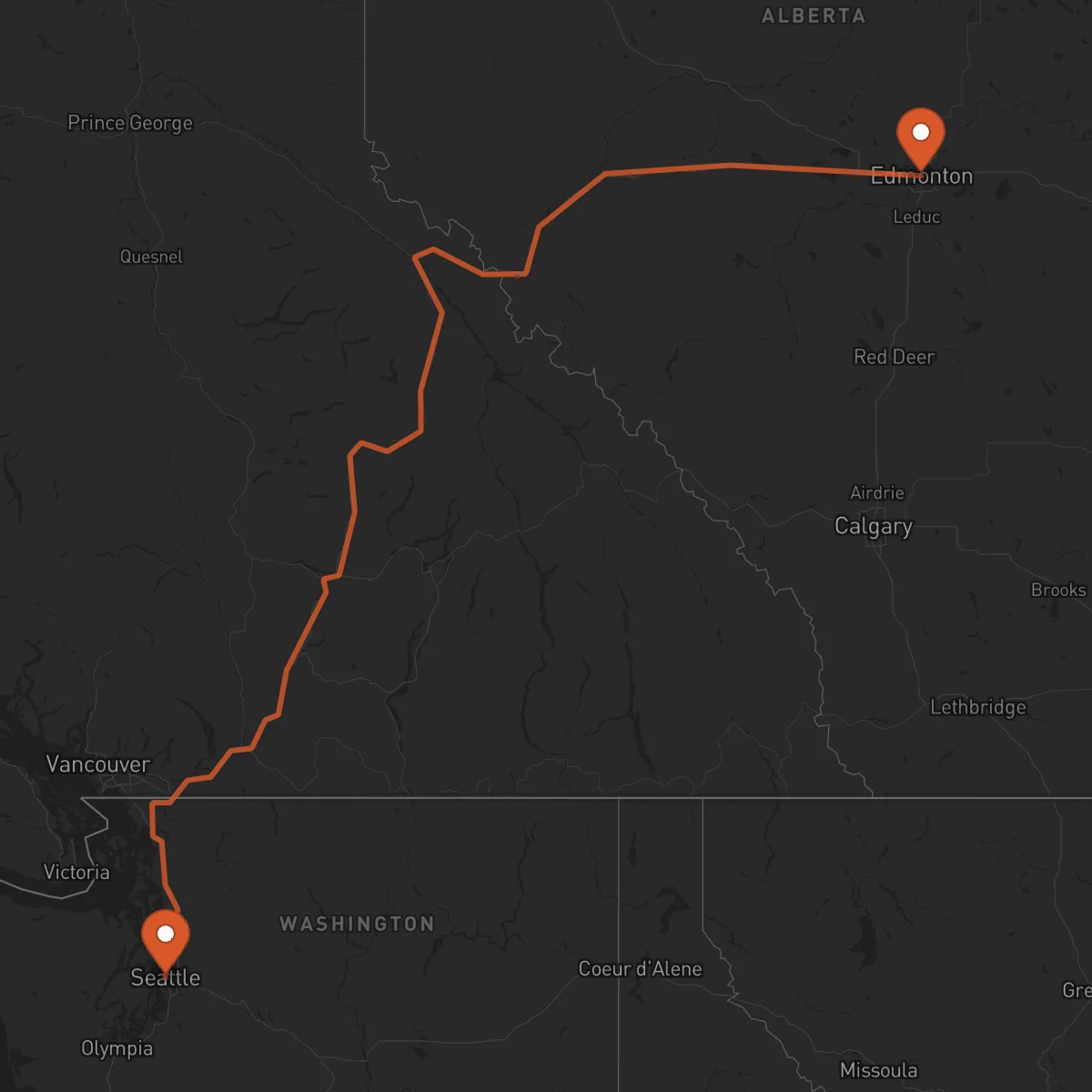
The Edmonton to Seattle corridor represents a vital cross-border logistics route connecting Alberta, Canada, with Washington State in the United States. This 907-kilometer transportation corridor serves as a crucial link between the energy-rich Canadian prairies and the bustling Pacific Northwest market, facilitating the movement of diverse cargo types across international borders. The route traverses through major transportation hubs, connecting industrial centers with international ports and distribution networks.
The economic significance of this corridor is underscored by the strong trade relationship between Alberta and Washington State. Edmonton serves as a major distribution center for Alberta's energy sector, while Seattle functions as a gateway to Asian markets through its ports and as a key logistics hub for the Pacific Northwest. The corridor supports the movement of industrial equipment, manufactured goods, agricultural products, and energy-related materials, reflecting the complementary economic structures of both regions.
Transportation infrastructure along this corridor includes major highways such as Highway 2 and Interstate 5, providing reliable freight movement. The Peace Arch and Pacific Highway border crossings facilitate efficient customs clearance for cross-border shipments. Control Terrestre leverages this infrastructure to provide seamless FTL transportation services, ensuring cargo moves efficiently through customs procedures and reaches its destination on schedule. Our expertise in cross-border operations helps clients navigate the complexities of international freight movement between Canada and the United States.
Services for this Route
Available services for the corridor Edmonton - Seattle
 Origin
Edmonton, the capital city of Alberta, Canada, serves as a strategic logistics hub in Western Canada. Located in the heart of Alberta's industrial corridor, Edmonton provides excellent connectivity to major transportation networks, including highways, railways, and air cargo facilities. The city's proximity to major oil sands operations in northern Alberta makes it a critical distribution center for energy sector equipment and supplies. Edmonton's industrial base includes manufacturing, technology, and distribution sectors, creating diverse freight transportation needs. The city's location also provides access to the rest of Canada and serves as a gateway for international trade through its transportation infrastructure.
 Destination
Seattle
Seattle, Washington, stands as a premier logistics and distribution center in the Pacific Northwest. The city's strategic location on the Puget Sound provides access to major ports, facilitating international trade with Asia and beyond. Seattle's robust transportation infrastructure includes extensive highway networks, rail connections, and the Seattle-Tacoma International Airport, supporting diverse freight movement requirements. The region's economy is driven by technology, aerospace (including Boeing's presence), maritime industries, and international trade. Seattle's position as a gateway to the Asia-Pacific region makes it an essential destination for cross-border freight from Canada, with the city serving as a distribution hub for the broader Pacific Northwest market.










