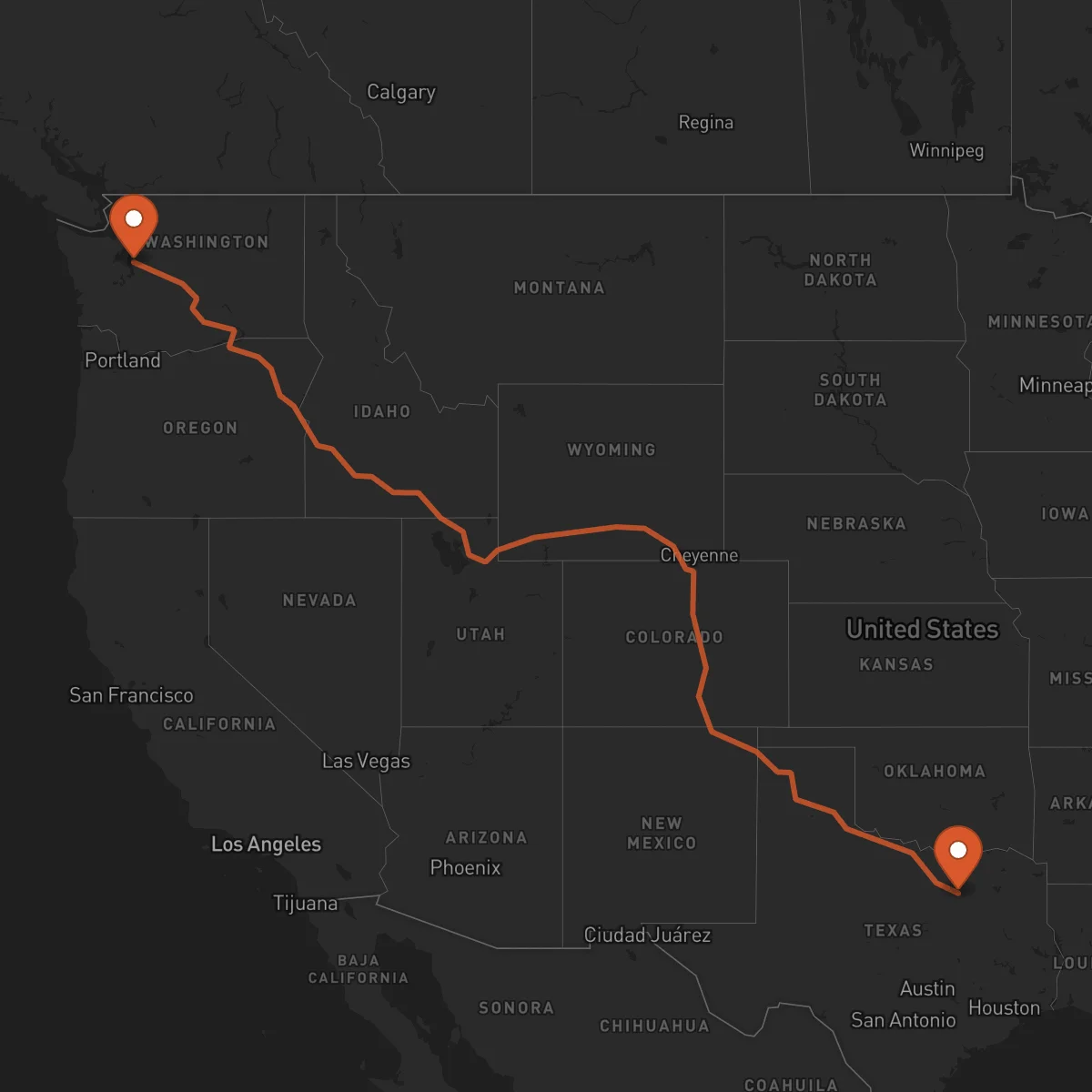
Seattle to Dallas
Dallas → SeattleFTL freight transportation service between Seattle and Dallas. Reliable logistics solutions for your business.
Route Description
Everything you need to know about the corridor Seattle - Dallas
The Seattle-Dallas corridor represents one of the most critical freight transportation routes in the United States, connecting the Pacific Northwest with the heart of Texas. This 2,703 km route traverses diverse landscapes and crosses multiple states, facilitating the movement of goods between two major economic hubs. The corridor's strategic importance lies in its ability to link Seattle's port facilities and technology sector with Dallas's central location and thriving business environment.
The economic context of this corridor reflects the complementary nature of both regions. Seattle serves as a gateway for international trade, particularly with Asia, while Dallas functions as a major distribution center for the southern United States. This creates a dynamic flow of goods moving in both directions, from high-tech equipment and aerospace components to consumer goods and industrial materials. The corridor supports the movement of specialized cargo, including refrigerated goods from the Pacific Northwest and manufactured products from Texas.
Key industries utilizing this corridor include technology, aerospace, automotive, retail, and agriculture. The route passes through major transportation hubs including Portland, Salt Lake City, Denver, and Oklahoma City, providing multiple opportunities for logistics optimization. Control Terrestre facilitates seamless operations on this corridor through our network of certified carriers, offering dedicated FTL services that ensure timely and secure delivery of your freight across this extensive route.
Services for this Route
Available services for the corridor Seattle - Dallas
 Origin
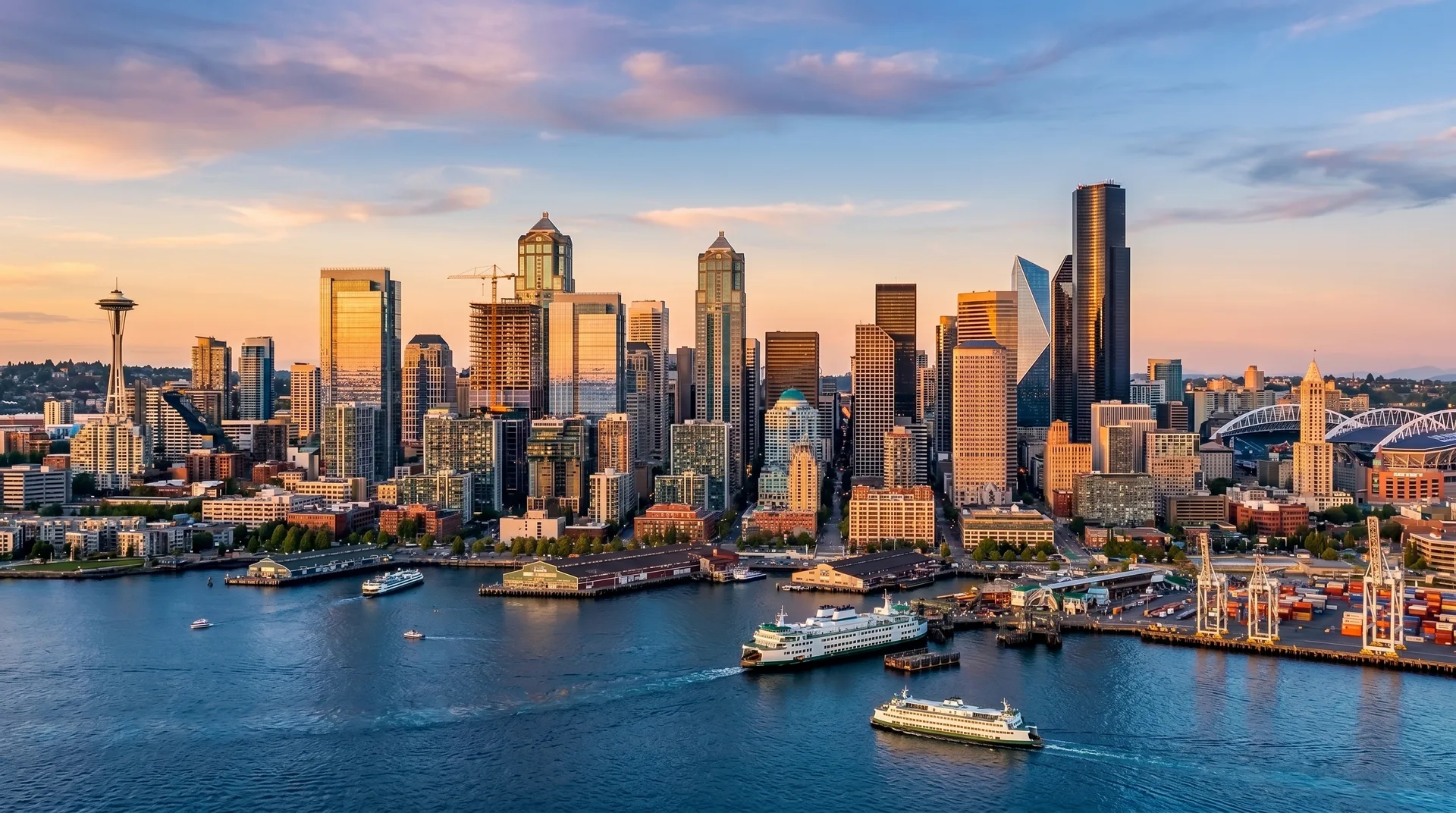
Seattle
Seattle, Washington, serves as a strategic logistics hub on the West Coast, offering unique advantages for freight transportation. The city's location provides direct access to major ports, including the Port of Seattle, which handles significant international cargo volumes. Seattle's robust transportation infrastructure includes Interstate 5, which runs north-south through the city, and Interstate 90, providing east-west connectivity. The region's economy is driven by technology, aerospace (with Boeing's major presence), and international trade, creating consistent demand for reliable freight services.
 Destination
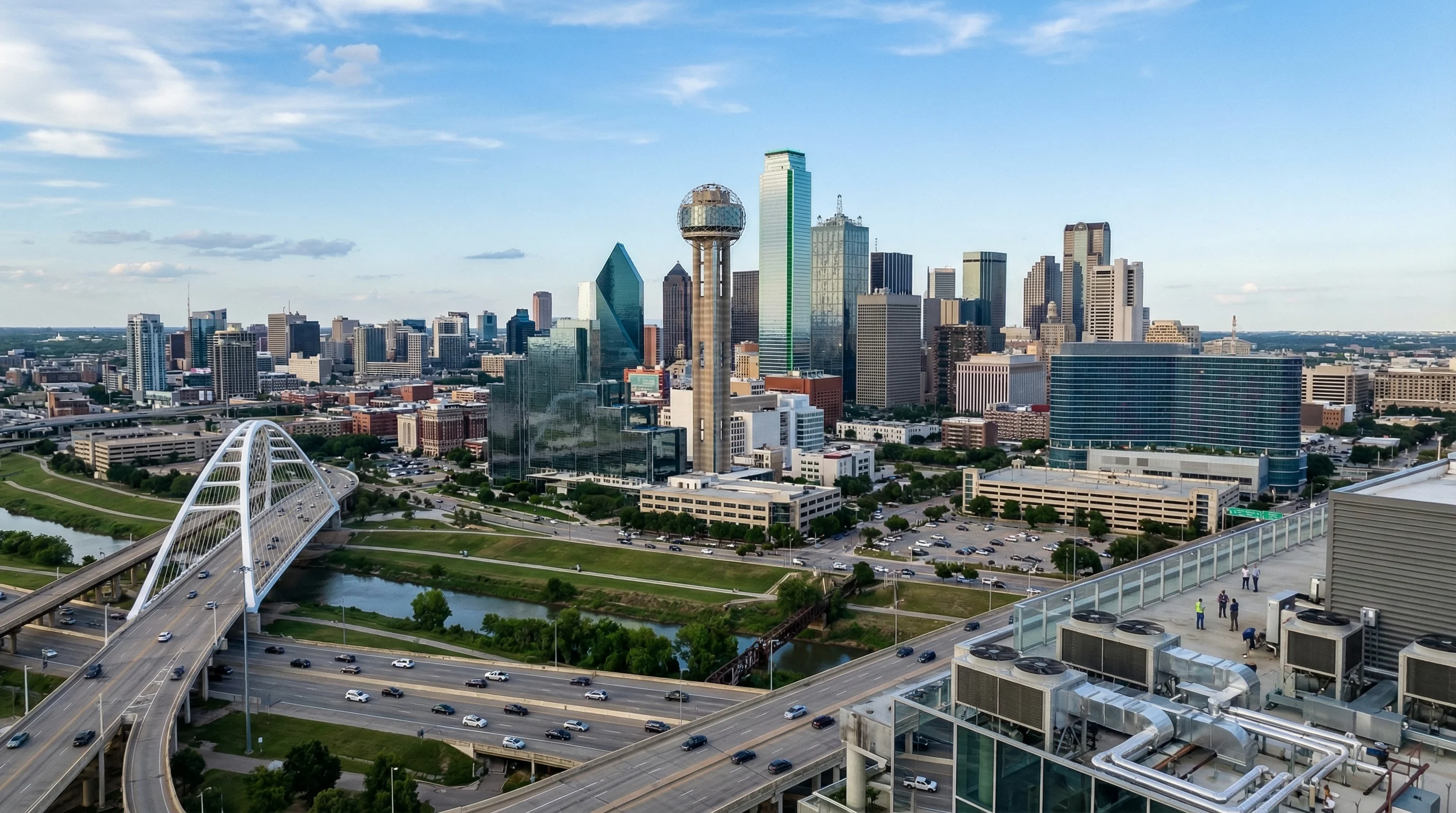
Dallas
Dallas, Texas, stands as a central logistics powerhouse in the southern United States, offering exceptional connectivity and infrastructure. The city's strategic location at the intersection of major interstate highways (I-20, I-30, I-35E, and I-45) makes it an ideal distribution center. Dallas benefits from the presence of Dallas/Fort Worth International Airport, one of the busiest cargo airports in the country, and the Port of Houston's proximity for international freight. The region's diverse economy, encompassing technology, telecommunications, healthcare, and manufacturing, generates substantial freight movement, while the city's central location enables efficient distribution throughout the southern and central United States.










