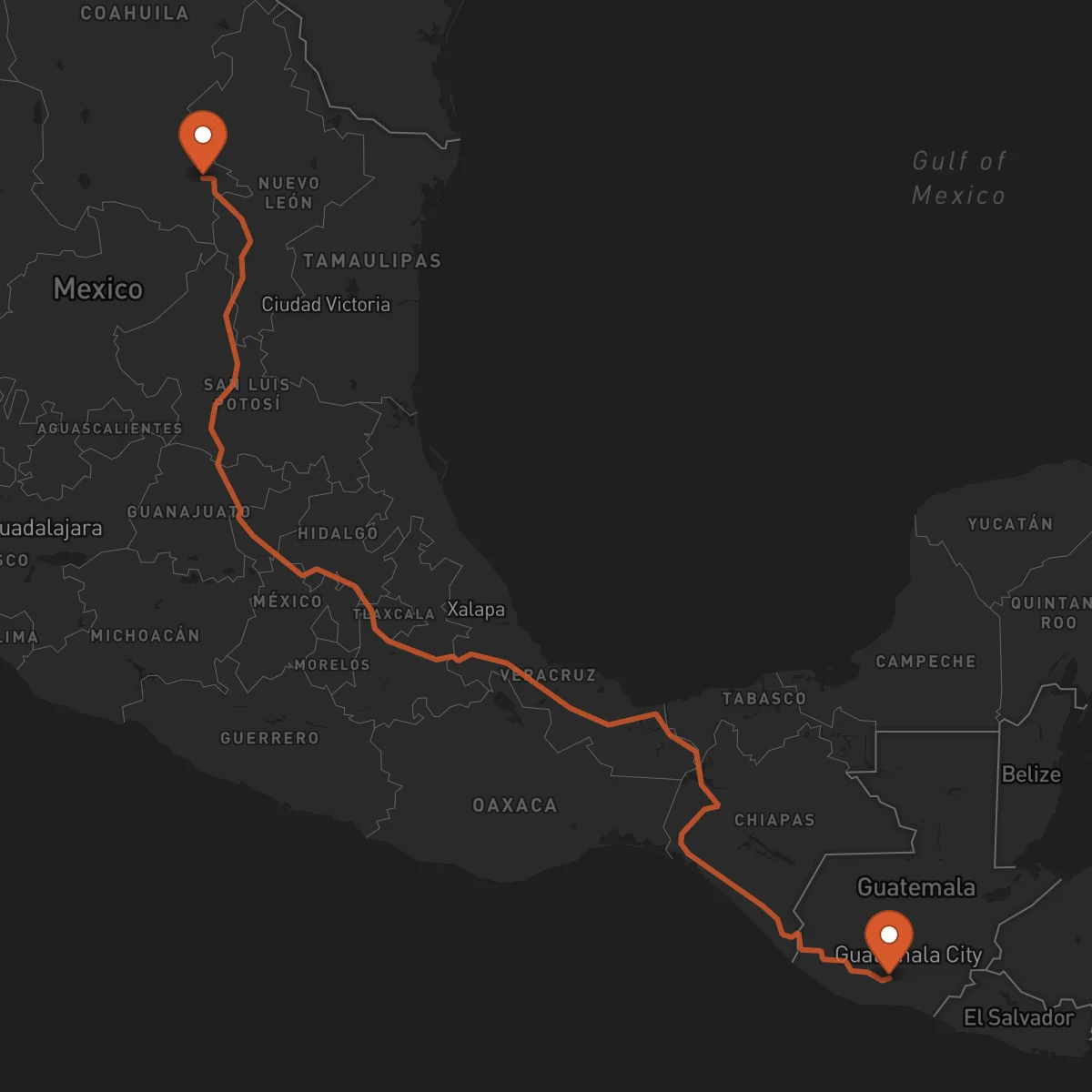
Saltillo to Escuintla
Escuintla → SaltilloFTL freight transportation service between Saltillo and Escuintla. Reliable logistics solutions for your business.
Route Description
Everything you need to know about the corridor Saltillo - Escuintla
The Saltillo-Escuintla corridor represents a vital north-south logistics artery connecting Mexico's industrial heartland with Guatemala's Pacific gateway. Spanning approximately 1,632 kilometers, this cross-border route is fundamental to regional trade, facilitating the flow of goods between North and Central America. It serves as a critical link for manufacturers and exporters leveraging Mexico's maquila industry and Central America's agricultural and textile sectors. The corridor's economic significance is underscored by its role in moving automotive parts, industrial components, agricultural exports, and consumer goods, supporting integrated supply chains across the region.
Key transportation infrastructure primarily follows Mexico's Highway 40D (Carretera Federal 40) from Saltillo towards the border, transitioning to Central American Route CA-1 in Guatemala. This network, while comprehensive, presents varying road conditions that require experienced navigation. The principal border crossing is at Tecún Umán/ Ciudad Hidalgo, a major port of entry between Mexico and Guatemala. Successful navigation of this corridor demands meticulous attention to customs documentation, compliance with both Mexican and Guatemalan regulations, and an understanding of specific requirements for goods like agricultural products or manufactured components.
Control Terrestre facilitates seamless operations on this corridor through our strategic alliance of certified transportation providers. Our partners hold essential credentials including C-TPAT and FAST for expedited U.S. and cross-border processing, and BASC for security standards, which are invaluable at the Mexico-Guatemala frontier. We exclusively provide Full Truckload (FTL) solutions—dedicated, expedited, or specialized—ensuring your cargo moves as a single, secure unit from door to door without consolidation. Our expertise in cross-border freight transportation manages the complexities of international documentation and customs clearance, providing our clients with a single, reliable point of contact for this critical supply chain route.
Services for this Route
Available services for the corridor Saltillo - Escuintla
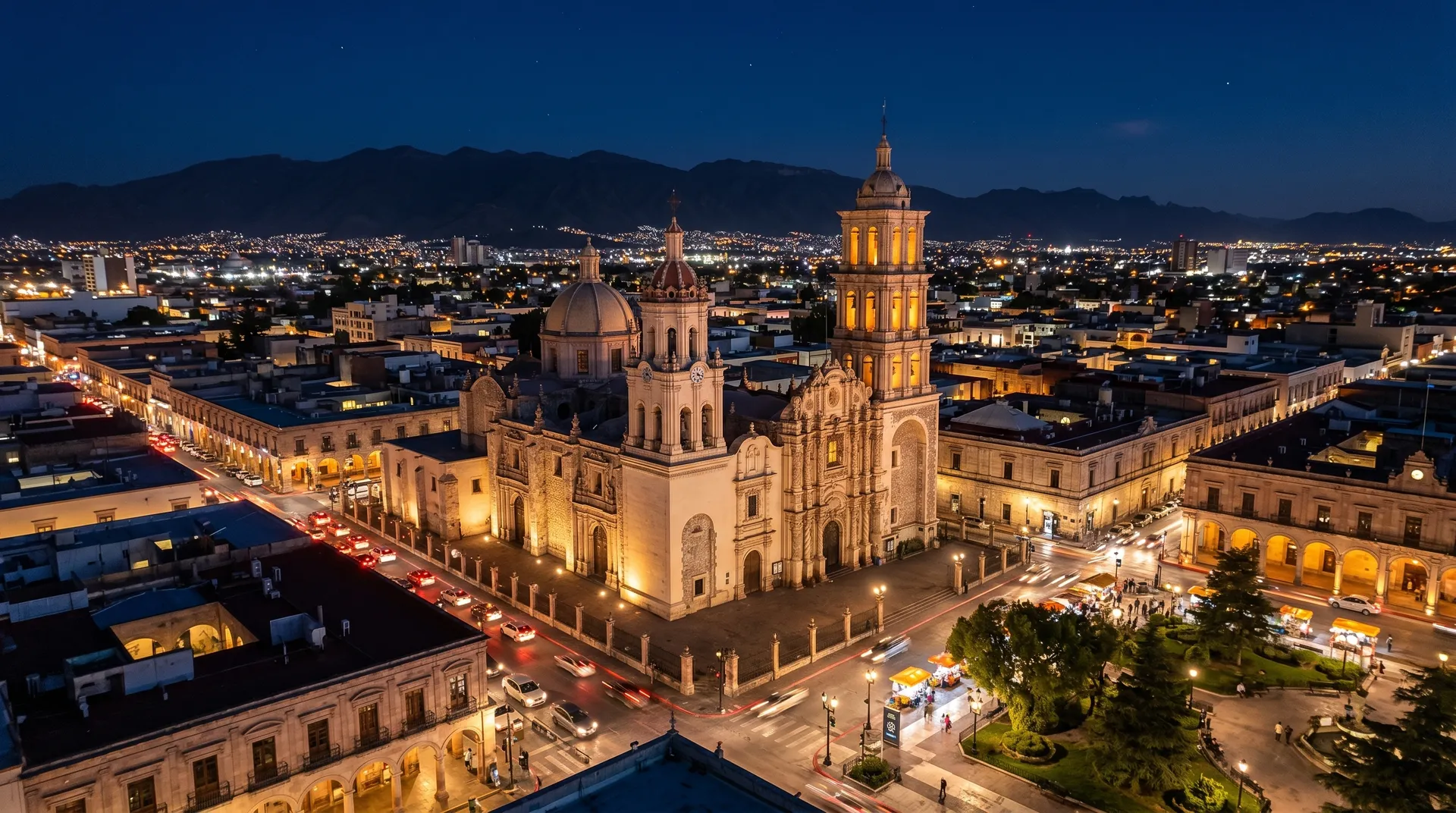 Origin
Saltillo, Coahuila, is a premier industrial and logistics hub in northeastern Mexico, strategically positioned approximately 900 km from the U.S. border at Laredo. Its economy is dominated by the automotive industry, hosting major manufacturing plants for General Motors and other suppliers, making it a primary origin for vehicle parts and finished automobiles. The city is also a significant center for steel production, food processing, and manufacturing of appliances and textiles. Its robust logistics infrastructure includes direct access to Mexican Federal Highways 40 and 57, which connect efficiently to the U.S. border and to central Mexico. Furthermore, Saltillo is served by a major rail line and is within reach of ports in Veracruz and Altamira, providing multimodal flexibility for export and import freight moving throughout North America.
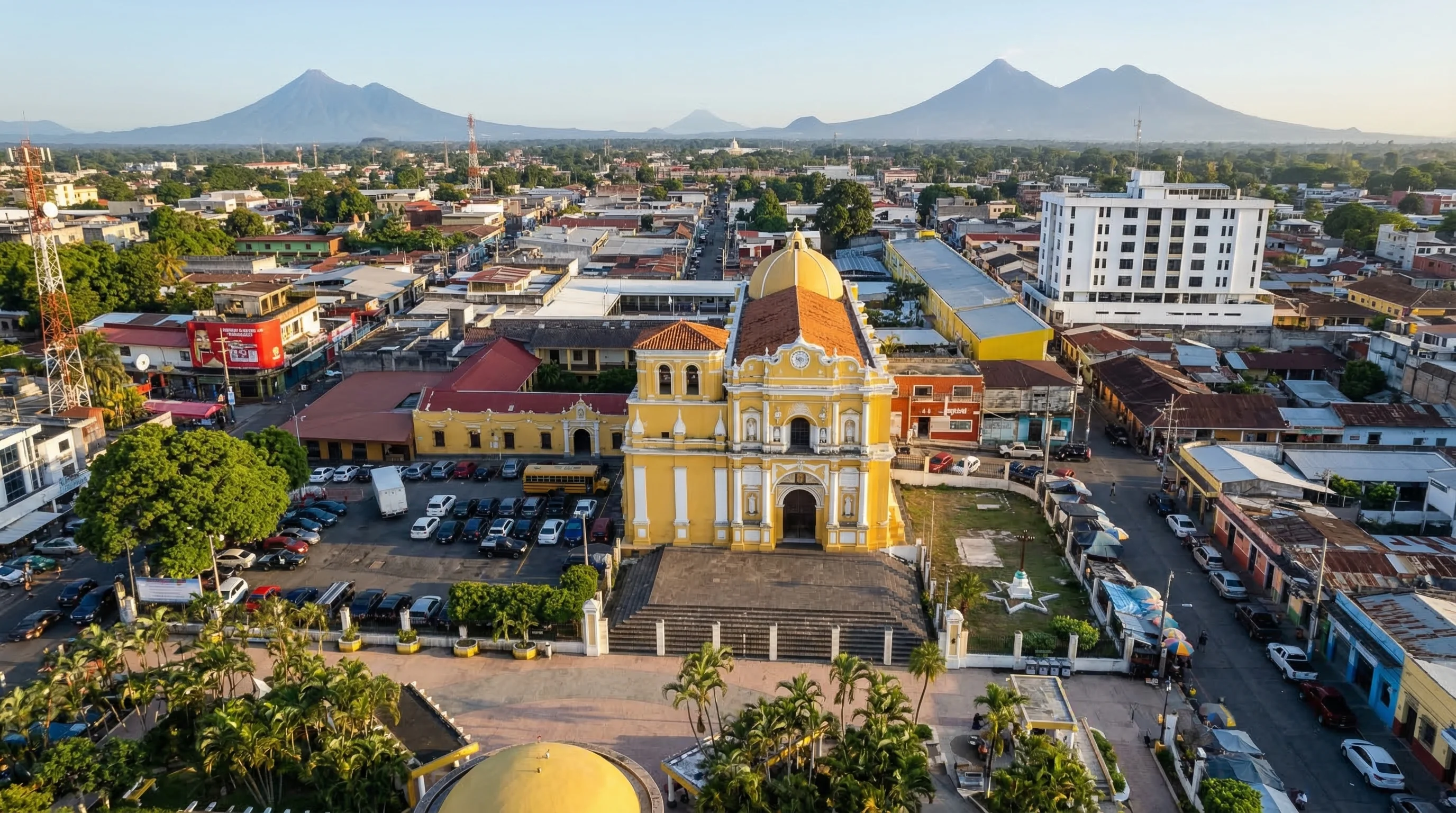 Destination
Escuintla, located on Guatemala's Pacific coast, is a crucial commercial and agricultural gateway. Its strategic value stems from its proximity to the principal port of Puerto San José, one of Central America's most important maritime terminals, facilitating direct ocean freight connections. The department of Escuintla is Guatemala's agricultural powerhouse, producing a significant portion of the nation's sugarcane, coffee, bananas, and tropical fruits. Key industries also include food and beverage processing, textiles, and light manufacturing. The city is the southern terminus of the Pan-American Highway (CA-1), providing the main terrestrial link to Mexico and the rest of Central America. This infrastructure makes Escuintla an essential distribution point for goods entering and exiting the region, serving both local demand and as a transit hub.










