Miami to Toronto
Toronto → MiamiFTL freight transportation service between Miami and Toronto. Reliable logistics solutions for your business.
Route Description
Everything you need to know about the corridor Miami - Toronto
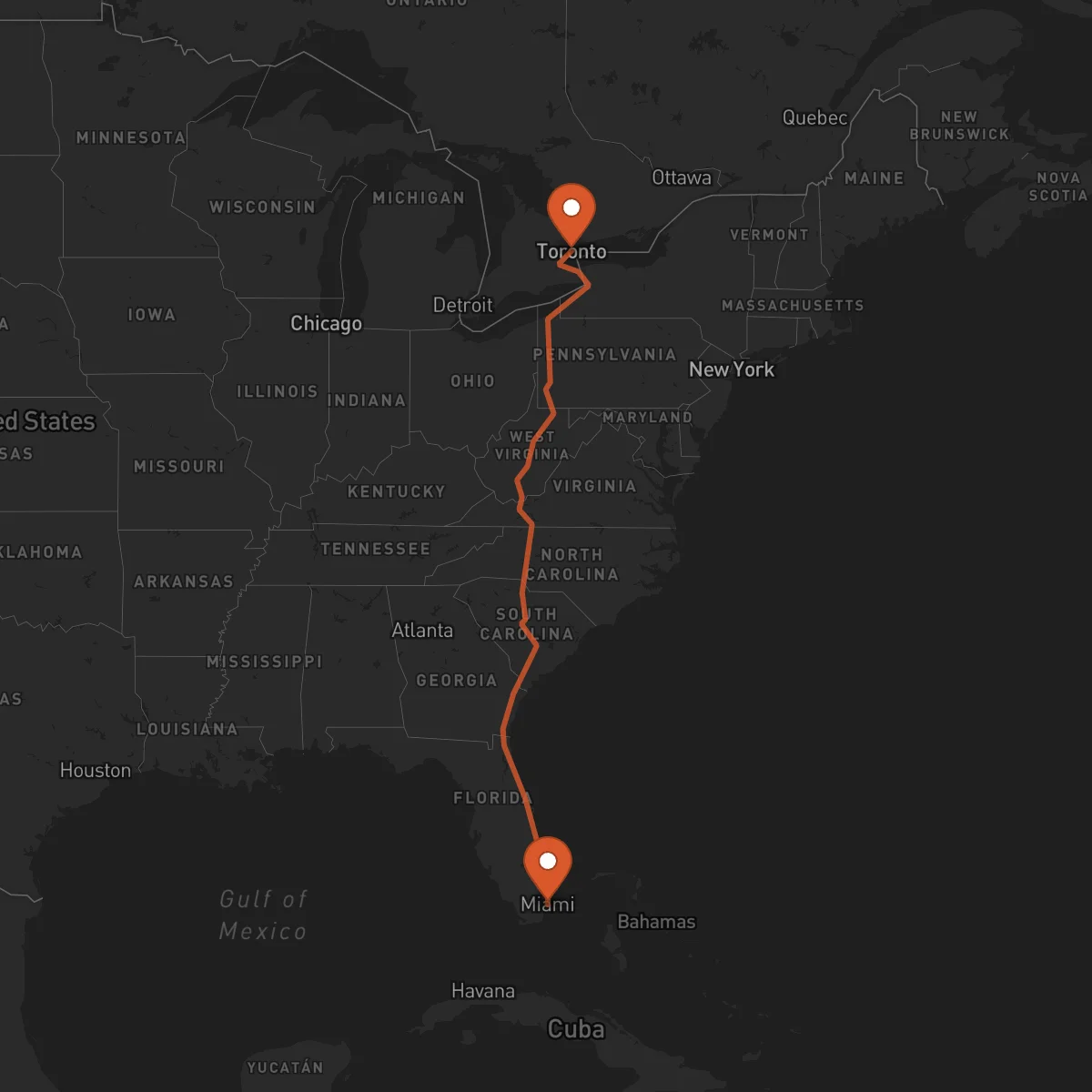
The logistics corridor connecting Miami, Florida, to Toronto, Ontario, represents one of the most vital trade routes in North America, spanning approximately 1,991 kilometers. This cross-border route links the southeastern United States with Canada's economic powerhouse, facilitating the movement of goods between two major economic regions. The corridor traverses diverse landscapes and crosses international borders, making it a critical artery for North American commerce.
The economic significance of this route cannot be overstated. Miami serves as a gateway to Latin American markets and a major hub for international trade, while Toronto stands as Canada's financial capital and a manufacturing powerhouse. The corridor supports industries ranging from automotive and electronics to pharmaceuticals and consumer goods. Major companies rely on this route for just-in-time manufacturing, retail distribution, and supply chain optimization.
Transportation infrastructure along this corridor includes major highways such as I-95, I-75, and the 401, providing multiple routing options for freight carriers. The route crosses at key border points including Detroit-Windsor and Buffalo-Niagara Falls, each offering different advantages depending on cargo type and destination. Control Terrestre's expertise in navigating these crossings, understanding customs requirements, and managing cross-border documentation ensures smooth operations for our clients, minimizing delays and optimizing transit times for full truckload shipments between these major metropolitan areas.
Services for this Route
Available services for the corridor Miami - Toronto
 Origin
Miami
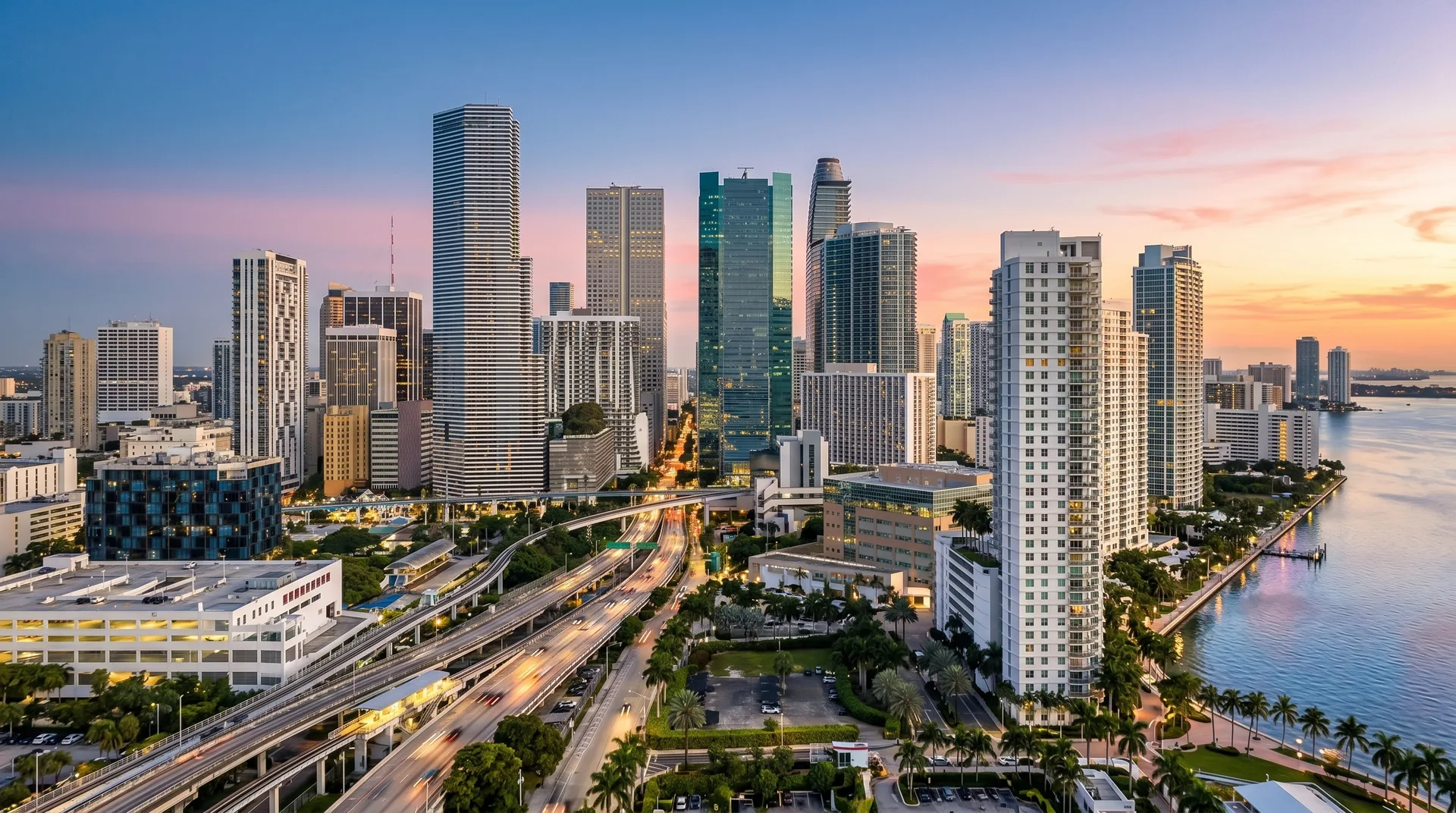
Miami, Florida, serves as a strategic logistics hub for North American and international trade. Located at the southeastern tip of the United States, Miami provides direct access to Latin American markets and the Caribbean. The city's Port of Miami and Miami International Airport rank among the busiest cargo facilities in the country, handling millions of tons of freight annually. Miami's economy is diverse, with strong sectors in international trade, tourism, healthcare, and technology. The city's extensive transportation infrastructure includes major highways (I-95, I-75, Florida's Turnpike), rail connections, and one of the largest containerized cargo ports in the United States, making it an ideal origin point for cross-border freight movements.
 Destination
Toronto, Ontario, stands as Canada's economic engine and the fourth-largest city in North America. Located on the northwestern shore of Lake Ontario, Toronto serves as a major distribution center for goods moving throughout Canada and into the United States. The city's economy is dominated by finance, technology, manufacturing, and healthcare sectors, with a highly skilled workforce and advanced infrastructure. Toronto's transportation network includes Pearson International Airport (Canada's busiest), extensive rail connections, and the 400-series highways that provide seamless access to major U.S. markets. The city's strategic location makes it a natural destination for freight moving from southern U.S. markets, particularly for industries requiring reliable, full truckload transportation services.










