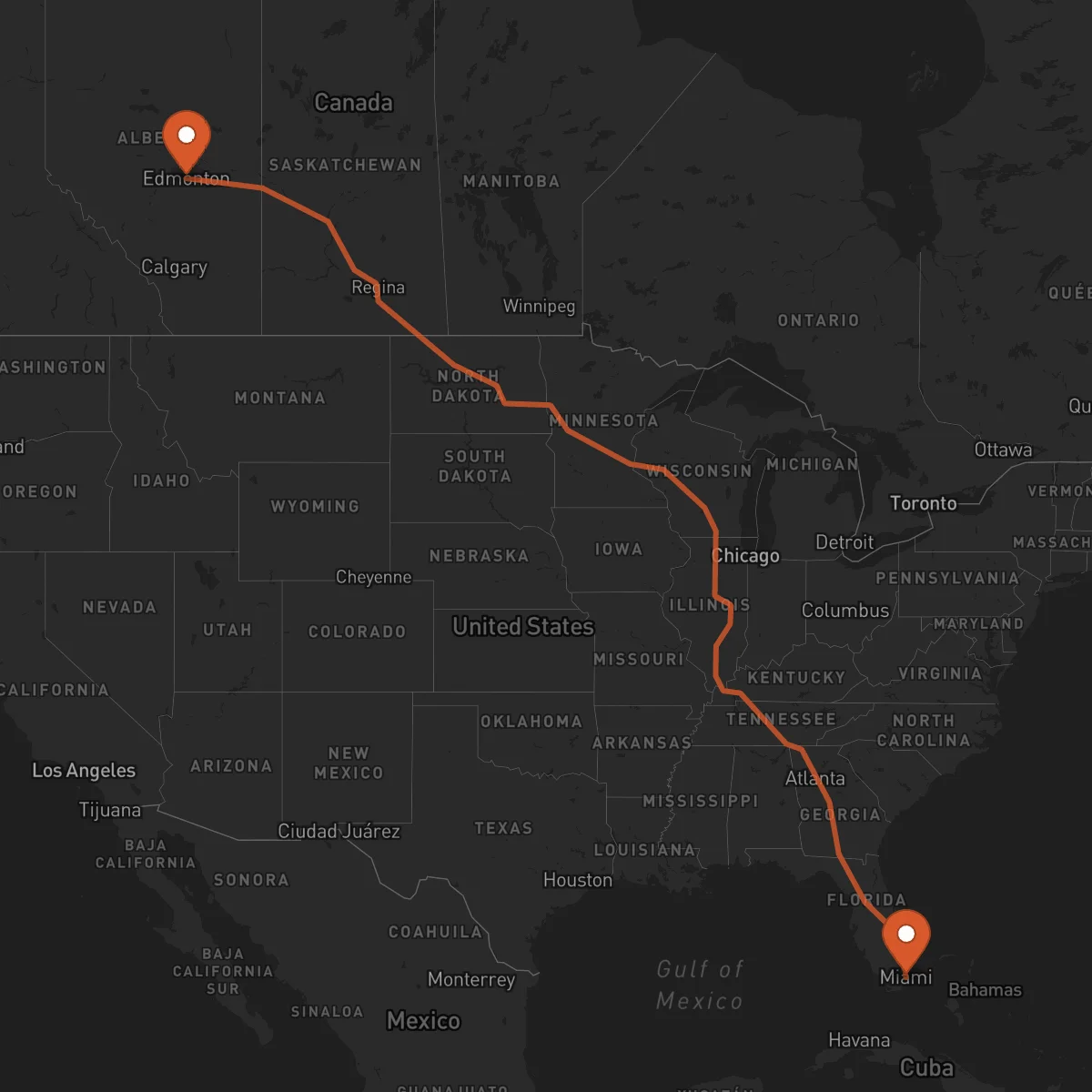
Miami to Edmonton
Edmonton → MiamiFTL freight transportation service between Miami and Edmonton. Reliable logistics solutions for your business.
Route Description
Everything you need to know about the corridor Miami - Edmonton
The Miami-Edmonton corridor represents a vital logistics connection between the southeastern United States and western Canada, spanning approximately 4,133 kilometers across diverse terrains and climate zones. This cross-border route connects two major economic centers, facilitating the movement of goods between the vibrant port city of Miami and the industrial hub of Edmonton. The corridor traverses through multiple states and provinces, including Florida, Georgia, Tennessee, Kentucky, Illinois, Wisconsin, Minnesota, North Dakota, Saskatchewan, and Alberta, crossing international borders at key points such as Pembina or Portal in North Dakota.
The economic significance of this corridor cannot be overstated, as it links Miami's role as a major gateway for international trade with Edmonton's position as a center for energy, agriculture, and manufacturing in western Canada. The route supports numerous industries including automotive, electronics, agriculture, energy equipment, and consumer goods. Major highways along this corridor include I-95, I-75, I-24, I-57, I-94, and the Trans-Canada Highway, providing multiple routing options to optimize transit times and costs.
Control Terrestre specializes in managing the complexities of this cross-border corridor, offering comprehensive FTL services that ensure seamless transportation from origin to destination. Our expertise in customs clearance, documentation requirements, and regulatory compliance helps clients navigate the intricacies of US-Canada trade efficiently. With our network of certified carriers and strategic partnerships, we provide reliable, temperature-controlled when needed, and specialized transportation solutions that meet the diverse needs of industries relying on this crucial trade route.
Services for this Route
Available services for the corridor Miami - Edmonton
 Origin
Miami
Miami serves as a strategic logistics hub in the southeastern United States, leveraging its position as a major port city with access to international maritime trade routes. The city's location provides excellent connectivity to Latin American and Caribbean markets, making it a crucial entry point for goods entering the US. Miami's infrastructure includes the Port of Miami, one of the busiest container ports in the country, and Miami International Airport, which handles significant cargo volumes. The region's economy is diverse, with strong sectors in international trade, tourism, agriculture (particularly tropical fruits), and technology. The extensive highway network, including I-95 and I-75, provides excellent ground transportation connections to the rest of the country.
 Destination
Edmonton stands as a strategic logistics center in western Canada, serving as the capital of Alberta and a major distribution point for goods moving throughout the Prairie provinces and beyond. The city's location provides access to the oil sands in northern Alberta and serves as a gateway to northern Canada. Edmonton benefits from a robust transportation infrastructure including the Edmonton International Airport, major rail connections, and highway networks such as the Yellowhead Highway (Highway 16) and the Queen Elizabeth II Highway. The region's economy is heavily influenced by the energy sector, particularly oil and gas, but also includes significant activity in agriculture, manufacturing, and technology. Edmonton's position makes it an ideal distribution center for goods destined for western Canada and the northern territories.










