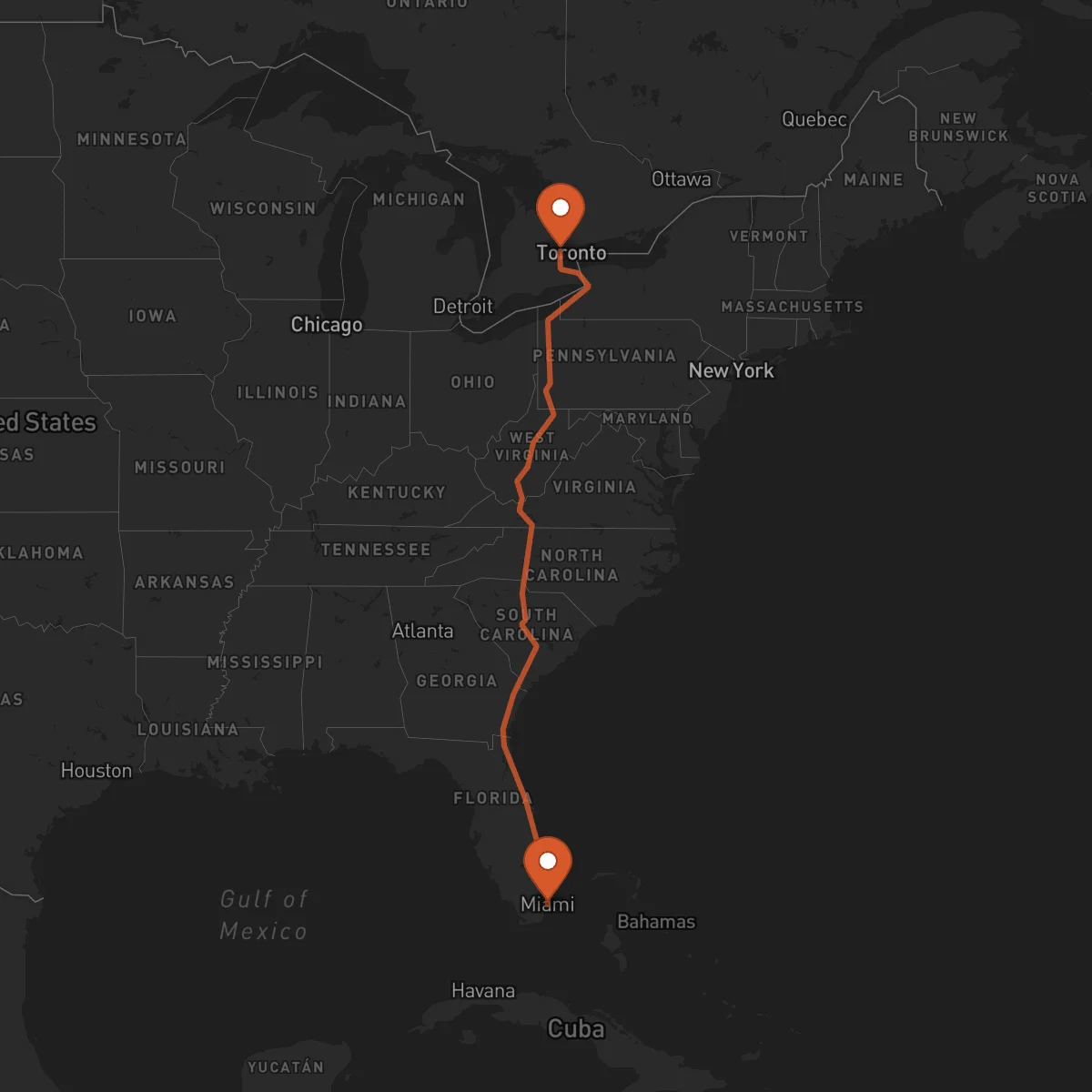
Miami to Brampton
Brampton → MiamiFTL freight transportation service between Miami and Brampton. Reliable logistics solutions for your business.
Route Description
Everything you need to know about the corridor Miami - Brampton
The Miami to Brampton corridor is a vital cross-border freight route connecting the vibrant economic hub of South Florida with one of Canada's most important industrial centers in the Greater Toronto Area. This strategic corridor spans approximately 1,994 kilometers and serves as a crucial link in the North American supply chain, facilitating the movement of goods between the United States and Canada.
The corridor traverses major transportation infrastructure, including key highways such as I-95, I-75, and the 401, which is Canada's busiest highway. The primary border crossing utilized is the Ambassador Bridge in Detroit, one of the busiest commercial border crossings in North America, handling millions of freight shipments annually. This route is essential for industries requiring efficient cross-border logistics solutions.
Major industries leveraging this corridor include automotive manufacturing, electronics, pharmaceuticals, and consumer goods. The Miami region serves as a gateway for Latin American trade, while Brampton hosts numerous warehouses and distribution centers for major retailers and manufacturers. Control Terrestre specializes in facilitating seamless cross-border operations on this corridor, ensuring compliance with customs regulations and providing dedicated FTL services that maintain the integrity and security of shipments throughout their journey.
Services for this Route
Available services for the corridor Miami - Brampton
 Origin
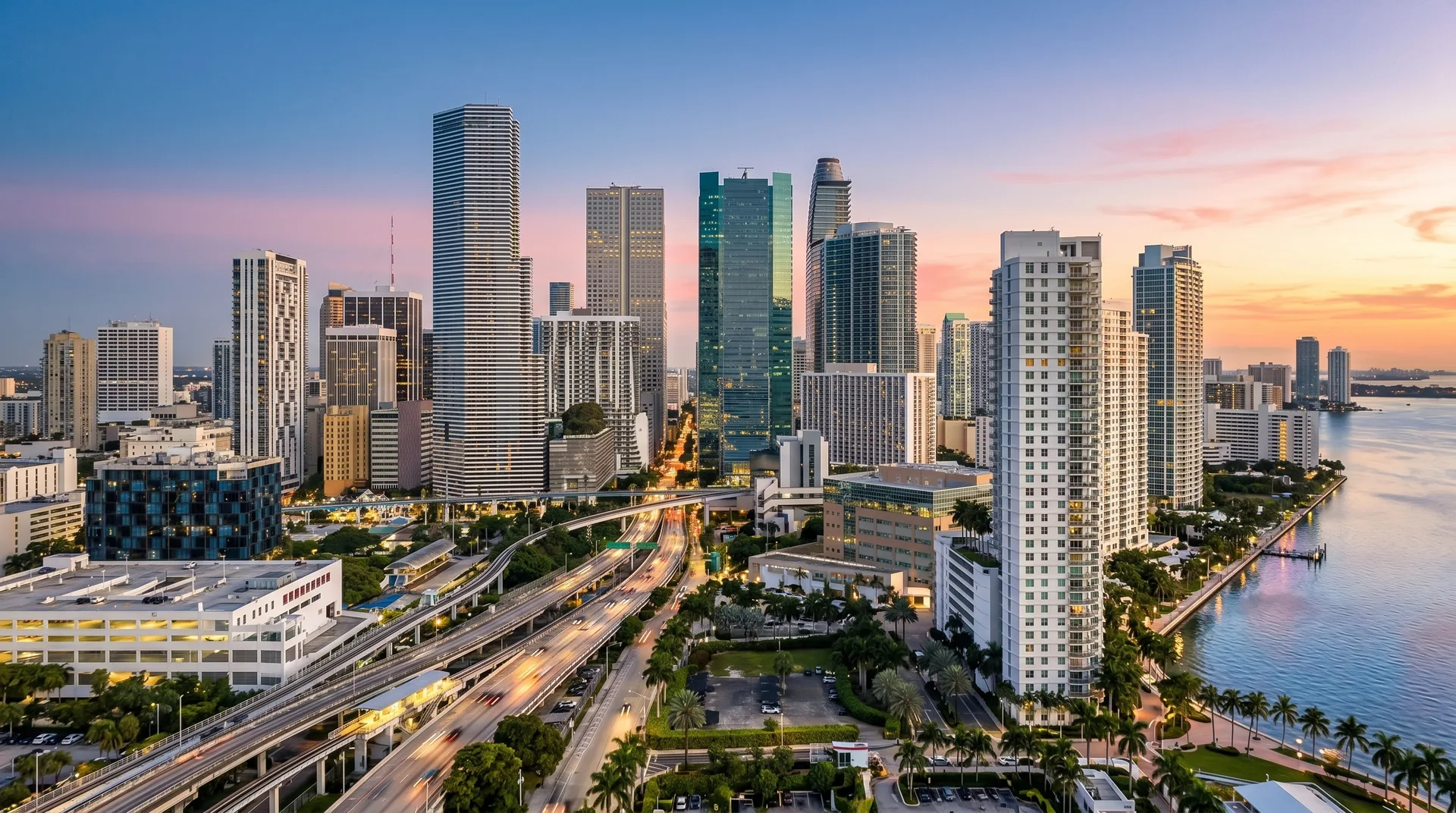
Miami
Miami stands as a strategic logistics hub in South Florida, serving as a primary gateway for trade with Latin America and the Caribbean. The city's location at the southeastern tip of the United States provides unique advantages for international freight movement. Miami International Airport is one of the busiest cargo airports in the world, while the Port of Miami handles significant container and breakbulk cargo volumes. The region's economy is diverse, with strong sectors in international trade, tourism, agriculture, and technology. Miami's extensive transportation infrastructure includes multiple interstate highways, rail connections, and a robust warehousing and distribution network, making it an ideal origin point for cross-border freight operations.
 Destination
Brampton, located in the Greater Toronto Area, is one of Canada's fastest-growing cities and a major logistics and manufacturing center. Its strategic position near Toronto Pearson International Airport, Canada's largest and busiest airport, and its proximity to major highways like the 401 and 407 make it an ideal destination for freight transportation. Brampton is home to numerous warehouses, distribution centers, and manufacturing facilities, particularly in the automotive, aerospace, and technology sectors. The city's diverse economy and well-developed infrastructure support efficient supply chain operations, making it a key endpoint for cross-border freight from the United States.










