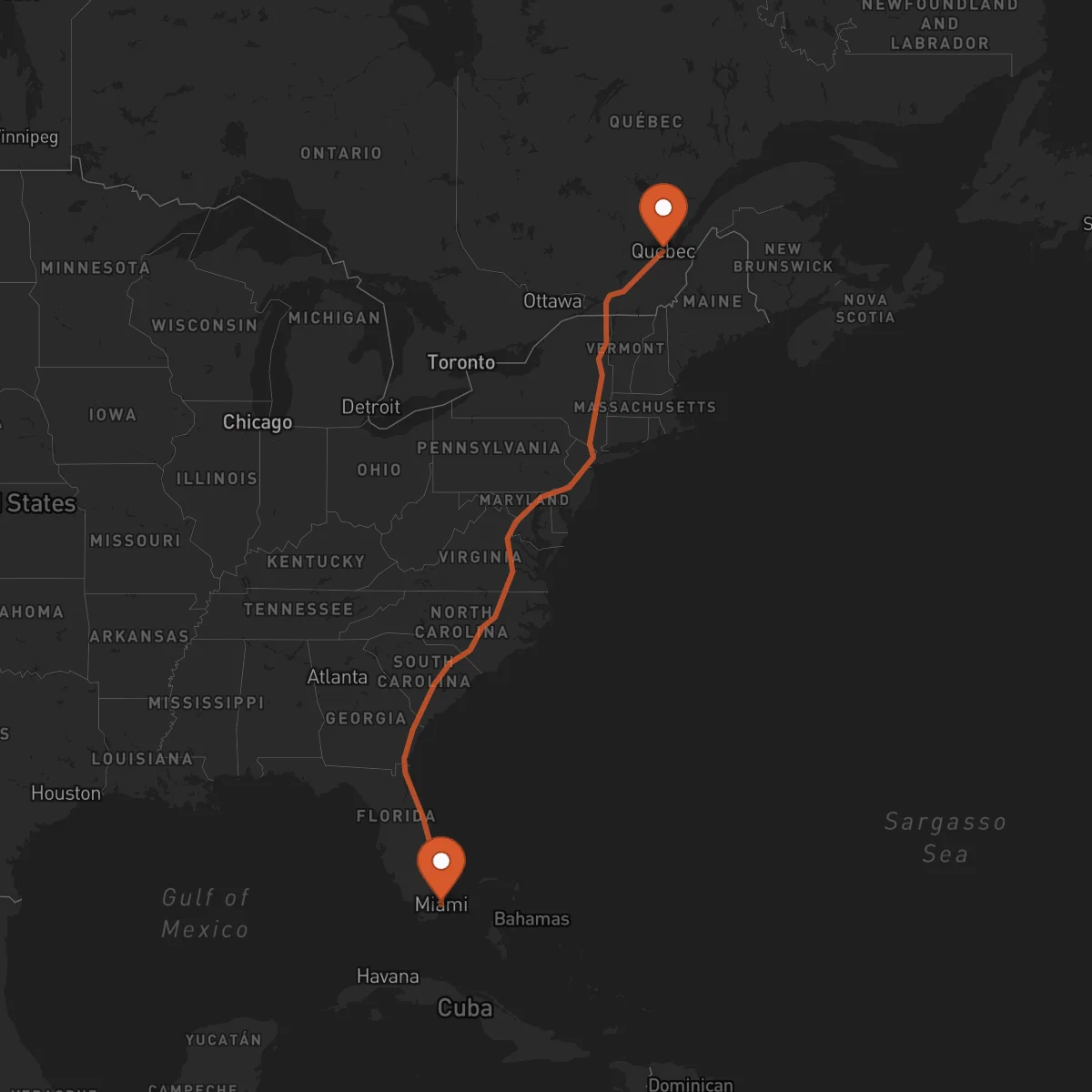
Miami to Quebec City
Quebec City → MiamiFTL freight transportation service between Miami and Quebec City. Reliable logistics solutions for your business.
Route Description
Everything you need to know about the corridor Miami - Quebec City
The logistics corridor connecting Miami, Florida, to Quebec City, Quebec, represents one of the most important commercial routes in North America. This strategic north-south connection spans approximately 2,471 kilometers, linking the vibrant economic hub of South Florida with the historic capital of Canada's largest province. The corridor traverses diverse landscapes and crosses multiple state and provincial boundaries, making it a critical artery for cross-border trade between the United States and Canada.
The economic significance of this corridor cannot be overstated. Miami serves as the gateway to Latin American trade, while Quebec City anchors a robust industrial and manufacturing sector in Eastern Canada. The route facilitates the movement of goods between major economic centers, supporting industries ranging from automotive and aerospace to food processing and technology. Companies along this corridor benefit from access to both Atlantic ports and inland distribution networks, creating a seamless supply chain that extends from the Caribbean to the Canadian Maritimes.
Transportation infrastructure along this corridor is well-developed, with Interstate 95 serving as the primary artery through the eastern United States, connecting to major highways in Canada such as Autoroute 20 and Autoroute 40. The corridor crosses at key border points including the Champlain-Rouses Point crossing, one of the busiest commercial ports of entry between the two countries. Control Terrestre's expertise in cross-border logistics ensures smooth customs clearance and compliance with both US and Canadian regulations, minimizing delays and optimizing transit times for full truckload shipments along this vital trade route.
Services for this Route
Available services for the corridor Miami - Quebec City
 Origin
Miami
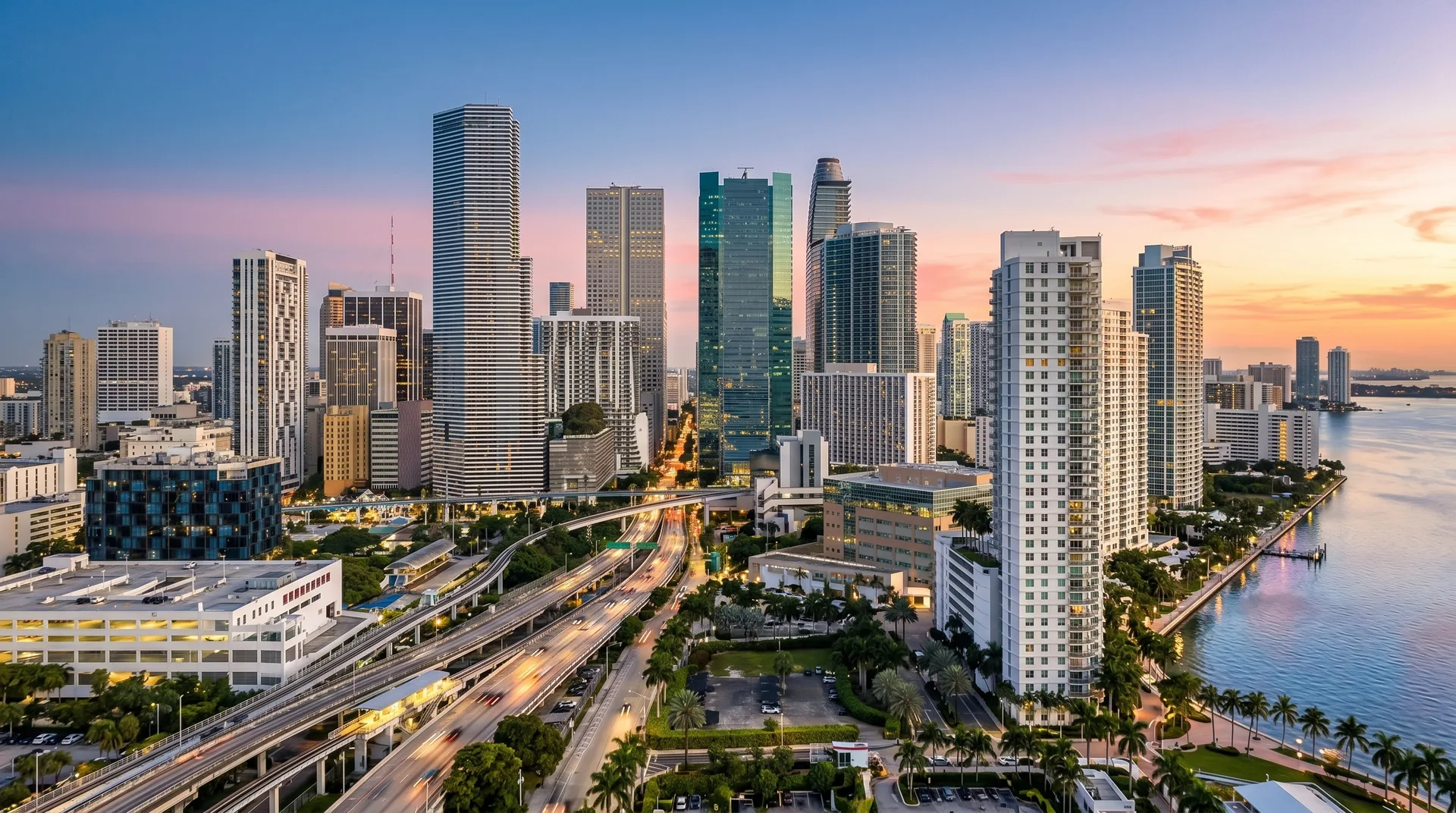
Miami stands as a strategic logistics hub in the southeastern United States, leveraging its position as the closest major US city to Latin America and the Caribbean. The city's location at the crossroads of North-South trade routes makes it an ideal origin point for freight moving throughout the continent. Miami International Airport ranks among the world's busiest for international freight, while the Port of Miami, known as the "Cargo Gateway of the Americas," handles millions of tons of cargo annually. The region's extensive highway network, including direct access to I-95, provides seamless connections to major US markets. Miami's economy thrives on international trade, tourism, and diverse manufacturing sectors, creating consistent demand for reliable freight transportation services.
 Destination
Quebec City serves as a strategic logistics gateway to Eastern Canada and the Atlantic provinces, positioned at the narrowing of the St. Lawrence River. The city's location provides access to major rail lines, an international airport, and the Port of Quebec, one of Canada's largest ports handling over 33 million tons of cargo annually. Quebec City anchors a robust industrial base including aerospace, biotechnology, and food processing sectors. The region's well-developed transportation infrastructure includes direct highway connections to Montreal and other major Canadian cities, as well as efficient border crossing options to the United States. The city's proximity to major Canadian markets and its role as a distribution center for northern and eastern regions make it a critical destination for cross-border freight movements.










