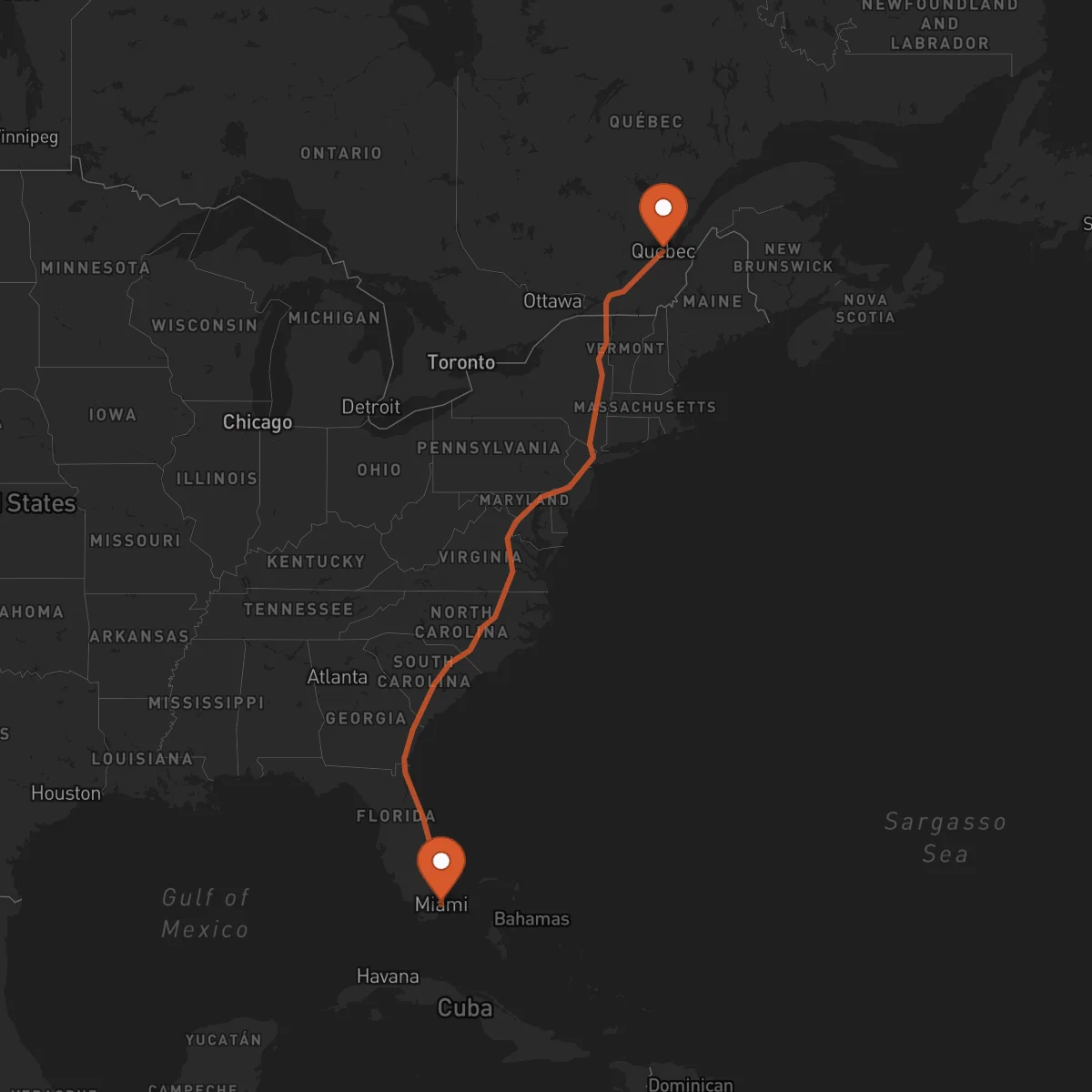
Quebec City to Miami
Miami → Quebec CityFTL freight transportation service between Quebec City and Miami. Reliable logistics solutions for your business.
Route Description
Everything you need to know about the corridor Quebec City - Miami
The Quebec City-Miami corridor represents a vital trade artery connecting Canada's major economic hub in the northeast with one of the United States' most dynamic ports and logistics centers. This cross-border route spans approximately 2,471 kilometers through diverse industrial and commercial regions, facilitating the movement of goods between two major North American markets. The corridor traverses key economic zones including the Great Lakes industrial belt, the northeastern manufacturing corridor, and the southeastern United States distribution network.
The route primarily utilizes major interstate highways including I-95 South through the northeastern United States, connecting with I-87 and I-90 for access from Quebec City. This strategic pathway enables efficient freight movement through major logistics hubs in cities such as Montreal, Boston, New York, Philadelphia, and Atlanta before reaching Miami's extensive port facilities and distribution centers. The corridor serves critical industries including automotive manufacturing, pharmaceutical distribution, agricultural products, and consumer goods.
Control Terrestre specializes in facilitating seamless cross-border operations along this corridor, managing all customs documentation and compliance requirements for full truckload shipments. Our experienced team ensures smooth border crossings at key points such as the Champlain-St. Bernard de Lacolle crossing, the most frequently used commercial crossing between Canada and the United States. We provide dedicated FTL services with certified carriers who maintain all necessary permits for hazardous materials, oversized loads, and temperature-controlled shipments when required.
Services for this Route
Available services for the corridor Quebec City - Miami
 Origin
Quebec City serves as a strategic logistics gateway for eastern Canada, positioned at the intersection of major transportation networks including the Port of Quebec and extensive rail connections. The region's economy is anchored by aerospace manufacturing, information technology, biotechnology, and food processing industries. Quebec City's industrial parks and specialized logistics zones provide modern warehousing and distribution facilities, while the city's proximity to major highways enables efficient access to both Canadian and U.S. markets.
 Destination
Miami
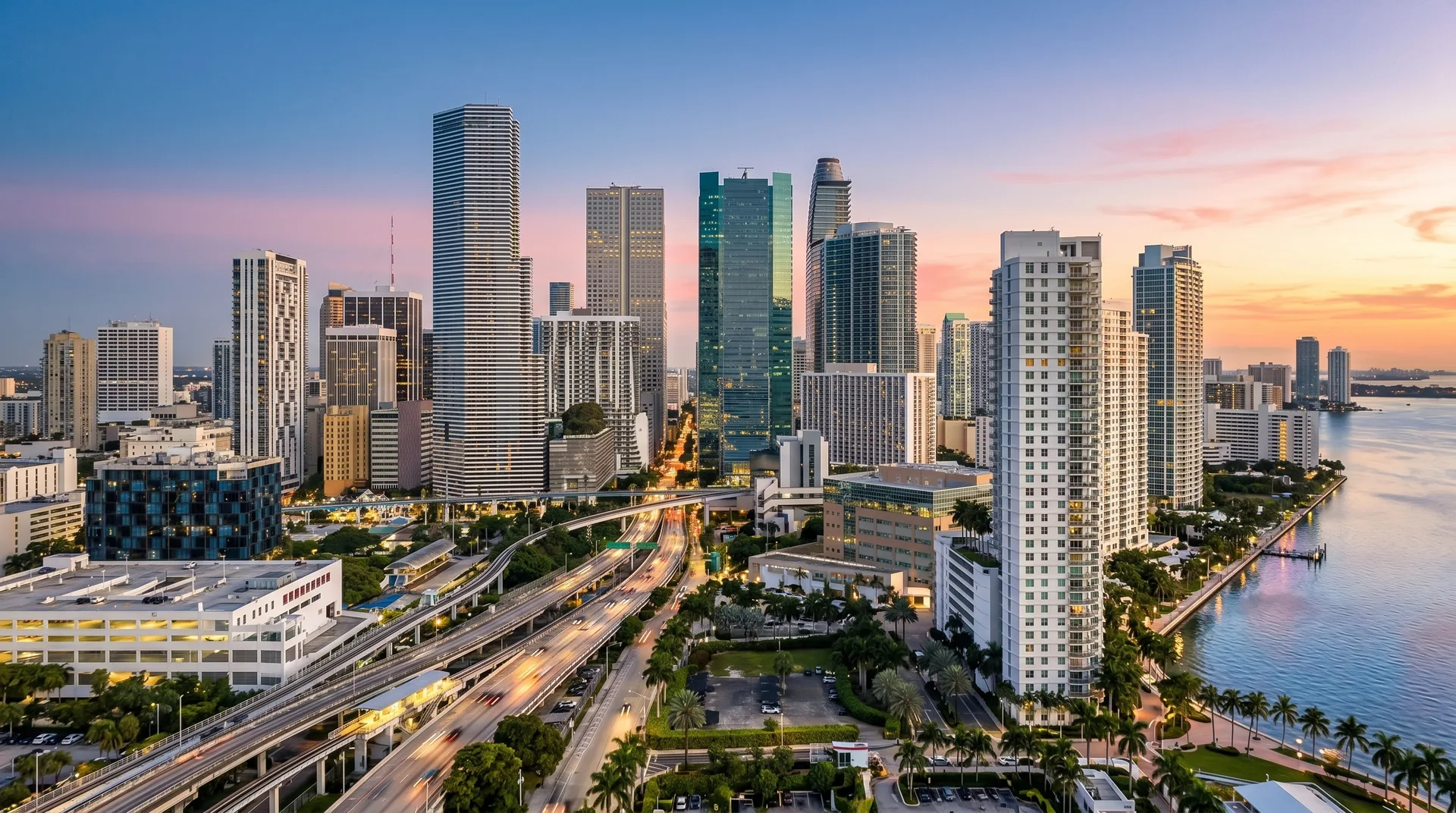
Miami functions as a critical logistics hub for the southeastern United States and Latin American trade, anchored by the Port of Miami and Miami International Airport. The region's economy encompasses international trade, tourism, healthcare, and technology sectors, with a strong presence of multinational corporations and distribution centers. Miami's strategic location provides access to both Atlantic and Caribbean markets, while its extensive highway network, including I-95 and Florida's Turnpike, ensures seamless connectivity to the broader U.S. distribution system.










