Madison to Granada
Granada → MadisonFTL freight transportation service between Madison and Granada. Reliable logistics solutions for your business.
Route Description
Everything you need to know about the corridor Madison - Granada
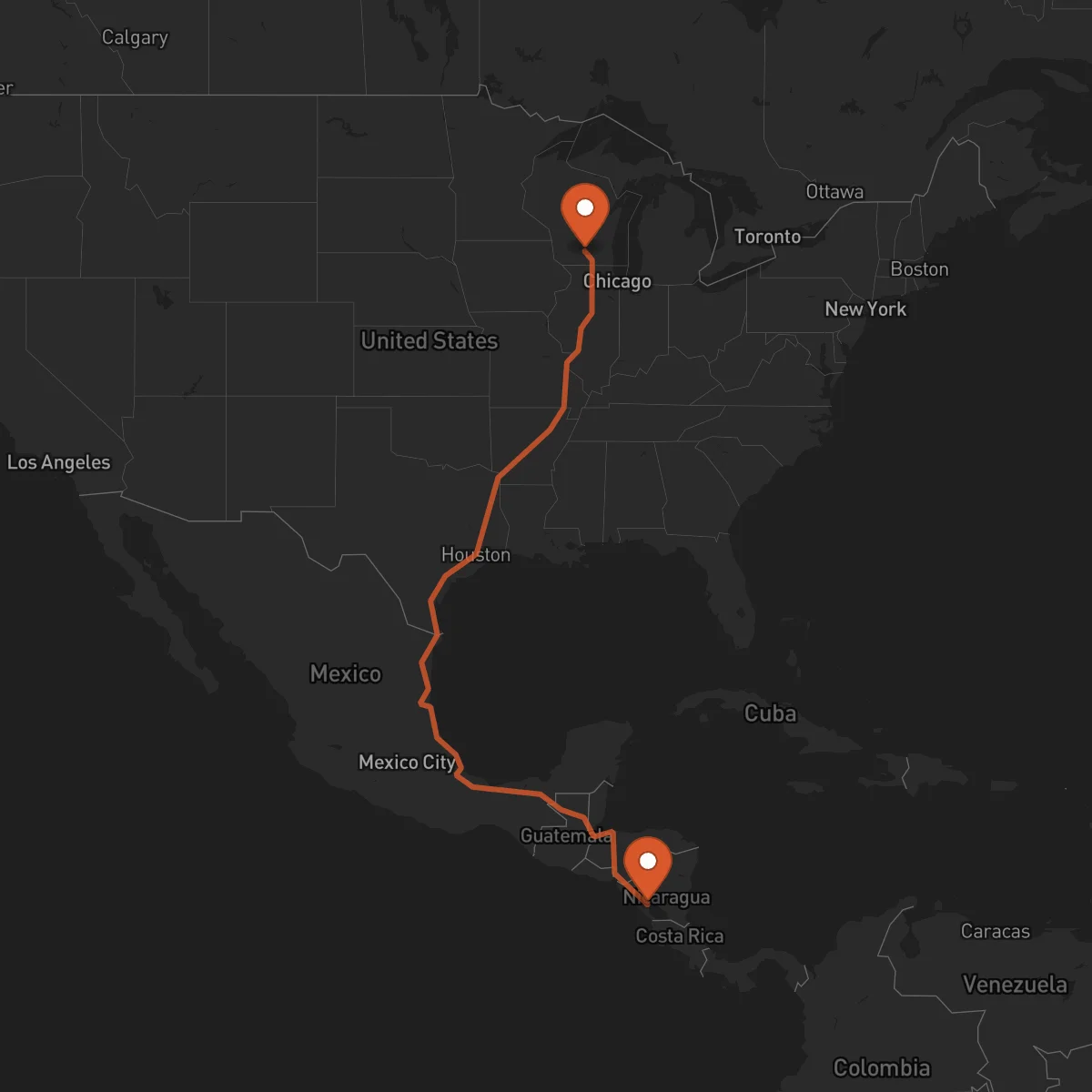
The Madison, Wisconsin to Granada, Nicaragua corridor is a critical north-south artery connecting the U.S. industrial Midwest with Central America's Pacific coast. Its strategic importance lies in facilitating trade between major U.S. manufacturing and agricultural hubs and Nicaragua's key export markets, serving as a vital link in the broader supply chain for the region. This route traverses diverse economic landscapes, from the dairy and machinery production centers of the upper Midwest to the agricultural and tourism-driven economy of southwestern Nicaragua. Primary industries utilizing this corridor include food and beverage processors, agricultural commodity exporters, manufactured goods distributors, and project cargo shippers moving industrial equipment. The transportation infrastructure relies heavily on the U.S. Interstate Highway System, primarily I-90 and I-94 east from Madison, connecting to I-35 south through the Midwest. The route then follows the Pan-American Highway through Mexico, a well-established but lengthy transit. Key border crossings involve the U.S.-Mexico border (commonly at Laredo/El Paso) and the Mexico-Guatemala border (such as Ciudad Hidalgo/Tecún Umán), with further transit through Guatemala and Honduras before entering Nicaragua. Customs considerations are significant, requiring expertise in multiple countries' regulations, documentation (like NAFTA/USMCA certificates), and compliance programs. Control Terrestre facilitates seamless operations on this complex corridor through our alliance of certified providers. Our partners hold critical accreditations including C-TPAT and FAST for expedited U.S. clearance and BASC for security standards in Latin America. We manage the entire cross-border process, coordinating dedicated and specialized full truckload (FTL) movements—including refrigerated and oversized units—from door in Madison to door in Granada, navigating customs protocols and ensuring cargo integrity across all jurisdictions without intermediate consolidation.
Services for this Route
Available services for the corridor Madison - Granada
 Origin
Madison
Madison, Wisconsin, serves as a strategic logistics origin due to its central location in the U.S. Midwest and its robust multi-modal connectivity. The city is the economic and cultural hub of Wisconsin, anchored by a diverse industrial base. Key sectors include advanced food and dairy processing (leveraging the state's agricultural output), medical device and biotechnology manufacturing, information technology, and government services. The area's transportation infrastructure is highly developed, positioned at the crossroads of major Interstate highways I-90 and I-94, providing direct, high-capacity routes east to Chicago and west to Minneapolis-St. Paul. This network efficiently links to other key freight corridors like I-39 and I-43. Furthermore, Madison benefits from significant rail intermodal facilities and is within a day's drive of major Great Lakes ports and international airports, creating a versatile logistics ecosystem for full truckload (FTL) shipments destined for international corridors.
 Destination
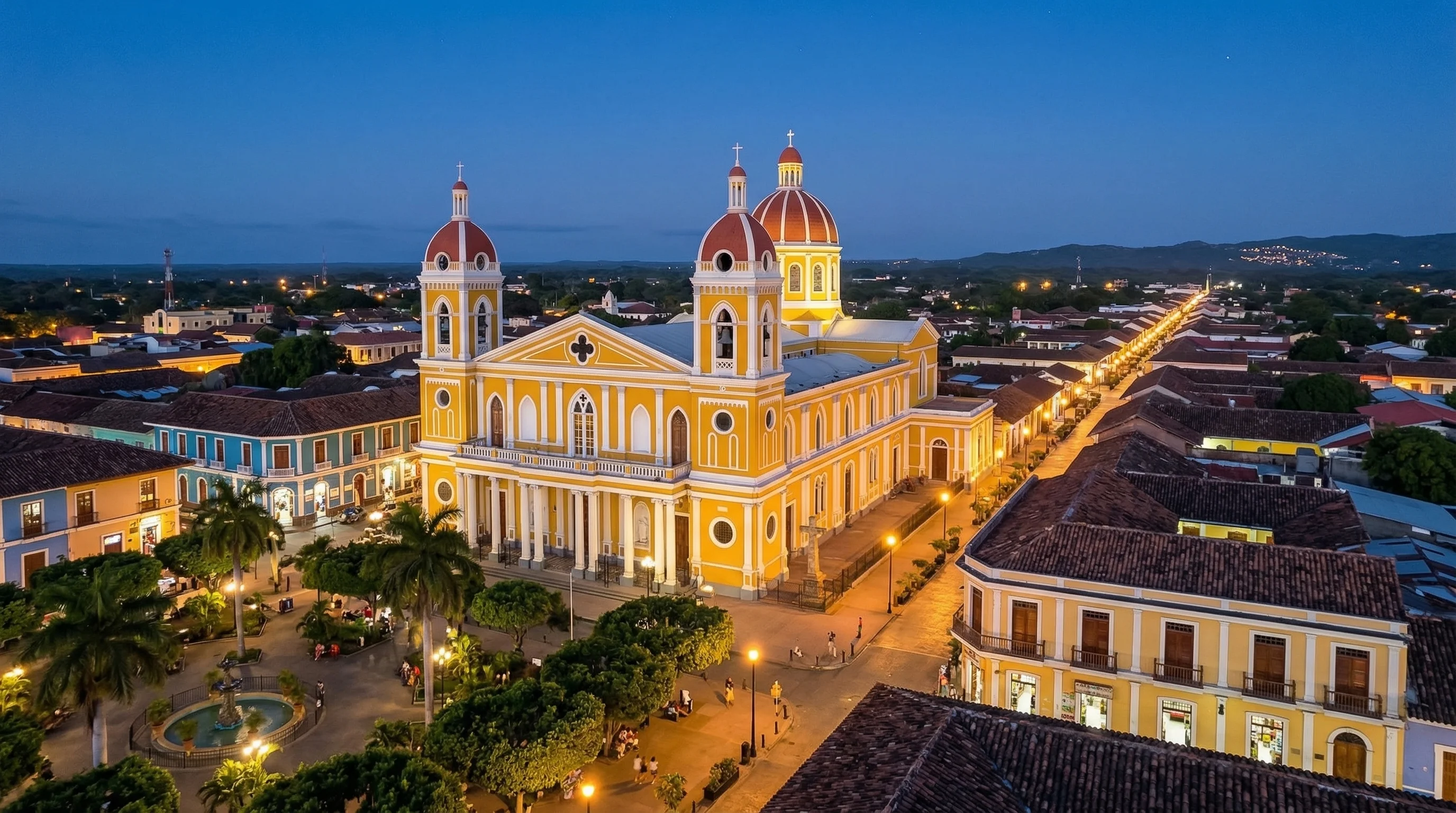
Granada, Nicaragua, is a strategically significant logistics destination on the Pacific coast of Central America. It functions as a major commercial, agricultural, and tourism hub for southwestern Nicaragua. The city's economic sectors are dominated by coffee and cacao production and export, sugarcane processing, livestock, and a thriving tourism industry that drives demand for goods and services. Its location provides excellent access to Nicaragua's primary Pacific port of Corinto, which handles the majority of the country's international maritime trade. The city is directly connected to the Pan-American Highway (Nicaraguan Highway 1), the continent's main overland route, enabling efficient ground transport north into Honduras and El Salvador, and south to Costa Rica. This highway network supports the movement of full truckload (FTL) cargo, including refrigerated goods for agricultural exports and general freight for the region's commercial activity, making Granada a pivotal inland distribution point.










