Granada to Madison
Madison → GranadaFTL freight transportation service between Granada and Madison. Reliable logistics solutions for your business.
Route Description
Everything you need to know about the corridor Granada - Madison
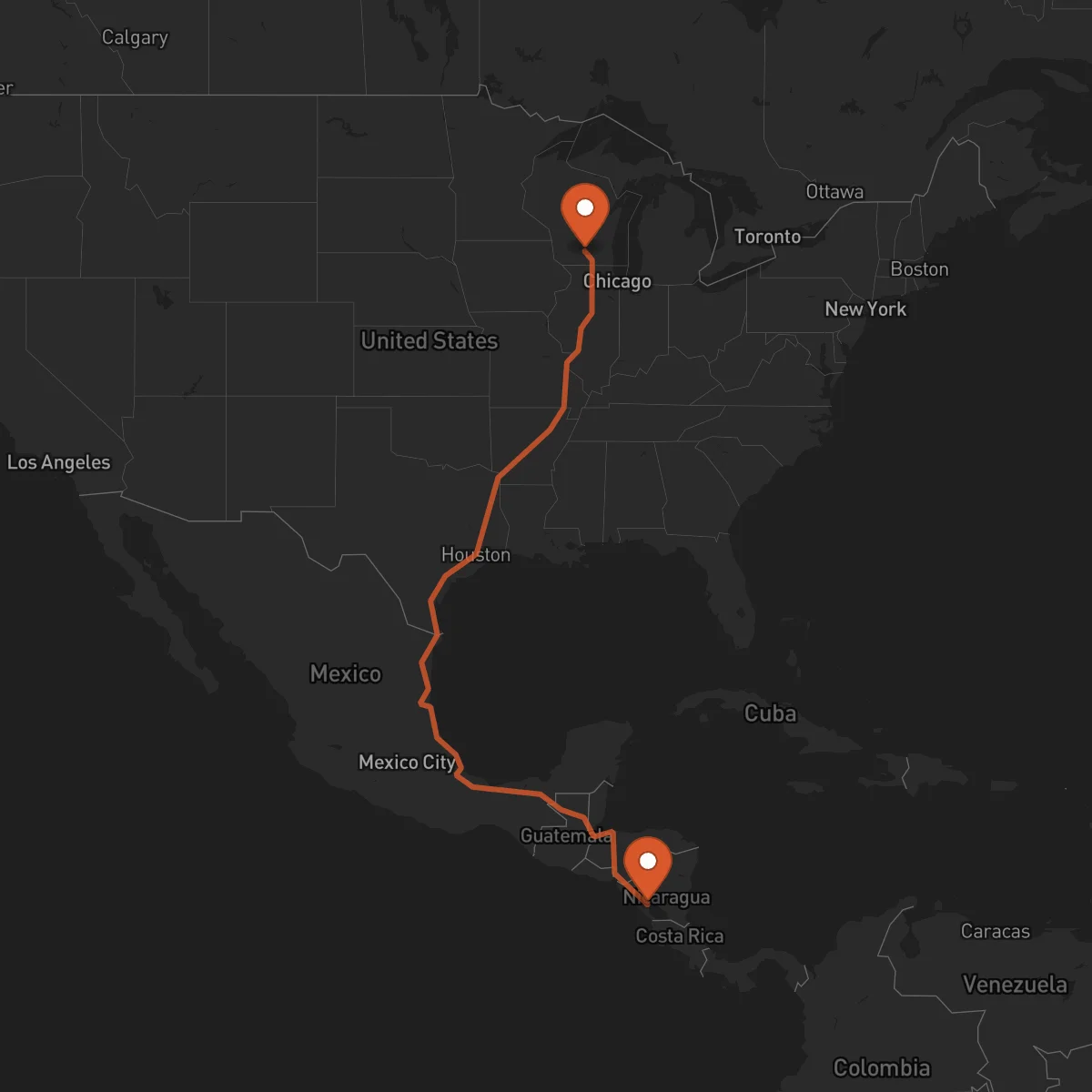
The Granada to Madison corridor represents a vital North American trade link, connecting Central America's Pacific coast with the industrial heartland of the U.S. Midwest. This cross-border route facilitates the movement of essential goods, supporting economic integration between Nicaragua and the United States. Strategically, it bridges key production zones in Nicaragua with major consumption and manufacturing markets in Wisconsin and beyond, playing a crucial role in regional supply chains.
Economically, the corridor serves the agricultural and manufacturing sectors of both regions. Nicaragua exports significant volumes of coffee, seafood, textiles, and agricultural commodities, while Wisconsin is renowned for dairy products, processed foods, machinery, and industrial goods. This reciprocal trade creates consistent demand for reliable, full truckload transportation. The primary industries utilizing this route include food and beverage, agriculture, light manufacturing, and retail distribution, all requiring efficient, secure, and timely cross-border logistics.
Infrastructure along the route is anchored by major highways. From Granada, cargo typically moves north via Nicaragua's CA-1 highway to the border crossings at El Paso, Texas (or potentially via other southern border points depending on specific routing and provider alliances). Once in the U.S., the journey utilizes the extensive Interstate Highway System, predominantly I-10 and I-20 eastward before connecting to I-90/I-94 for the final leg into Madison. Key border considerations include U.S. Customs and Border Protection (CBP) regulations, customs brokerage requirements, and compliance with programs like C-TPAT and FAST, which our provider network holds to ensure smoother crossings.
Control Terrestre facilitates seamless operations on this corridor through our robust alliance of certified transportation providers. We exclusively coordinate Full Truckload (FTL) services, matching your specific cargo—whether dry van, refrigerated, or specialized—with the right equipped carrier. Our partners' certifications, including C-TPAT, FAST, and BASC, streamline customs processes, while our expertise in cross-border documentation and coordination ensures your shipment moves efficiently from origin to destination door-to-door. We manage the complexities, providing you with a single, reliable point of contact for your cross-border freight needs.
Services for this Route
Available services for the corridor Granada - Madison
 Origin
Granada, Nicaragua, is a strategically significant logistics origin on the Pacific coast of Central America. Its location provides direct access to the Port of Corinto, Nicaragua's primary deep-water port, which is essential for maritime connections. This coastal position makes it a natural hub for consolidating exports destined for North America. The city and surrounding region are economic powerhouses in Nicaragua, with key industries centered on agriculture (coffee, sugarcane, tropical fruits), seafood processing, textiles, and light manufacturing. These sectors generate substantial outbound freight requiring reliable overland transport to northern borders. The available transportation infrastructure includes the CA-1 highway, which runs the length of Nicaragua and connects to major border crossings with Honduras and Costa Rica, forming part of the Central American highway network. This infrastructure supports the efficient movement of goods from production facilities in and around Granada to the primary U.S. border crossings.
 Destination
Madison
Madison, Wisconsin, is a strategically located logistics destination in the Upper Midwest of the United States. As the state capital and home to the University of Wisconsin, it sits at the crossroads of major Interstate highways I-90 and I-94, providing direct, high-capacity routes to Chicago, Minneapolis, and the broader national freight network. This central location makes it an ideal distribution point for the Upper Midwest and Great Lakes regions. Madison's economy is diverse and robust, driven by major industries such as dairy and food processing (cheese, butter, packaged foods), biotechnology, healthcare, and technology. These sectors are both major producers and consumers of freight, requiring inbound raw materials and outbound finished goods. The city is well-served by robust intermodal facilities, rail connections (Canadian National and others), and the Dane County Regional Airport for air cargo, creating a multi-modal ecosystem. The primary overland infrastructure for inbound truckload freight is the interstate system, ensuring efficient door-to-door delivery to manufacturing plants, distribution centers, and retail hubs throughout the region.










